

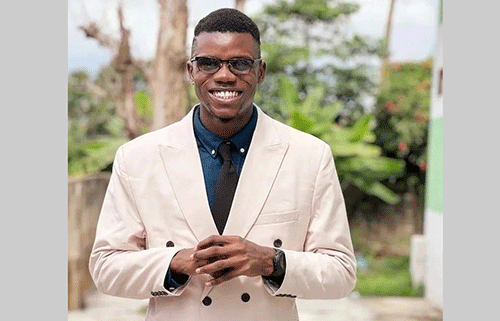

Andrew Ngenokesho Taapopi, Sports manager.
Globally, one is likely to fully attest that successful or elite athletes have many fans on social media (check Instagram, search for Cristiano Ronaldo, Lionel Messi, Virat Kohli, LeBron James, Sydney McLaughlin etc.), this is because they are regarded as the greatest of all times (goat).
But in the world of sports, one does not just become a goat, greatness doesn’t just happen, it is discovered, nurtured, and built over time. On or after the outcast, grassroots fields to Olympic stadiums, the process of identifying and developing athletic talent is a crucial part of building champions. Across the cosmos, sports academies, schools, and clubs are investing more time and resources into finding the next generation of athletes.
But how exactly is talent identified? And once it’s found, what does it take to develop it?
“Development is a marathon, not a sprint,” says Jamaican national youth coach Elaine Thompson”.
Early signs and investigation, this often begins with a sharp eye. Coaches and scouts look for young individuals (normally seven-year-olds up) who exhibit key traits such as speed, coordination, strength, and a hunger to compete. Sometimes it’s not about being the best player on the field. It is important to encourage children to try multiple sports, helping expose hidden abilities and prevent early burnout.
The role of science and talent identification is not just guessing work. The configuration of both fitness tests, movement analysis, and even psychological profiling are common tools in elite programs. Using these metrics, coaches can better predict which young athletes have the capacity to excel and withstand the rigors of high-level training.
Developing potential, once a talented athlete is identified, then hard work must truly begin. Experts agree that personalised training, access to skilled coaching, and strong support networks are key. Furthermore, Long-Term Athlete Development models should guide many programs, focusing on age-appropriate skill-building and physical development.
These models are designed to avoid early specialization major risk factors for injury and dropout. There is a need for athletes peaking in their late teens and twenties, not burning out by fifteen.
Finally, it is of most importance for collectively, family, education, and mental health resources to be properly integrated due to a significant role they performance in athletes’ journey towards success. With the increasing pressure of competition, balancing sport with life is more important than ever. Identifying and developing talent is not just about creating winners.
It’s about opening doors, building confidence, and offering young people a path to grow through sport.
As the next crop of athletes begins to shine, one thing is clear: talent may be born, but champions are made.