


Democratic governance is a system in which all sectors of society participate fully and share responsibility for the affairs of the state—that is, participation by all. It refers to a situation where both the rulers and the ruled take part in the decision-making process at all levels.
During the pre-colonial period in Africa, there was democracy. Men, women, and the youth all knew their roles in society and participated fully in governance. However, it was during the colonial period that the system of democratic governance was deliberately distorted. We were made to believe that we needed to be “civilised” and “developed” because we were considered barbaric. Consequently, democratic governance was undermined, and the sense of patriotism and loyalty to one’s country weakened.
Even after independence, the creation of one-party states in some countries made it difficult if not impossible for people to participate meaningfully in their own affairs. Citizens were expected to think only in the way government wanted them to think. As a result, the question of youth participation was completely sidelined.
The reality is that most African countries have predominantly youthful populations. One would therefore expect full participation of the youth in democratic governance. Yet the opposite is true. Despite being the majority, young people are often excluded from meaningful participation in decision-making processes.
The youth are not taken seriously, as they are often perceived as idealists with utopian thoughts or, worse still, as people without constructive ideas. Many resort to social media platforms, using them to insult and criticise leaders rather than to engage in practical and meaningful participation in national development.
The immediate questions that arise from this situation are:
How can young people be regarded as the future of the country if they are not empowered? How can they become future leaders if they are not given the opportunity to prove themselves?
These are crucial questions that must be addressed head-on. At the same time, the youth themselves must take responsibility for finding answers, or else their marginalisation will continue.
The youth hold immense power as both the current and future driving force of the nation. Yet, paradoxically, they have the capacity to marginalise themselves. The energy and potential that the youth possess must be channelled effectively to build a better future because no one will build it for them.
The youth also have a moral obligation to reflect upon themselves and ask:
Firstly, what can we offer our country?Secondly, are we ready to take responsibility for our actions?
There is a persistent tendency to blame the status quo for every failure. Why, for instance, do we not challenge—radically but peacefully—our governments about our right to participate in democratic governance?
Why are so many young people too indifferent or uninspired even to register as voters, when the ballot box remains the most powerful tool for aligning national goals and ideas?
Why should we continue to say the situation is not conducive to challenge those in power? The time has come to do what is right—to challenge the status quo, whether it feels comfortable or not.
Let us become a segment of the national demographic that cannot be ignored by constructively participating in decision-making processes. Let us use the right platforms to show drive, initiative, and commitment. Let us inspire confidence in those who doubt us by demonstrating our ability to do the right things at the right time.
It is high time that we demand what we deserve in our country.
It is high time that we become the engineers of our own destiny.
It becomes difficult to speak of the youth’s role when they fail to take charge of their own future. The youth must work hard to bring about tangible results and actions that will build government’s confidence in their capacity to help drive the nation forward.
To achieve this, we must make use of structures such as the ministry of youth, national service, sport and culture; the National Youth Council; and Constituency Youth Forums, among others, to help realise our collective dreams. However, this engagement must not remain only on paper—it must be translated into action.
Let us demonstrate to the world that young people can and do play constructive roles in the decision-making and governance of our country and their own lives.
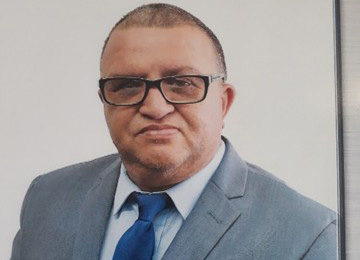
Reverend Jan A. Scholtz is the former chairperson of the //Kharas Regional Council and former !Nami#nus constituency Councillor. He holds a Diploma in Theology, B-Theo (SA), a Diploma in Youth Work and Development from the University of Zambia (UNZA), as well as a Diploma in Education III (KOK) and a BA (HED) from UNISA.