

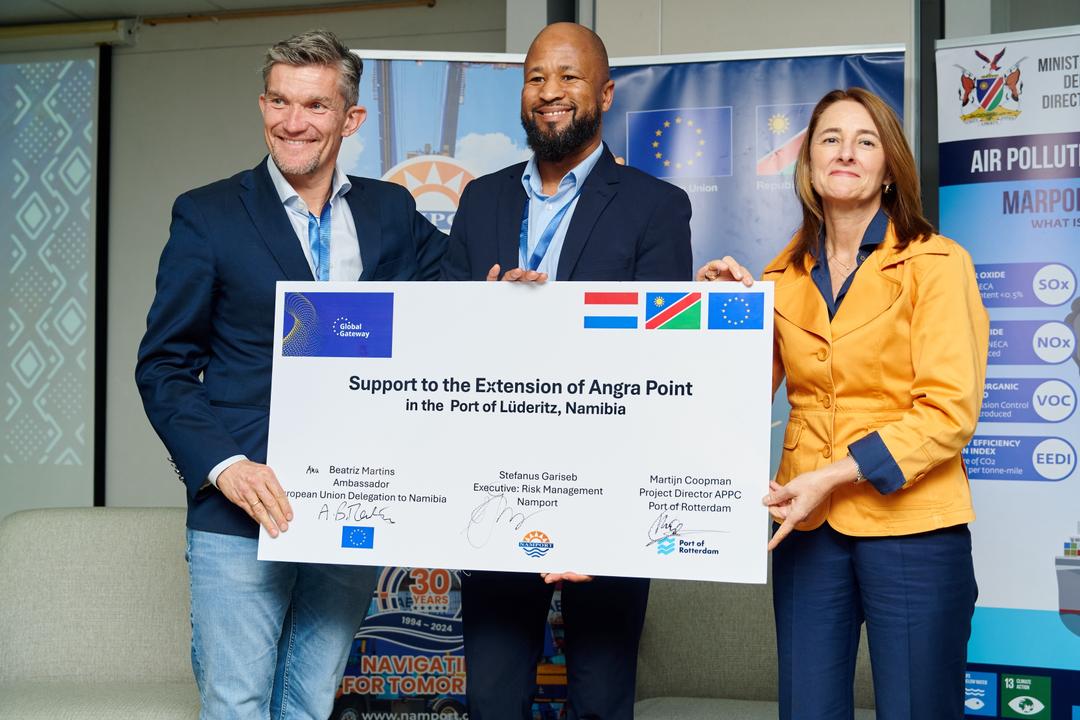

The European Union (EU), in collaboration with the Port of Rotterdam and Namibia Ports Authority (Namport), signed a N$13 million agreement to support the planning of the Lüderitz Port expansion at Angra Point.
According to Martijn Coopman, Programme Manager of International Hydrogen Supply Chains at the Port of Rotterdam, this initiative builds upon the existing cooperation agreement between the Port of Rotterdam and Namport, focusing on developing a hydrogen hub at the Port of Lüderitz–Angra Point in southern Namibia. The collaboration aligns with the EU’s Global Gateway initiative, which aims to accelerate global investment in sustainable infrastructure and energy transition projects.
“Namibia, through Namport, has already commenced green iron exports earlier this year and continues to play a pivotal role in exporting mineral ores such as manganese, lithium, and graphite. Plans are underway to process these minerals locally, further enhancing Namibia’s position in the global clean energy supply chain,” he said.
He added that the EU’s Global Gateway funding will support the development of the multi-user terminal design, which will serve the export of processed mineral ores as well as the import and export of various other cargoes.
“The Namport–Port of Rotterdam agreement, therefore, serves as a cornerstone of Namibia’s green hydrogen export strategy, transforming Namport from a traditional logistics entity into a strategic enabler of global clean energy trade. By leveraging Rotterdam’s technical capacity, market access, and investment network, Namport is positioning itself to become Sub-Saharan Africa’s premier green hydrogen export port,” he said.
Ana Beatriz Martins, EU Ambassador to Namibia, said the support to Lüderitz port draws on earlier EU-funded cooperation between Port of Antwerp Bruges International (POABI) and Namport to develop a master plan for the expansion of Walvis Bay Port, which could more than double the port’s capacity and unlock up to N$10 billion in potential investment if implemented. Both ports’ expansions aim to strengthen strategic trade corridors between Africa and Europe, positioning Namibia as a key regional gateway for sustainable trade and a future green logistics hub within global green maritime corridors.
Together, these initiatives form part of the EU’s Global Gateway strategy, the EU’s flagship investment programme to boost sustainable infrastructure, strengthen global partnerships, and create local opportunities.
“This partnership embodies the shared vision of the European Union and Namibia for a sustainable, fair, and mutually beneficial green industrialisation. By investing in the necessary port infrastructure and the studies behind it, we are ensuring that development is both forward-looking and responsible. This is how Global Gateway works: by creating the conditions for sustainable growth, decent jobs, and human development for Namibians,” she said.
Speaking on behalf of Namport, Stefanus Gariseb, Risk Management Executive, stated that Namport welcomes the support of the EU and the Port of Rotterdam for the development of a Green Minerals Terminal at Lüderitz.
“This partnership marks a major step in strengthening Namibia’s role in global clean energy supply chains. By leveraging international expertise and investment, Namport is driving industrialisation, job creation, and sustainable growth.
The initiative aligns with the EU’s Global Gateway strategy and Namibia’s green hydrogen ambitions, positioning Namport as a strategic hub for critical minerals and clean energy exports to Europe and beyond,” he said.