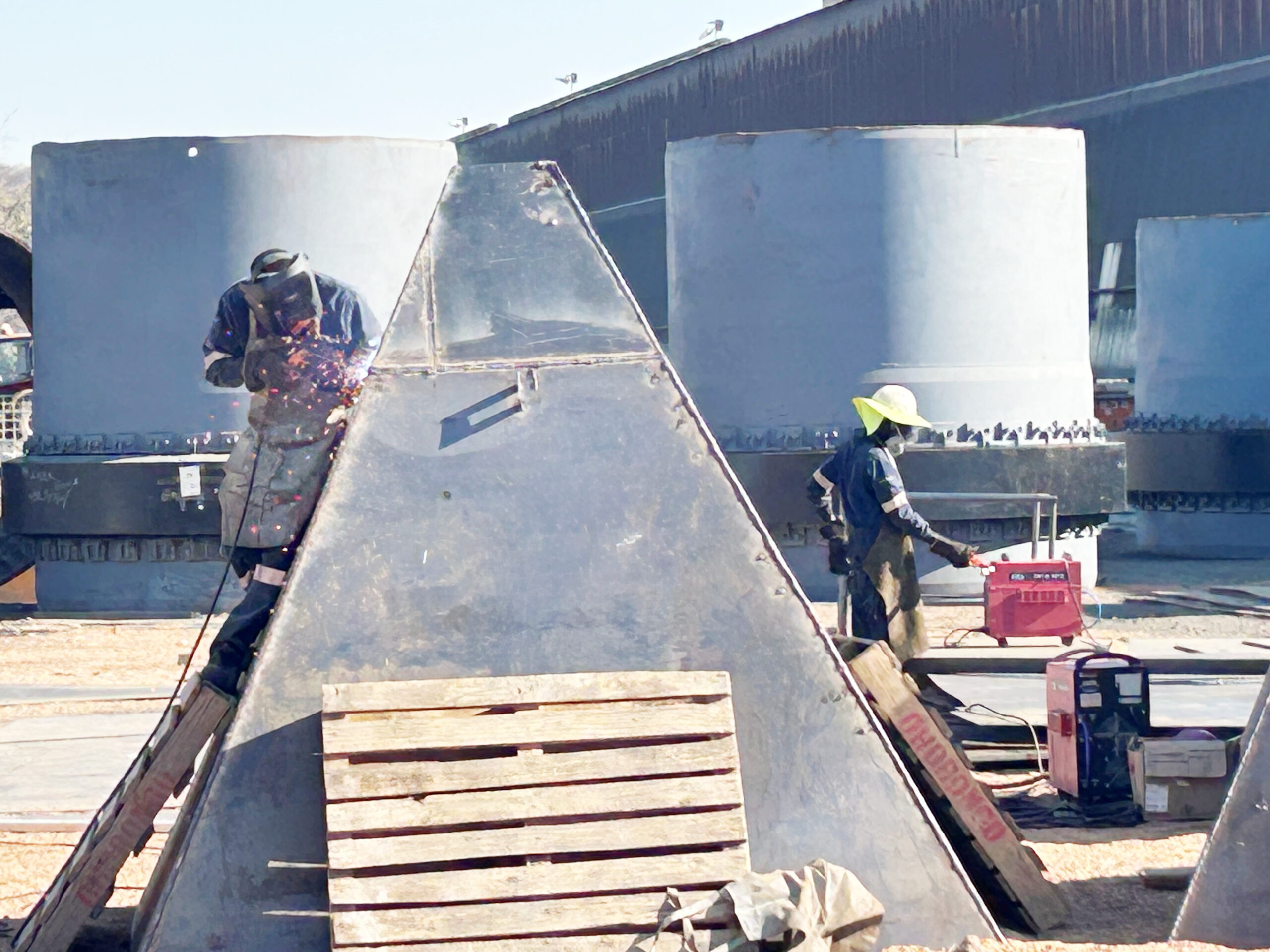

The Sinomine Tsumeb Smelter, traditionally a cornerstone of Namibia’s industrial mining capacity, is currently undergoing a critical realignment.
It is in the process of committing N$2 billion for the development of a multi-metal recycling project. Industry insiders consider this a bold move for Sinomine to focus on polymetallic recovery.
The new recycling plant aims to extract germanium, gallium and zinc from existing tailings, signalling a shift toward the future of tech metals and clean-energy supply chains while addressing environmental concerns.
Through this project, Sinomine Namibia aims to process the slag or leftover material from past smelting processes to extract critical metals, targeting germanium, gallium and zinc production.
This initiative is backed by the planned multimillion-dollar investment, aiming to produce about 33 tonnes of germanium, some 11 tonnes of gallium and around 10 900 tonnes of zinc annually.
The Multi-Metals Recycling Project has already secured regulatory approval and is scheduled to roll out in three phases, with initial production expected by late 2025.
The Tsumeb Smelter has been forced to evolve, as its operations have been heavily impacted by global copper concentrate scarcity.
This scarcity has compelled Sinomine management to place the traditional smelter operations under care and maintenance.
This decision was taken despite the facility being one of only a few in the world capable of processing complex copper concentrates, particularly those containing arsenic and lead, making it strategically important on a global scale.
“We have slag that was generated back in the days that still contains a lot of metals, one of which is germanium, which is a critical mineral.
“The N$2 billion investment by Sinomine entails the new plant to beneficiate the minerals in the slag. The final investment decision has been committed. We have already done the Environmental Impact Assessment, for which we have gotten approval from the environmental commissioner to go ahead with the project. We are very excited about this development,” said Barcelona Tsauses, Sinomine’s director for sustainable business transformation.
During an exclusive engagement with New Era, she stated that the new plant is a three-phase investment, scheduled to commence during Q4 of 2025.
The last phase is expected to be operational by 2027.
“Ultimately, we are a copper concentrate business. We thrive on turning concentrate into sellable copper, which we return to those we sourced it from,” Tsauses added.
What is today known as Sinomine Namibia was historically owned by entities such as the Namibia Custom Smelters and Dundee Precious Metals before being acquired by the Sinomine Resource Group in August 2024.
The group is a global Chinese mining conglomerate.
At the time of the acquisition in 2024, the company had 600 permanent employees, with approximately 98% being Namibians and only a small fraction being foreign nationals.
In June this year, Sinomine announced a temporary suspension of copper smelting operations at Tsumeb due to the global shortage of copper concentrate, mainly caused by overcapacity in major copper-producing regions.
As a result of this operational suspension, a voluntary separation programme was introduced, affecting hundreds of workers.
At the time, the Mineworkers Union of Namibia (MUN) strongly opposed the move.
They cited inadequate consultation and conflict with the merger agreement’s no-retrenchment clause.
Despite this pause in smelting, Sinomine is pursuing a strategic transformation to expand into polymetallic recovery with the major new recycling project.
These upgrades align with Sinomine’s broader aim to transform the town of Tsumeb into a world-class polymetallic processing hub catering to renewable energy, semiconductor and advanced-technology markets.
Meanwhile, Sinomine’s corporate leadership structure balances local and international representation.
Since the 2024 restructuring, Sinomine’s executive team comprises five Namibians and three foreign executives.
Logan Lou Yonggang serves as CEO, supported by local leaders in roles such as human resources, technical services, sustainability and operations.