
With youth unemployment still high in Namibia, many young people are turning to small businesses to survive.
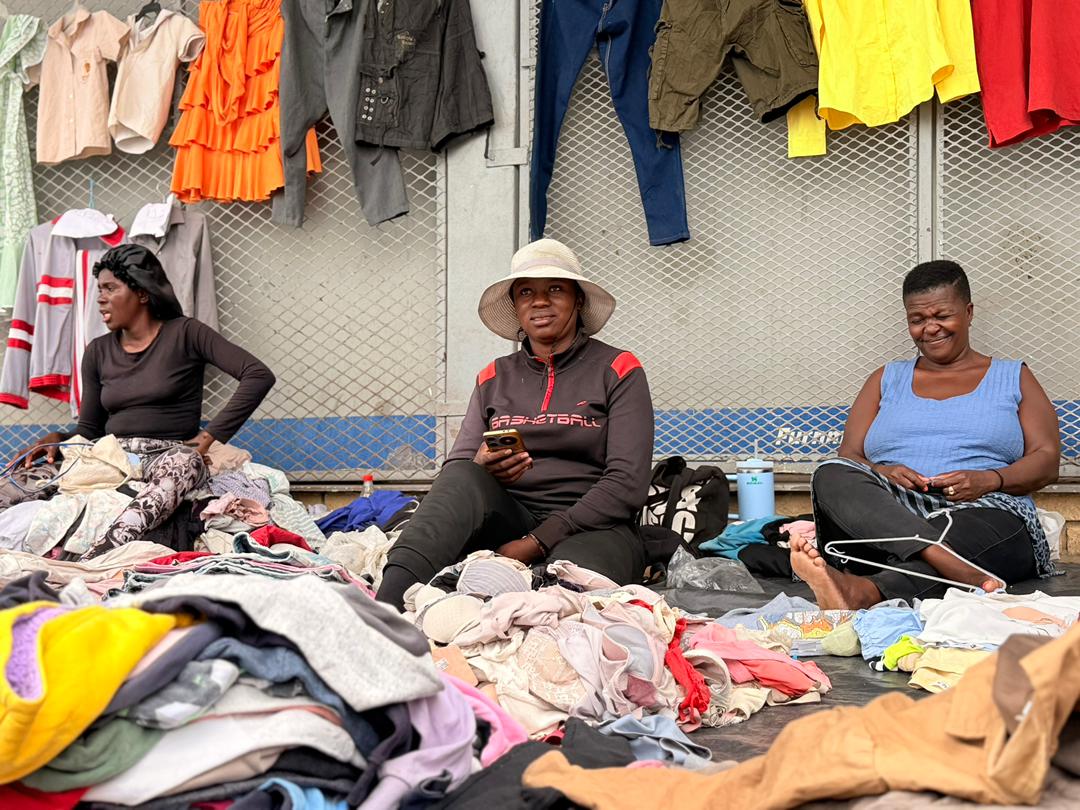
Lydia Nakale runs a small thrift clothing business at Stop n Shop in Okuryangava, Windhoek.
Nakale started her business three years ago after struggling to find employment. She is a graduate of the Namibian Institute of Mining and Technology (NIMT), where she obtained a certificate in Millwright Electrical N3.
Despite her qualifications, she could not secure a job.
“I started this business because I could not afford to pay for my clothes and school needs. I started selling clothes to get money, pay my fees and continue with school,” she said.
Today, her business is her only source of income. She sells second-hand and new clothes, which she buys mainly from Angola and some from Chinese suppliers. The business helps her feed her children and support her family.
However, Nakale says running a small business is not easy. One of her biggest challenges is harassment from city police. She said traders are often chased away because they are operating illegally.
“Sometimes the police would come and tell us to leave. We must pack our things and go. There were days when they even took some of my goods,” she said.
Another major challenge is the high cost charged by the Namibia Revenue Agency (NamRA). NamRA is responsible for collecting taxes and duties on goods entering the country. Nakale said small traders are heavily affected by these charges.
“When we bring clothes from Angola, NamRA charges a lot. They weigh the goods and charge us VAT and other fees. Sometimes the amount we pay at the border is almost the same price we paid to buy the clothes,” she said.
She explained that although traders still try to make a small profit, the high charges reduce their earnings and make the business very difficult to sustain.
“There are times when you go home without selling anything. Other days you sell a bit. It’s not stable,” she said.
She said small business importers are losing business due to NamRA increasingly unpredictable and high customs charges.
NamRA Commissioner Sam Shivute, last year, in December, urged small online importers to work closely with the agency, saying trade is the “engine of economic growth” and a key driver of business development in the country.
Shivute was speaking during a stakeholder engagement session in Windhoek with “Order with Me” operators, small businesses that help customers buy goods from abroad, mainly from China.
He told participants that NamRA’s goal is to support the growth of small and medium enterprises (SMEs), not to hinder them.
Shivute said clothing imports from countries such as China attract customs fees of 45% plus an import tax of 16.5%, totalling 61.5%. Which small traders feel it’s a bit high.
Nakale said she has never received any government assistance. She started the business with her family’s help and slowly grew it over time.
She believes the government can do more to support small traders, especially young people who are unemployed.
“The government must create an open market for clothes and small businesses. This can create jobs for people like us who have certificates but no employment,” she said.
Despite the challenges, Nakale says she is proud of her achievement and hopes for better support for informal traders in the future.
-pmukokobi@nepc.com.na