

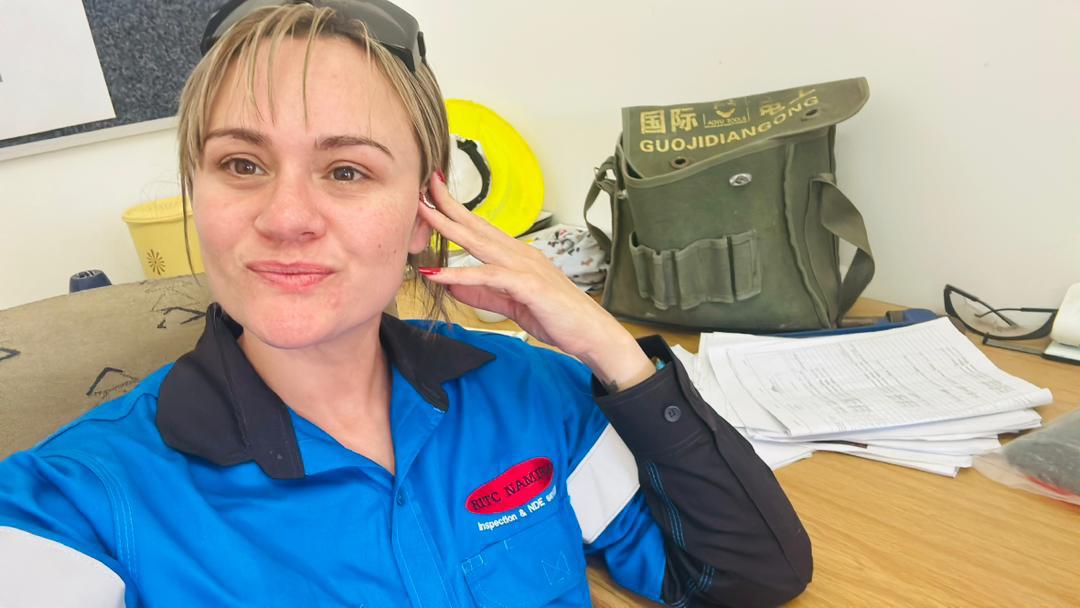

WALVIS BAY- When Ivolene Van Reneen first stepped into the world of non-destructive testing (NDT) in 2009, she started out as a sales representative at RITC Namibia, then a small company servicing the maritime, oil and gas industries. Four years later, she took over as managing director, determined to grow the business against all odds.
“The early days were tough. We had very limited equipment, and sometimes if invoices were delayed, we couldn’t pay salaries on time. But I stayed committed to our principle of delivering quality services and keeping operations running,” she said.
That perseverance has paid off. Today, RITC Namibia has evolved from two people working out of a small house into a fully established company with a team of highly skilled inspectors and support staff. The business now serves a wider market, including the maritime, energy, and oil and gas industries, while maintaining its core mission of creating opportunities and uplifting communities.
Van Reneen says her greatest motivation has always been people.
“By venturing into this business, I realized I could create opportunities for underprivileged individuals. My goal is to help them gain certification, inspire their interest in the industry, and support their further education,” she said.
The impact of RITC Namibia extends beyond its balance sheets. The company supports NGOs, small businesses, soup kitchens, and students while providing stable employment for its staff.
“This business sustains my family, but it also uplifts many others in the community,” Van Reneen adds.
Like many small business owners, Van Reneen faces financial challenges such as high operating costs and delayed payments from clients. Yet she remains optimistic.
“We’ve grown by staying true to our values of quality and resilience. I believe our best years are still ahead,” she said.
RITC Namibia offers a wide range of third-party inspection and NDE services using highly qualified and experienced team of inspectors and technicians.
The biggest challenge is that foreign companies often enter Namibia and offer salaries three times higher than what an SME like hers can afford. This creates a competitive imbalance, making it difficult to attract and retain skilled employees.
“It can also lead to employee bias or dissatisfaction when salary expectations are raised, and sometimes we lose talented staff despite providing a supportive and growth-oriented work environment. Additionally, limited access to advanced training or international exposure compared to larger companies can make it harder for SMEs to compete for top talent.
“RITC does not operate in isolation; we rely on sectors such as marine, energy, and oil and gas, providing specialized services as a contractor. Because of this, we have a deep understanding of the timing and cycles of operations, which allows us to manage cash flows effectively. During slower months, when business activity is low, we already have a back-up plan to ensure continuity and stability,” she said.
-pmukokobi@nepc.com.na