


Small and medium enterprises (SMEs) are the backbone of Namibia’s economy.
They create jobs, support families and help drive local development across the country.
However, many of these businesses face challenges that limit their growth.
The Ministry of Industries, Mines and Energy, through its Industrial Development Directorate, plays an important role in helping these enterprises overcome such obstacles.
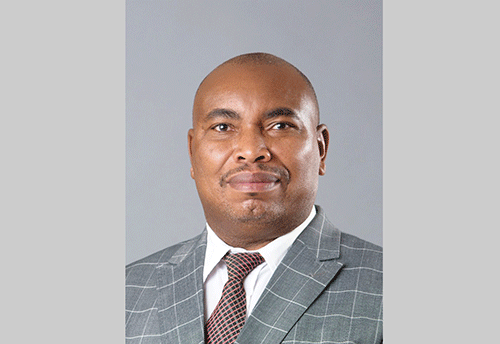
In an interview with New Era, Pinehas Shinyala, acting director for industrial development, shared how the ministry supports SMEs and what plans are in place to ensure more inclusive growth, especially in rural areas.
Shinyala said the ministry provides support to micro, small and medium enterprises (MSMEs) through several key programmes.
Among these are the Equipment Aid Scheme (EAS) and the Industrial Upgrading and Modernisation Programme (IUMP), both of which focus on providing much-needed equipment to small businesses.
“However, support does not stop there. The ministry offers training to business owners through a competency-based behavioural entrepreneurship training programme. This is complemented by business advisory services delivered through Empretec Namibia, aimed at strengthening business skills and encouraging a growth mindset among entrepreneurs,” he said.
Who qualifies for the EAS are Namibian citizens registered with the Business and Intellectual Property Authority and who have a tax clearance certificate for the company from the Namibia Revenue Agency, including proof of qualification.
The EAS caters to businesses such as manufacturing, which encompasses garment and metal fabrication, agri-food processing, gemstone and dimension stone processing (including small-scale mining), pharmaceuticals and cosmetics, refrigeration and air-conditioning, cultural and creative sectors, renewable energy as well as information and communication technology.
Despite these efforts, SMEs in Namibia continue to face several serious challenges.
“Many entrepreneurs still lack the necessary training to make full use of the equipment they receive, which highlights the need for more integrated training and support. Access to working capital remains a major obstacle, with many SMEs struggling to secure the funds required to expand their operations or meet daily business needs,” Shinyala said.
He highlighted the growing need for consistent monitoring and evaluation of the ministry’s support programmes to measure their real impact on businesses.
Furthermore, SMEs require sustained after-care and long-term relationships with government and support institutions to ensure they continue to grow and thrive.
Shinyala emphasised the importance of decentralisation.
The Ministry has established regional offices in all 14 regions of Namibia, ensuring that support is available across the country.
Through annual outreach activities, stakeholder engagements and close collaboration with regional councils and constituency offices, the ministry ensures that rural communities are informed and included in development programmes.
“The support provided is not only general but also tailored to target rural-based companies, with the goal of promoting rural industrialisation and economic inclusion. In addition, expos and trade fairs are used as powerful platforms to share information and connect SMEs with business opportunities. These outreach efforts are part of the performance agreements for staff, ensuring accountability and focus on results,” he said.
Shinyala said while progress has been made, more work remains.
Over 3 200 MSMEs across all 14 regions have benefitted since the programme began.
Since training activities began in 2023, more than 138 MSMEs and 325 individuals have benefitted from business development and financial literacy workshops.