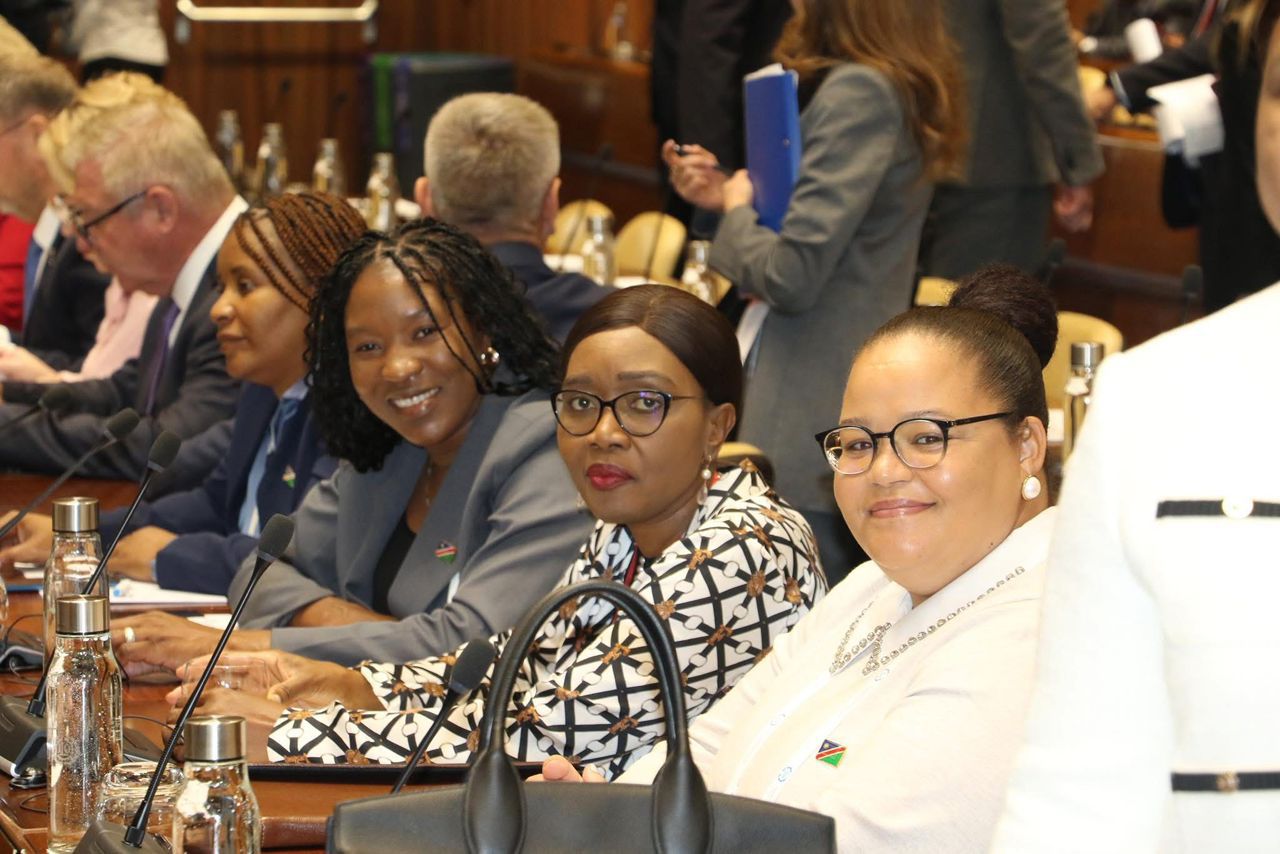

National Assembly Speaker Saara Kuugongelwa-Amadhila says Namibia has been a trendsetter and leader in women’s affairs, peace and security since presiding over the UN Security Council in October 2000.
Namibia has been consistently maintaining a prominent role in advancing the women, peace, and security framework, the speaker said.
She further called for multilateral collaboration and accountability, as they are vital for peace and justice.
Kuugongelwa-Amadhila was speaking at the opening of the Inter-Parliamentary Union (IPU) 15th Summit of Women Speakers of Parliament (15SWSP) in Geneva, Switzerland, recently.
“Although significant strides have been made globally, women remain significantly under-represented in peace processes, underfunded in conflict prevention, and continue to bear the disproportionate burden of conflict,” she said.
The Summit is intended to bring together women in the highest parliamentary decision-making positions to shape the parliamentary agenda based on emerging political, economic, environmental, and social changes that require united and gender-responsive global governance solutions. It offers a platform for women leaders to network and exchange views and experiences.
Namibia has adopted its first National Action Plan (2019–2024) to address not only violence and conflict but also emerging risks such as cyber threats, climate insecurity, and displacement, risks that disproportionately affect women and girls.
“At home, our progress has been tangible. Namibia ranks first in Africa and eighth globally in the World Economic Forum’s Global Gender Gap Report. Our Cabinet reflects gender parity, and we have passed laws such as the Combating of Domestic Violence Act to address gender-based violence, while integrating gender into peacekeeping training and security sector reforms,” said the speaker.
Namibia, in 2020, launched the International Women’s Peace Centre, an institutional response to deepen women’s influence in peace processes.
“We are guided by these lessons: the need for local ownership; for data that is disaggregated by sex and age; for dedicated funding to transform aspirations into action; and for the full dismantling of structural barriers that limit women’s leadership, especially in uniformed services,” she said.
Kuugongelwa-Amadhila also noted that parliaments have an indispensable role as guardians of democratic accountability to champion gender-responsive budgeting, demand transparent reporting on National Action Plan implementation, and enact laws that shield women from violence, whether in their homes, communities, or digital and conflict zones.
“The Women, Peace, and Security (WPS) agenda’s convening power lies in its universality. It is not a women’s agenda; it is a peace agenda. We hold firm to the belief that peace must not only be negotiated at conference tables but felt in the lives of women in every village, border post, and urban settlement,” she stated.
The 15th Summit is taking place during a year of many milestones for the women and girls of the world; 2025 marks the 30th anniversary of the Beijing Declaration and Platform for Action, as well as the 10-year milestone of implementation of the Sustainable Development Goals (SDGs).
The women, peace and security agenda is marking 25 years of existence.