


Heather Erdmann
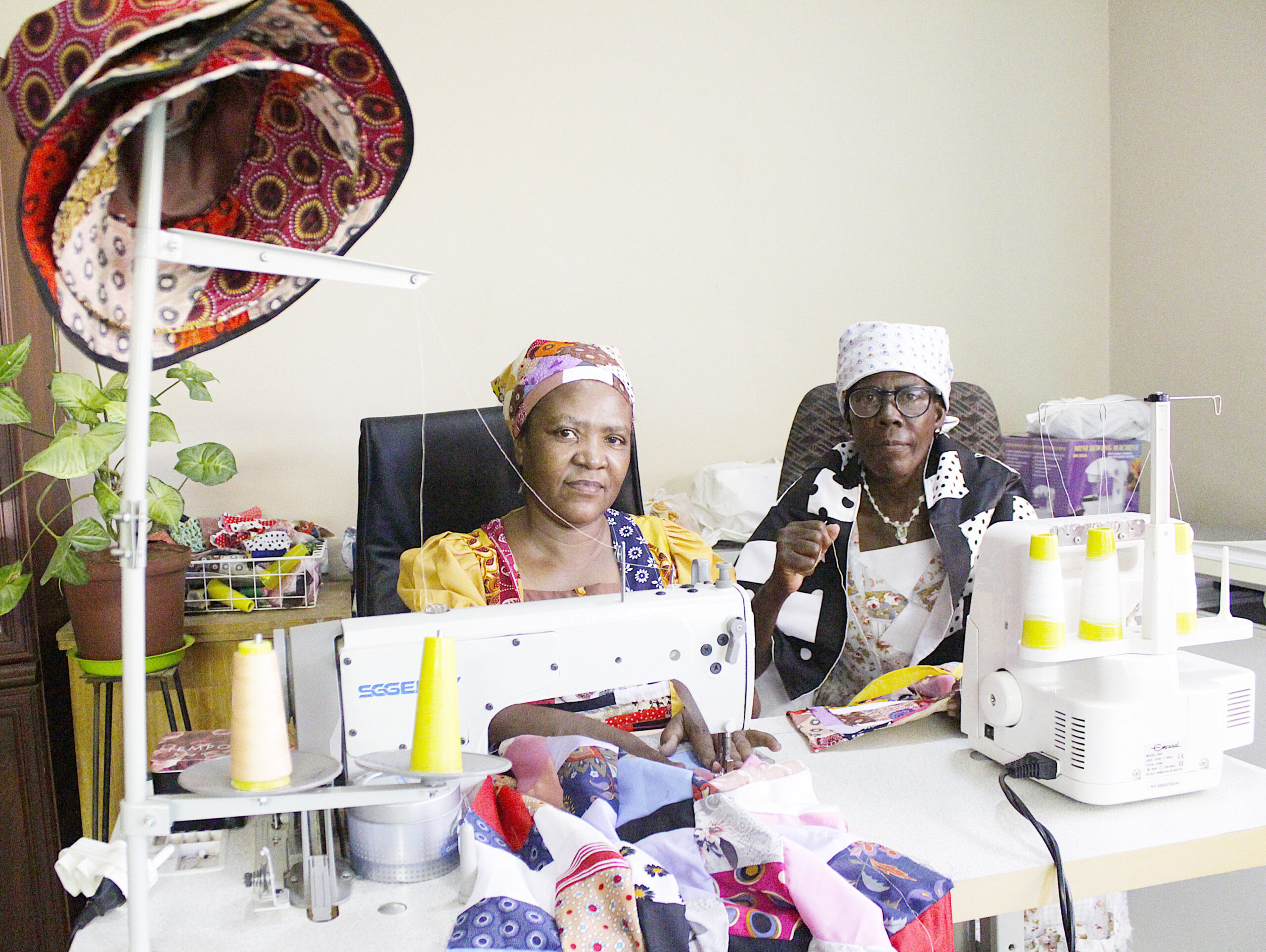
Rehoboth – Late on a summer’s day in Kavuki, colourful scraps of fabric are neatly stored away, waiting to be stitched together in an old-fashioned tradition.
The tradition is that of ‘laslappies’, small pieces of cloths neatly sewn together. The practise is a traditional Nama patchwork. Each stitch, each carefully measured seam, is a tribute to their ancestors and a testament to the lasting beauty of Nama Namibian culture, telling a story older than the Rehoboth town’s history itself.
Margrietha Dausas (61), Helena Elfrieda //Garoës (61), and Lena Valencia /Goâgoses (62), are pensioners, but their hands move with the energy of youth as they continue a craft that has survived generations: “laslappie”. For Dausas, the journey began at the age of eight, stealing small scraps of cloth to make doll clothes while her grandmother worked on real garments.
“When Ouma went out to smoke her pipe, I would quickly grab a piece of cloth and stitch it together before she came back,” she recalls with a smile.
//Garoës, who started needlework in 1985 was taught the basics by her mother but stepped away from needlework for a while. Only in her youthful years she returned to laslappie in 1985 – 1987. /Goâgoses began in 1995 with needlework and started her journey together with //Garoës in the same year under the guidance of Laurena Christ, a local seamstress, making everything from bridal, matric farewell, and baptism gowns.
Dausas, who only formally began the laslappie business in 2017, after years of working as a cleaner at Central Hospital in Windhoek, transferred to Mariental and later finally moved to Rehoboth.
The three women live on opposite sides of town: Dausas and //Garoës in Block G,
/Goâgoses in Block E but their craft keeps them connected. Visiting Dausas’ living room one afternoon, the space was tidy, a total opposite to the chaos that usually surrounds a working laslappie studio.
“When the machines run, lappies and threads are everywhere. Sticking to everything and everyone,” /Goâgoses said.
“But it’s part of the magic. Every thread tells a story.”
Laslappie is more than a hobby, it’s a living tradition. Originally, a Nama tradition uses scraps of material to sew clothing out of necessity. Green pants patched with yellow piece fabric; dresses made entirely from leftovers; the emphasis was on originality and would showcase creativity.
Today, the tradition continues by making vibrant, custom-made garments for weddings, engagements, baptisms, and festivals. Matching outfits are a common sight: women’s dresses mirror men’s shirts, signalling identity, unity, and pride. “You don’t need a ring to identify to whom the couples belong too,” //Garoës says. “Your outfit tells everyone where you belong.”
The craft is meticulous. First, the ‘lappies’ are cut straight, sewn together, ironed, patterned, stitched again, and pressed with the iron once more. Pleats must be carefully inserted in dresses, seams must be precise, and menswear, especially pants, requires the most patience.
“A trouser can take more than a day,” Dausas says.
Easier items like the doekie (headscarves), peg bags, or Charlies (small shoulder blankets) can be made in a day or less and can even be produced in batches.
Their collection is widespread. Peg bags sell for N$100, doeke N$150, dresses range from N$150 for young ladies to N$400 for large ones, shirts cost between N$250–N$300, aprons from N$70–N$200, Charlies N$150, and hats N$180.
They also make bedding (pillowcases, duvets), scattered cushions, Menswear, sling bags, placement mats and other household goods.
“Every item tells a story,” Dausas says. “You can imagine the process, the thought, and the energy that went into it”, she said with a smile.
Despite their skill, their journey was not without challenges. Dausas recalls a bitter experience with a church that commissioned 13 gowns at N$280 each, promising full payment. The church only delivered half the materials, collected the gowns early, and never paid the balance.
“It was the ugly part of the journey,” she says. Yet, setbacks like these have not diminished their passion. “We work with humility,” /Goâgoses says. “Even if people pay half or none, we continue. This is our culture, and it must live on.”
Their work extends beyond business. Every garment carries care, energy, and a unique story. Customers leave feeling proud and confident to wear their traditional attire that defines their cultural identity.
//Garoës dreams of One Namibia, One Nation, and unity through heritage.
Dausas recounts a customer in Gobabis whose dresses drew more clients simply because she exuded confidence. Some of their work has even reached foreigners and clients overseas.
For these three pensioners, laslappie is more than thread and fabric. Its heritage stitched into every fold, a legacy of creativity and resilience. One stitch at a time, they ensure that the vibrant culture of the Nama people continues to shine, proud and unbroken, across generations.
Photo: Heather Erdmann