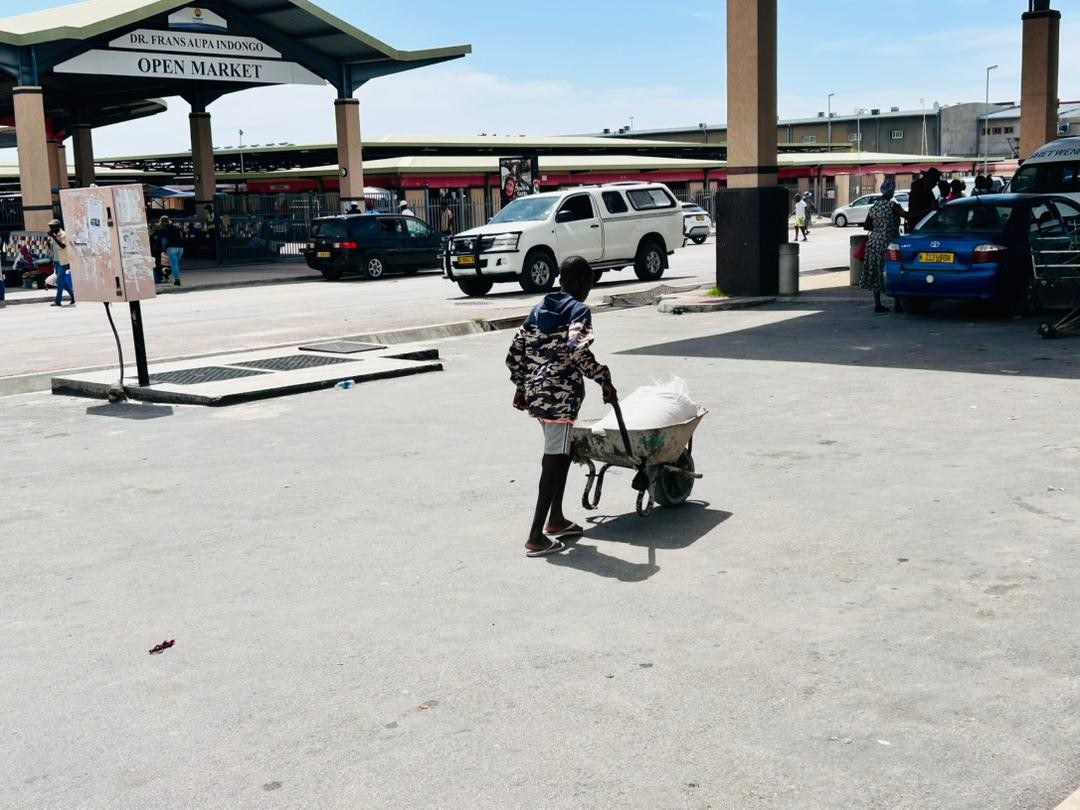

OSHAKATI – Teachers and the Namibian Police in Oshana region have warned against the growing trend of primary school learners skipping classes to work at the Oshakati open market.
They said the practice is harming children’s education and amounts to child labour.
The Oshakati open market hosts “market days” every Monday and Friday to allow community members without permanent stalls to sell seasonal products at cheaper prices.
However, the busy trading atmosphere has also turned the area into a hotspot for school absenteeism.
Investigations show that learners from primary schools in Oshakati and nearby villages miss school mostly on Mondays and Fridays to push trolleys and carry goods for traders and customers.
The children are paid between N$5 and N$10, a small amount that continues to keep them away from classrooms.
Life Skills teacher Dolly Frans from a local school in Oshakati said the practice has become common.
“This is normal mostly on Fridays and Mondays. It is not only happening at our school, but also at Ehenye Okatana primary, Mwadhina gwaNembenge combined schools and nearby villages. It is very bad,” she said.
Frans added that many of the affected learners perform poorly in class due to frequent absenteeism.
She said some parents claim they leave their children in town alone while working in crop fields, a situation she described as irresponsible.
Oshana regional police commander Naftal Sakaria confirmed that the police are aware of the situation.
“We have been on the ground. That is why when they see police officers, they run away. It has been happening, and we will continue monitoring it,” he said.
Sakaria stressed that child labour is illegal, warning that anyone who continues offering these children money will be arrested.
“Some learners even come from distant villages such as Ongenga to hustle at the market,” he added.
Gender minister spokesperson Lukas Haufiku condemned the practice as negligence, saying children belong in school, not at markets.
He urged adults to stop giving money to minors, noting that without payment, they would be discouraged from returning.
He also warned that the presence of street beggars sets a bad example for Namibian children, making hustling appear normal.
Social activist Paulus Amutenya also expressed concern, saying the situation is being worsened by children copying what they see on the streets.
He pointed to Angolan children who beg for money in town as a bad influence on Namibian learners.
“When Namibian children see Angolan kids begging and receiving money from the public, they start believing that hustling and begging is normal and acceptable,” he said.
Amutenya stressed that this sends a wrong message to learners, encouraging them to abandon school in favour of quick cash.
“Children must be protected from such environments. Attending school must remain their priority, not the streets or open markets,” he added
Attempts to get comments from the Oshana education director Pauline Shapumba proved futile, as she was in the meeting at the time.
Government leaders have called on parents, traders and the community to protect children’s rights to education and keep them in school.
– vkaapanda@nepc.com.na