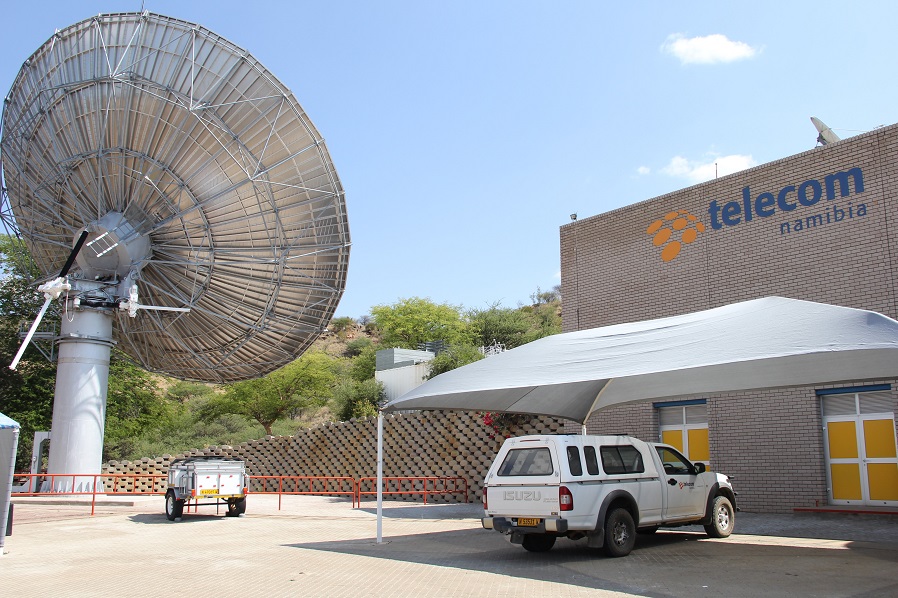

Telecom Namibia has embarked on one of the most ambitious network modernisation drives in its history, committing hundreds of millions of Namibian dollars to overhaul ageing infrastructure, expand fibre and mobile coverage, and position the country for a more competitive digital future.
For the current financial year, Telecom Namibia has earmarked approximately N$300 million in additional capital expenditure for priority network upgrades. These funds are intended to support major capital projects, strengthen existing infrastructure, and enhance the performance and resilience of the national network.
The company stated that the planned investments are critical to improving customer experience, supporting digital services, and ensuring long-term sustainability in an increasingly competitive telecommunications market.
“Collectively, the planned upgrade will contribute to improved customer experience and support Telecom Namibia’s ongoing journey toward digital transformation and long-term sustainability,” said Ndapewa Neshila, Telecom’ spokesperson.
However, modernising Namibia’s telecommunications backbone does not come without challenges. Telecom Namibia must upgrade live networks without destabilising services, integrate new platforms with legacy systems, and manage high capital costs while keeping services affordable. The logistical realities of operating across vast and often remote areas further complicate large-scale rollouts.
In addition, cybersecurity has also emerged as a key concern, with global threats forcing operators to strengthen data protection and network resilience.
Telecom Namibia has responded with a strategic, internally driven approach.
Customer-focused initiatives such as Project Phoenix, aimed at reengineering business processes, and Project Cinceho, which modernises billing and system integration, are central to bridging the gap between old and new technologies. At the same time, the company noted it is investing in advanced cybersecurity measures and robust power backup systems to ensure service continuity.
During the 2024/2025 financial year, Telecom Namibia, a state-owned operator, invested N$230 million in a comprehensive national and international network upgrade programme. The upgrades span critical infrastructure layers, including the IP/MPLS core network, international gateways, DWDM and transport networks, backbone fibre routes, fixed access networks, and key operational support systems. Responding to New Era queries, Neshila explained that the network upgrading programme is driven by a decisive shift away from legacy technologies. In this regard, Telecom is accelerating the rollout of Fibre-to-the-x (FTTx) to homes and businesses, migrating customers from copper-based networks to high-speed fibre, while simultaneously modernising its mobile network with nationwide upgrades to 4G and 4.5G.
These investments are designed to meet rising demand for fast, reliable connectivity and to enable Fixed-Mobile Convergence (FMC), which requires high-capacity, modern core networks.
As of 30 September 2025, Telecom Namibia’s total customer base stood at over 504 000, comprising 160 844 fixed-line and 343 413 mobile subscribers. While this is down from 647 650 subscribers in September 2023, it marks a significant recovery from 461 294 recorded in September 2024.
The sharp decline in 2024 was largely driven by the mandatory SIM registration exercise enforced by the Communications Regulatory Authority of Namibia (CRAN), which resulted in the deregistration of unregistered SIM cards. In 2025, mobile subscriptions rebounded, signalling stabilisation and improved regulatory compliance. The fixed-line segment, however, continues its gradual decline, reflecting global market trends and the shift toward mobile and fibre-based services.
In the short to medium term, Telecom customers can expect faster speeds, lower latency, and more reliable service. The expansion of fibre infrastructure, combined with the activation of international capacity on the Equiano subsea cable, which is already delivering 100Gbps links that ease congestion and reduce costs. On the mobile side, nationwide 4G and 4.5G upgrades, supported by a modern FMC core, promise improved coverage and performance.
For businesses, Telecom Namibia is introducing customised Service Level Agreements (SLAs) to guarantee quality of service and business continuity. Enhanced cybersecurity and power resilience measures aim to ensure that higher speeds are matched by stability and reliability.
Taken together, the scale of Telecom Namibia’s investment signals a clear intent, namely, to rebuild its network for the digital age, regain market momentum, and deliver a faster, more resilient telecommunications environment for both urban and rural communities across Namibia. – ebrandt@nepc.com.na