


Kaviveterue Virere
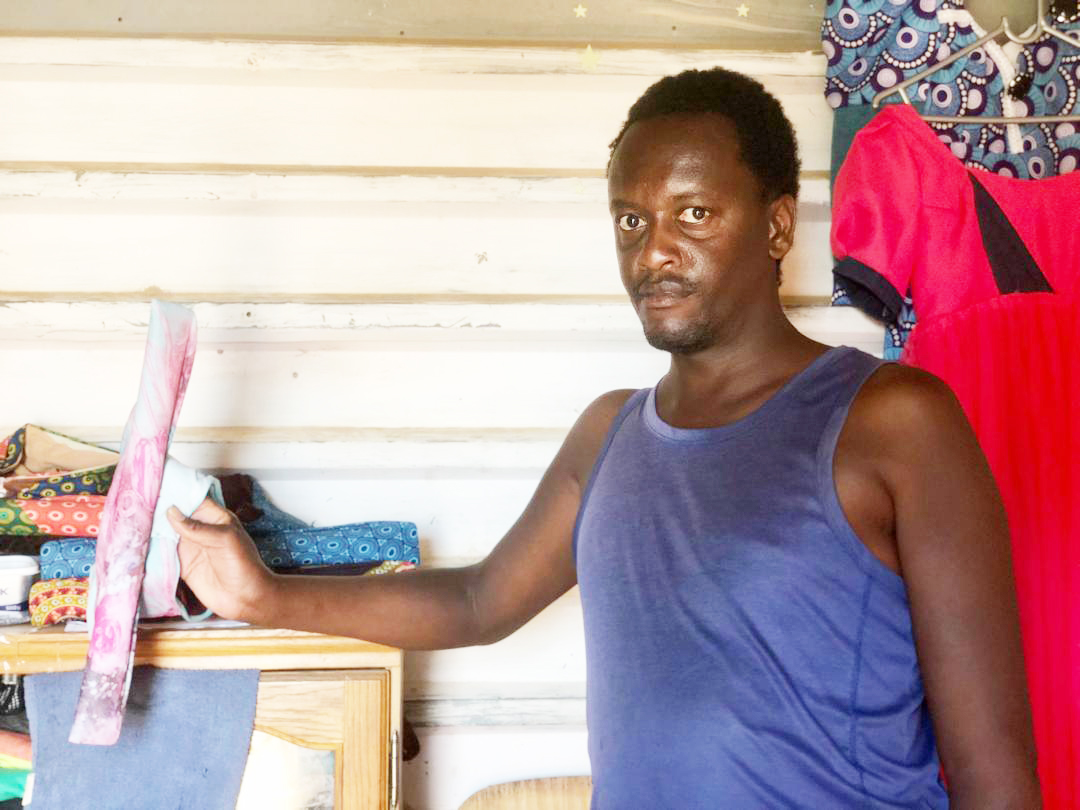
In a world where tradition and gender roles often go hand in hand, Alpha Keja has dared to redefine both.
The 38-year-old from Katutura is one of the few men in Namibia who has mastered the intricate art of crafting otjikaiva, the iconic horn-shaped headgear worn by Ovaherero women.
He has successfully turned this rare skill into a small but sustainable business.
What began as a humble skill learnt from his mother’s side has grown into a thriving small business that is not only preserving cultural heritage but also sustaining a livelihood.
Keja has been in this craft for 23 years, since 2002 to be precise.
He began in the Havana location before moving to the Katutura Single Quarters, where he continues to operate.
He was born and raised in Windhoek.
He completed his early education there before moving to Otjinene for grades 7 and 8 at the Usiel Ndjavera Combined School.
His journey began during school holidays when his mother, overwhelmed with domestic responsibilities, would ask him to assist her.
“Because I was so enthusiastic about this, my mother gave me the opportunity to assist her in finishing the numerous headpieces (ovikaiva),” he recalled.
Each otjikaiva is made for N$80.
During peak times, such as weddings and cultural events like Otjiserandu, he can earn up to N$3 000 in a single day.
Keja said his craft is more than just a business.
It is a family tradition passed down from his great-grandmother to his grandmother and then to his mother. Interestingly, although other girls in his family initially practised the craft, they eventually stopped.
They now turn to him to have their headpieces made.
His life has significantly improved since turning this tradition into a business.
“I don’t depend on anyone because I make a living from this. It gives me the freedom to do anything I choose,” said Keja.
He added that his earnings not only support himself but also his family in the village.
“I share the little money I make with my mother and the children at home,” he said.
However, the journey has not been without its challenges.
Keja faces criticism and stereotypes, particularly for being a man in what is seen as a woman’s craft.
“People may praise you today and then criticise you tomorrow,” he said.
He shared how some customers have refused his work solely because he is a man.
“There was a time I made an otjikaiva for someone. When she found out it was made by a man, she unravelled it and demanded a refund,” Keja recalled.
One of his early inspirations was the late Vevangua Muhondjo, another man who once made ovikaiva.
“He caught me doing this once and encouraged me not to listen to people. He told me that there would always be negative talk, but I should focus on my work,” Keja reminisced.
He has never received formal funding, but kind individuals sometimes bring him supplies like newspapers, Sellotape and pins.
He believes that the government should support entrepreneurs like him, who are working hard but face financial limitations. “The government should help people like us by sponsoring or donating sewing machines and other tools,” he suggested.
He has a message for young men and boys who hesitate to pursue talents they believe are only for women.
“Having your own money is better than always waiting for your parents, especially if you have a skill but are too scared to use it just because you›re a man. When you rely on yourself, you can live a good life,” he said.
While most of his clients are elderly women, Keja said he also serves younger customers.
He enjoys working with the elderly because once they trust you, they become loyal. He observed that “young people tend to complain a lot. You need to be very focused when working with both young and old people because their expectations and attitudes are different”.