


Agriculture minister Inge Zaamwani wants the full dissolution of the beleaguered Agricultural Business Development Agency (AgribusDev) by June 2026.
He said the move is long overdue and fully aligns with the ministry’s push for deeper policy coordination and institutional support.
The latest directive, which Zaamwani gave during the ministry’s recent 2025/26 Performance Review and Planning Workshop for 2026/2027, seeks to further coagulate the sustainable and equitable development, management and utilisation of agricultural resources and institutions. “AgribusDev must be dissolved by the end of June 2026.
This is more than a policy statement.
It is a call to action, a mandate that must shape our strategies, energise our planning and drive our execution. As a government, we carry the weighty responsibility of eradicating poverty, creating employment opportunities and building inclusive economic growth,” said the minister.
Zaamwani told the ministry’s staff unequivocally that the disbandment of AgribusDev and related undertakings is non-negotiable, as they are part of a broader list of key deliverables the ministry has been tasked with.
“Our priorities for agriculture and land reform remain clear. Under key programmes for 2026/2027, we are expected to expand support for staple crop production through agricultural extension services as well as advance green schemes and irrigation development. All these must be delivered and fully implemented within strict timelines,” he said.
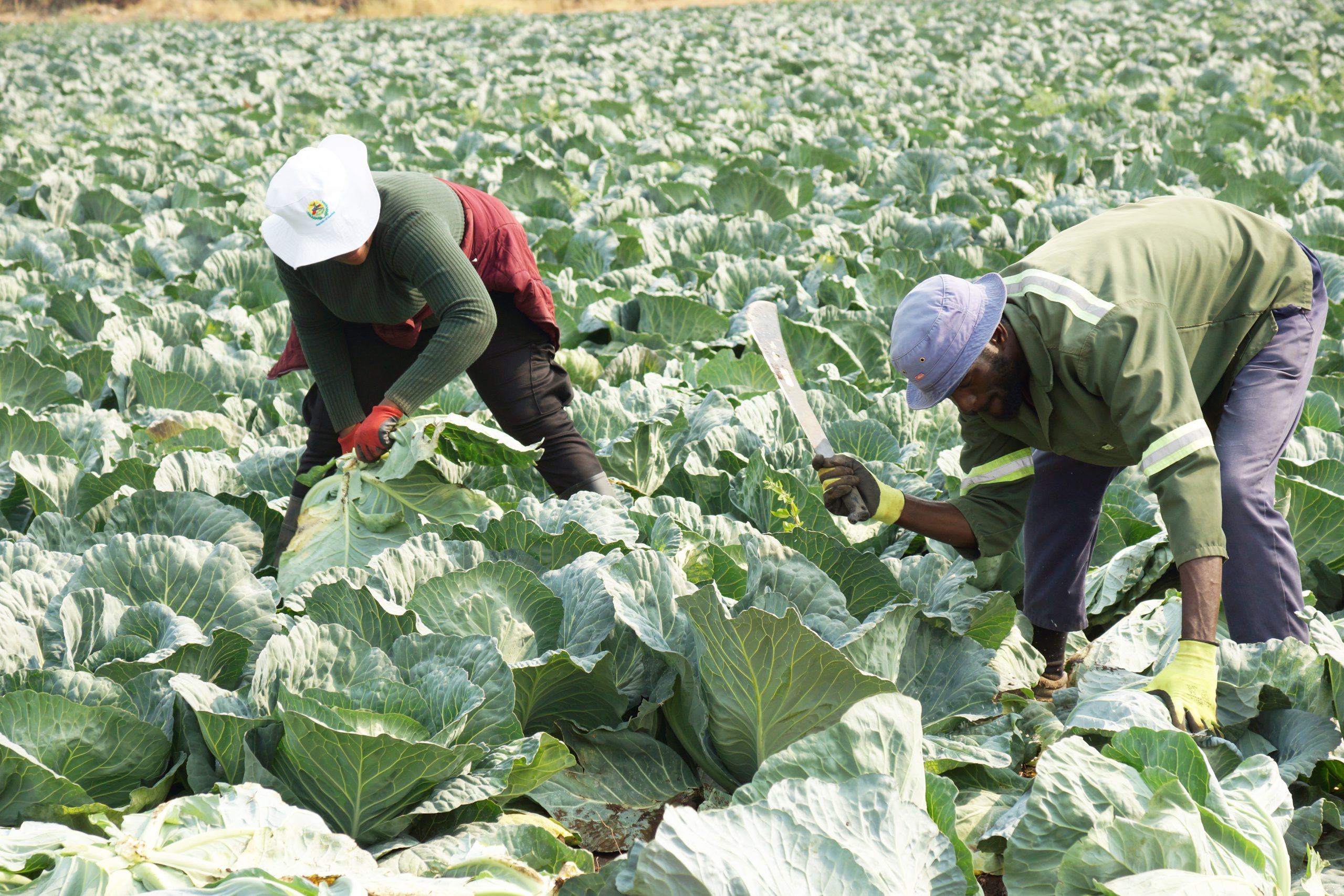
AgribusDev is a State-owned company, established to monitor and manage the government’s Green Scheme Projects.
Its primary mandate is to ensure adequate food production for local consumption and create an ideal environment for achieving the objectives outlined in the Green Scheme Policy of 2008.
However, as of late 2021, Cabinet directed the termination of AgribusDev as the operator of government green schemes projects in the country due to serious governance and financial challenges.
It included the reported overpricing of tenders and large payments for services that were never rendered.
Since then, the management of these schemes has largely transitioned back to the Ministry of Agriculture, Water and Land Reform, which now directly oversees several operational projects
Last year, government appointed Cha-Cha-Cha Management Consultancy to finalise the dissolution process of AgribusDev and facilitate the reintegration of employees into the ministry. Cha-Cha-Cha Management Consultancy was expected to finalise the process in June 2025, but that was extended to September 2025. Now, almost six years later, the dissolution of the AgribusDev process remains incomplete.
Zaamwani warned yesterday that she wants it fully finalised by June this year.
President Netumbo Nandi-Ndaitwah has designated agriculture as the top priority of her administration to drive economic growth, food security and job creation.
She has conducted nationwide tours of projects such as the Etunda Irrigation Project and the Shadikongoro Green Scheme, urging their full utilisation and modernisation.
Troubled past
This publication previously reported that, between 2013 and 2021, AgriBusDev required at least N$1.2 billion to operate the 11 government green schemes optimally.
However, during those eight years, it only received N$490 million or 41% of the amount that was needed to keep green schemes’ heads above water.
When broken down, statistics show that it was only in 2013 that Agribusdev received the budget it required.
That year, the troubled entity got N$10 million. While the agency requested N$55 million from the treasury in 2014, only N$26 million was extended to it.
It got worse in 2015, as AgribusDev needed N$157 million to successfully run the farms, but only received N$74 million from government. Moreover, in 2016, the agency requested a budget of N$227 million.
It received only N$58 million from the State purse. In 2017, AgribusDev requested N$229 million, just to receive N$57 million.
The following year, N$189 million was required to keep taps and tractors running at green schemes, but just N$42 million was allocated. Meanwhile, in 2019, AgribusDev requested N$178 million, and it only got N$88 million from government.
In 2020, there was a significant improvement in AgriBusDev’s funding, as government pumped in N$129 million of the required N$145 million. As of this year, government green schemes are in a state of resurgence, showing measurable production gains after years of decline and structural reform. While the ongoing resurgence faces institutional paralysis in some cases, recent interventions have successfully boosted yields and revenue.
-ohembapu@nepc.com.na