


Lylie Joel
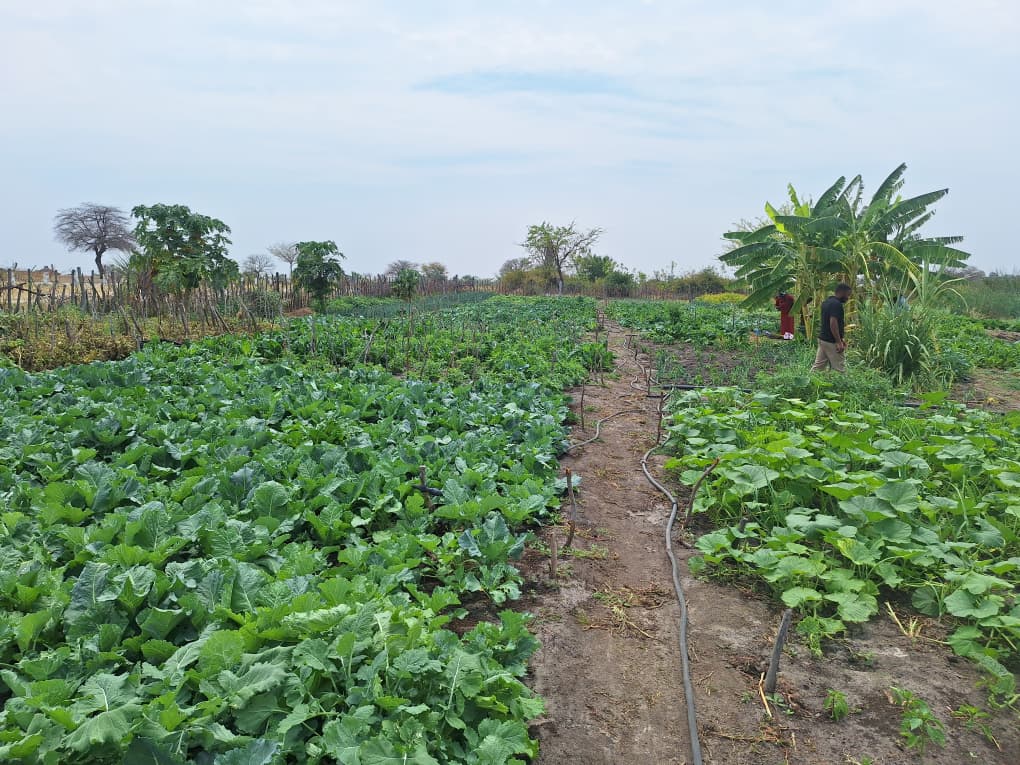
KAHUKURU – In the quiet heart of Kahukuru village, where the Kavango sun beats down on sandy soil and water is carried one bucket at a time, five villagers have found a way to turn scarcity into sustenance.
The Mutayipi Trading Garden was established last year in the Kapako Constituency of the Kavango West region as an initiative that would enable villagers to work together to grow food for their community and earn a living for themselves.
For chairperson Mutayipi Masela, who rallied her neighbours to join forces, the dream was as much about dignity as it was about vegetables.
“When we started, we knew it would not be easy. But our community needed vegetables, and we needed income. This garden has given us both, even with all the challenges we face,” she told Nampa.
However, the challenges are many.
With no piped water, the group relies on a well inside the garden.
Every bucket must be carried by hand to irrigate the thirsty crops.
In the dry season, when the water level drops, the work becomes almost backbreaking.
“The biggest challenge is water, especially in the dry months when the plants need more but the well is low,” Masela explained.
“We carry every bucket. It’s exhausting, but we don’t have another choice,” she said.
The soil, too, resists them.
Salty and unforgiving, it limits what can be grown.
Through trial and error, the group discovered which vegetables can withstand the conditions – spinach, cabbage, tomatoes, onions, carrots, green peppers, mutete and even sugarcane.
They are dependent on basic tools, with three hoes, two spades, one pipe and a single rake shared among all five members. Yet, they continue to plant, water and harvest.
The garden’s impact is measured not only in its produce but also in the personal stories it inspires.
For Petrus Mukendwa (28), joining the project was a turning point.
“Before this, I had no steady income. My children often went without proper meals. Now, they eat fresh vegetables every day, and I can cover their school expenses. This garden changed everything for us,” he said.
Mukendwa represents the younger generation’s commitment to community-based solutions.
His journey reflects how a simple initiative can reshape family life, putting food on the table while instilling pride and stability.
Other members tell similar stories.
Beyond the modest profits, they carry home baskets of vegetables, ensuring their families eat healthy meals in a region known for food insecurity.
Despite being in existence for just over two years, the Mutayipi garden’s influence reaches beyond Kahukuru village.
Local residents often visit to buy fresh produce or simply to observe, ask questions and share ideas.
The project has sparked informal networks of support and inspired discussions about starting similar gardens elsewhere in the constituency.
Yet, growth remains constrained by limited resources.
The members know exactly what they need. They need proper irrigation systems to replace buckets, more farming tools to ease the workload, quality seeds and fertilisers to improve yields, and a fence strong enough to keep out the animals.
“We have big dreams for this garden. With proper support, we could feed more families, create jobs and show other communities that everything is possible when people work together,” Masela said.
For now, she and her team push on with what they have.
Their produce finds its way to street vendors in nearby towns, to neighbours who drop by and to walk-in customers who make the trip to Kahukuru.
For Maria Tokona Sirongo, a satisfied customer, the garden has reshaped the way families in Kahukuru access food.
“The fresh produce quality is exceptional. Their fair pricing helps our families access nutritious vegetables year-round. My children now enjoy eating greens because everything tastes so fresh,” she said.
James Wambi, another village resident, highlighted the project’s convenience and economic impact.
Meanwhile, Johannes Karondo, Kapako Constituency councillor, praised the initiative as a model of grassroots development.
The story of the Mutayipi Trading Garden is about resilience and cooperation in the face of hardship, about finding opportunity in scarcity and about proving that community-driven solutions can flourish where formal support is lacking. “Every harvest tells the same truth: transformation does not always come from large projects with big budgets or from donor aid,” he said.
Sometimes, it begins with five people, a patch of sandy soil, and the determination to keep carrying buckets until something grows. -Nampa