


Namibia’s annual inflation for November 2025 stood at 3.4%, with Zone 1 recording the lowest rate among the three price-collection zones, the Namibia Statistics Agency (NSA) has announced.
Statistician General and NSA CEO Alex Shimuafeni said Zone 1, which covers Kavango East, Kavango West, Kunene, Ohangwena, Omusati, Oshana, Oshikoto, Otjozondjupa and Zambezi, recorded an annual inflation rate of 3.3%. Both Zone 2 (Khomas) and Zone 3 (//Kharas, Erongo, Hardap and Omaheke) recorded inflation rates of 3.4%.
An analysis of retail prices showed that consumers in Zone 2 paid the lowest price for beef stew, at N$101.39 per kg. In Zone 3, the price averaged N$113.45, while Zone 1 consumers paid N$113.49 per kg.
“For onions, Zone 2 recorded the highest average price at N$22.90 per kg, followed by Zone 1 at N$19.33, while Zone 3 consumers paid the lowest price at N$18.30,” he said.
Core inflation, which excludes volatile items such as most food and energy products, stood at 3.6% slightly above the headline rate.
Shimuafeni explained that core inflation is used to measure underlying price movements by removing items affected by sudden shocks such as weather, supply disruptions and geopolitical events.
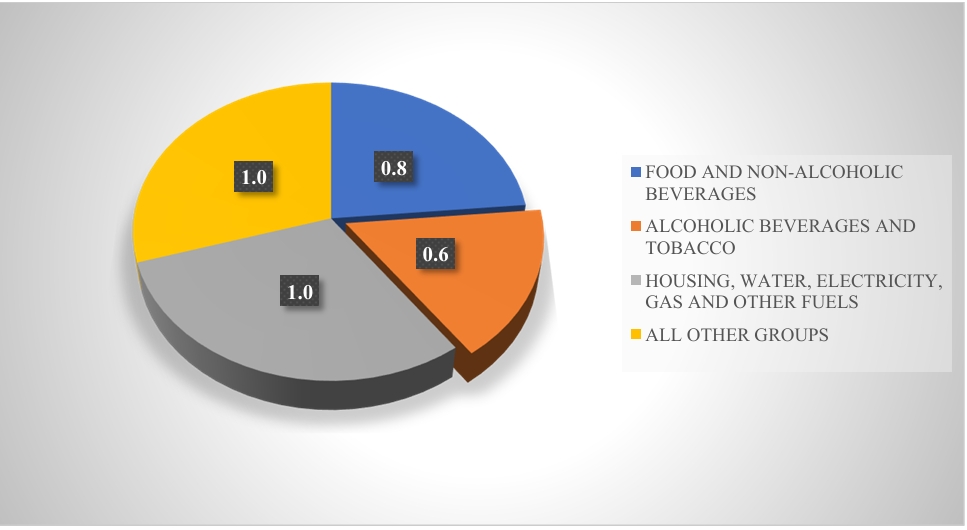
“The main contributors to the annual inflation rate of 3.4% were housing, water, electricity, gas and other fuels contributing 1.0% point, food and non-alcoholic beverages contributing 0.8% points, and alcoholic beverages and tobacco contributing 0.6% points,” he said.
He added that, the highest annual increases were recorded in hotels, cafés and restaurants (4.8%), education (4.3%), housing, water, electricity, gas and other fuels (4.1%), food and non-alcoholic beverages (3.9%), alcoholic beverages and tobacco (3.9%) and recreation and culture (3.8%).
The consumer price index report covers two measures of inflation to reflect the country’s critical inflationary dynamics. The headline inflation, which is the total measure of price increases across all goods and services in an economy, including volatile items, i.e. food and energy, while the core inflation excludes selected volatile items to reveal the underlying, longer-term inflationary trend. Thus, this is considered a more stable measure.
For the month under review, November 2025, the headline annual inflation rate increased to 3.4%, compared to the 3.0% inflation rate recorded in November 2024. Monthly, inflation stood at 0.0%, compared to 0.5% observed in the preceding month.