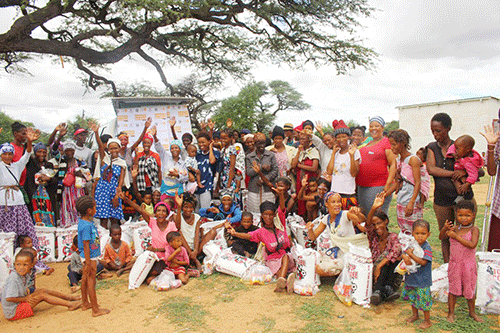

The latest Integrated Food Security Phase Classification (IPC) report shows that Namibia has made commendable progress in lifting more than 694 000 people from high levels of acute food insecurity, with only 456 000 Namibians currently reported to be facing extreme hunger when compared to the 1.15 million people recorded last year.
The IPC report, which was published Tuesday and covers analysis and findings from July to September 2025, further shows that only the Kunene, Kavango West, and Zambezi regions remain in the IPC Phase 3 classification [crisis phase], with the rest of the regions all under IPC Phase 2 classification [stressed phase].
The improvement in overall food security in the eleven regions is largely attributed to the above-average rainfall during the 2024/25 season, increased crop production, improved rangeland conditions, and coordinated interventions by the government and development partners.
“Namibia’s food security situation has improved significantly in 2025 compared to the previous year.
In the current period (July to September 2025), approximately 456 000 people (15% of the analysed population) are experiencing high levels of acute food insecurity (IPC Phase 3 or above), which is a sharp decrease from 1.15 million people during the same period last year.
As per the July 2025 Crops Post-Harvest, Livestock & Food Security Situation Report, crop production in Namibia improved significantly in 2025, particularly in communal areas where output rose by 75%,” reads the report.
The report further reads that “As a result, the majority of households will likely have sufficient food stock projected to last until December 2025. Pasture conditions across the country are also good due to above-average rainfall received, supporting healthy livestock and stable grazing.”
Mixed forecast
Meanwhile, water availability has also improved across the country, with most dams at over 85% full and underground water sources recharged, further ensuring sufficient supply for both people and livestock.
However, the National Strategic Food Reserves (NSFRs) remains low at most silos and storage facilities countywide, with only 3,505.77 metric tonnes available as of 30 June 2025, just 15% of the NSFR’s total storage capacity – highlighting limited buffer stock.
Despite this progress, the food security situation is expected to deteriorate during the lean season, particularly around March next year, with IPC projections showing an increase to 612,000 people in Phase 3.
Regions such as Kunene, Kavango West, Zambezi and Omaheke are all expected to face the highest food insecurity levels (IPC Phase 3 or above).
The combination of rising food prices, dependence on markets, and reduced purchasing power will likely deepen household vulnerability, particularly in rural and marginalised communities.
“This worsening is attributed to the discontinuation of the countrywide drought relief by government in August this year, reduced labour opportunities, poor livestock conditions in drought-prone areas. However, the food insecurity situation in the second projection period (April to June 2026) is projected to show a slight improvement. The number of people in Phase 3 is projected to decline to 408,000, as many households begin to consume their own harvests,” projects the report.
However, Zambezi and Kavango West regions are expected to transition to Phase 2 next year, benefiting from improved rainfall, better water availability, and stronger agricultural productivity.
Nonetheless, Kunene region remains a concern due to flood-related crop damage, veld-fires, and structural challenges such as high poverty, poor infrastructure, and a chronically food-insecure population.
Basis
The IPC is an innovative multi-partner initiative for improving food security and nutrition analysis and decision-making. By using the IPC classification and analytical approach, governments globally, UN agencies, NGOs, civil society and other relevant actors, work together to determine the severity and magnitude of acute and chronic food insecurity, and acute malnutrition situations in their countries.
ohembapu@nepc.com.na