

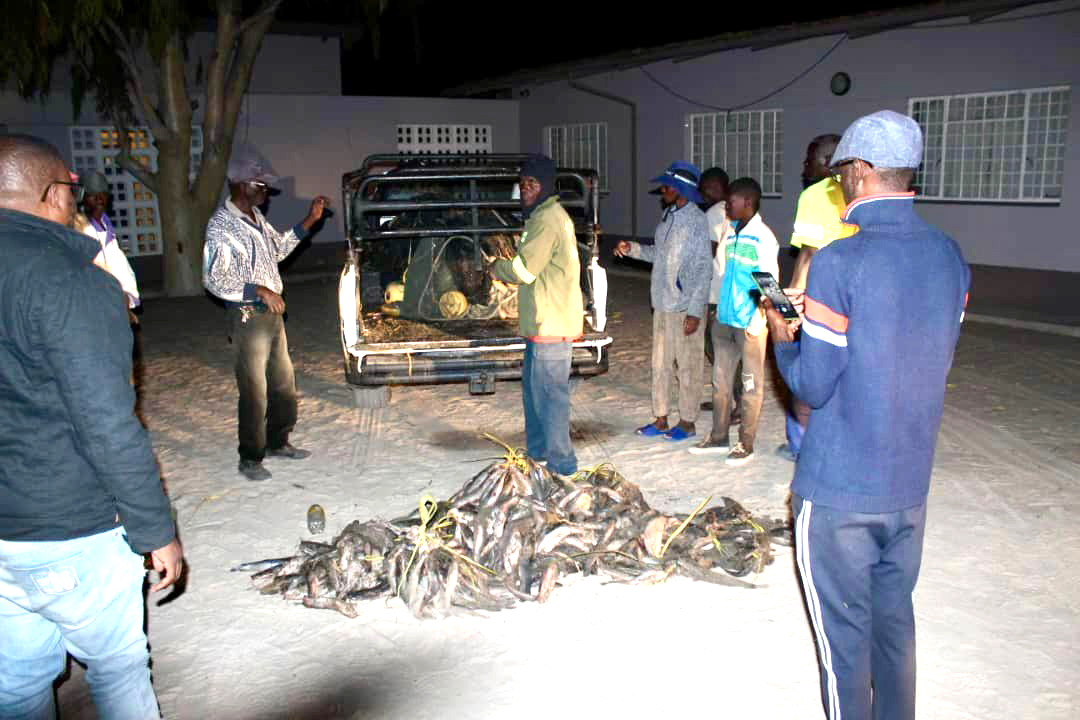

OSHAKATI – Several desperate residents of Oshakati were arrested on Monday after being caught fishing in a sewage pond located behind the Namibian Defence Force (NDF) base, a move the Oshana police and Oshakati Town Council have condemned as dangerous and illegal.
This move is discouraged as it is illegal and a national health risk as the unhealth fish are consumed and sold to a lot of people to eat.
Fishing in the Oshanas, seasonal flood plains that are a lifeline for many northern communities, is only allowed with a licence issued by the Ministry of Fisheries and Marine Resources.
Oshana police spokesperson, Warrant Officer Frieda Shikole, said this is justified under the Inland Fisheries Resources Act 1 of 2003, which governs fishing activities in Namibia’s rivers, oshanas and other inland water systems.
Several desperate residents of Oshakati were arrested on Monday after being caught fishing in a sewage pond located behind the Namibian Defence Force (NDF) base, a move the Oshana police and Oshakati Town Council have condemned as dangerous and illegal.
Warrant Shikole said the arrests were made during a joint operation between the Namibian Police and the Ministry of Fisheries and Marine Resources.
She further said the suspects now face charges under Inland Fisheries Resources Act 1 of 2003.
“They were fishing in a sewage pond, which is not only against the law but also a serious health hazard. The public is further reminded that fishing in the Oshanas or any inland water bodies requires permission from relevant authorities,” she explained.
Shikole added that the law prohibits fishing without a valid permit and outlines strict regulations to preserve aquatic ecosystems and ensure food safety.
According to regulations, fishing permits are required for both commercial and subsistence fishing, and individuals must adhere to designated fishing seasons and methods.
Stating that is to protect fish populations during breeding periods and to prevent overfishing and exploitation of natural resources.
But despite these regulations, several local residents say they have no choice but to risk arrest and their health to put food on the table.
“We are not proud to fish in the sewage. But we are hungry. There is no food, no jobs and my children cry every night. What else can we do?” asked David Shilongo, a 43-year-old father of four from Oneshila in Oshakati.
Selma Ndeutapo, a graduate in education who said did not get a job for six years now, and a single mother of three from Evululuko location in Oshakati, echoed the same sentiments.
“I know it’s dangerous, but hunger is more dangerous. My children haven’t eaten meat or fish in weeks. We go there to the sewage pond because it’s the only place left,” she said.
Another resident, John Haikali, added that high unemployment and food prices have pushed many into survival mode.
“We are not criminals. We just want to eat. If the government can’t help us, they should at least understand why we are doing this,” he noted.
Activists in the areas have called for urgent intervention to address rising poverty and hunger in the region, particularly in informal settlements where access to basic services remains limited.
Meanwhile, the police in Oshana region have issued a stern warning to residents to stop fishing in sewage ponds and follow legal procedures for inland fishing.
Oshakati Town Council have also urged residents to report illegal fishing and cooperate in protecting public health and the environment.
Over the weekend, during a mini rally at Endola in the Ohangwena region, Minister of Works and Transport Veikko Nekundi assured the nation that under the 8th administration, hunger and unemployment will be addressed, ensuring that no Namibian is left behind.