

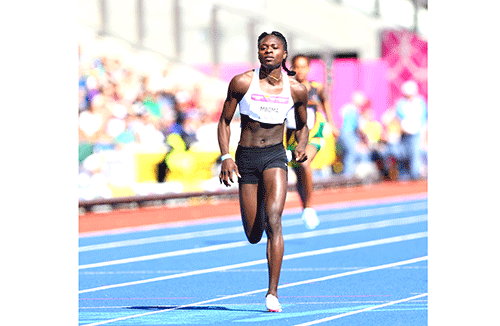

Christine Mboma’s coach, Henk Botha, has welcomed the recent European Court of Human Rights (ECHR) ruling in favour of South African middle-distance runner Caster Semenya. He described it as a positive step in the ongoing battle over World Athletics’ controversial testosterone regulations and a possible opening for Namibia’s own side-lined sprinters.
Botha, who guides Mboma and Beatrice Masilingi, said the court’s verdict could pave the way for affected athletes to mount fresh legal challenges against the rules that have restricted their Olympic ambitions.
“This is a small step in the right direction; this will benefit Christine, Beatrice, and all other athletes in similar positions,” Botha told New Era Sport. “Of course, there’s still a lot of work to be done, but this ruling now provides a legal foundation for us to consider challenging World Athletics’ decision regarding our athletes.”
Last week, Semenya scored a major victory at the European Court of Human Rights (ECHR). The court’s Grand Chamber decided that Swiss courts did not give the South African long-distance runner a fair hearing when she challenged World Athletics’ rules on Differences of Sexual Development (DSD).
World Athletics introduced the DSD regulations in 2018, requiring female athletes with naturally elevated testosterone levels to lower them through medication or surgery if they wished to compete in certain women’s events from 400 metres to one mile.
For Namibia, the impact of the new rule was deeply felt and shocked the entire nation when it was announced a week before the 2021 Tokyo Olympics that Mboma and her compatriot Masilingi, would not compete in their preferred 400m and 800m events after being found to have naturally high testosterone. In a remarkable show of resilience, Mboma switched to the 200m and went on to claim an Olympic silver medal – Namibia’s first Olympic medal since 1996.
Commenting on the ruling, the Deputy Minister of Education, Innovation, Youth, Sport, Arts, and Culture Dino Balloti acknowledged the development and its impact on Namibian athletes although he cautioned they would need to tread carefully and make the right decisions.
“It’s a great development for South Africa, and we will let their own court handle that situation. We have our own battles here back home with our own athletes, and we have to take an informed decision when it comes to the current issue,” he said.
Botha, who has been outspoken in his criticism of the DSD rules, said the Semenya verdict has strengthened their case and highlighted how flawed the processes have been.
“Caster’s ruling basically confirmed that the way these cases have been handled wasn’t fair.
If Caster was denied a fair trial, what about the rest of us?” Botha asked. “It’s a strong message that athletes can’t be side-lined without their rights being properly respected.”
He added that the next logical step would be for Mboma, Masilingi, and other athletes affected by the DSD rules to explore legal options, either through national federations, international courts, or regional human rights bodies.
While World Athletics maintains that the DSD regulations are “necessary and proportionate” to preserve fair competition in women’s sport, Botha believes that growing legal scrutiny is slowly dismantling that narrative.
“It’s still a long battle ahead, but this case shows there’s a path to follow. If athletes unite and pursue this legally, it will eventually force those in charge to relook these unjust rules,” he said.
In 2023, former sport minister Agnes Tjongarero said a committee had been set up with members from the Namibia National Olympic Committee and Athletics Namibia to fight the decision, but it had not received any response from Athletics South Africa and its government.
-mkambukwe@nepc.com.na