


KATIMA MULILO – Major progress in rural electrification, road infrastructure, water services, housing and town development was recorded across the Zambezi region over the past financial year.
This revelation was made by regional governor Dorothy Kabula in her maiden State of the Region Address this week. These developments are part of the government’s broader efforts to improve socio-economic conditions and promote inclusive development in both urban and remote communities.
“We are proud to report tangible results across critical sectors which directly impact the lives of our people, especially in rural areas,” said Kabula.
Chiefly, significant headway was made in rural electrification. “We successfully electrified areas under our four traditional authorities, including the Kalumba electrification project and the 40-kilometre Kongola-Masambo project in the Katima Rural and Kongola constituencies,” said Kabula.
Additional electrification reached residential communities in Kongola and Bukalo Shackdweller, as well as Nampengu village.
“Although work at Ikaba Combined School and Nsundwa Primary School was interrupted by floods, we are ready to resume as soon as the water recedes,” she added.
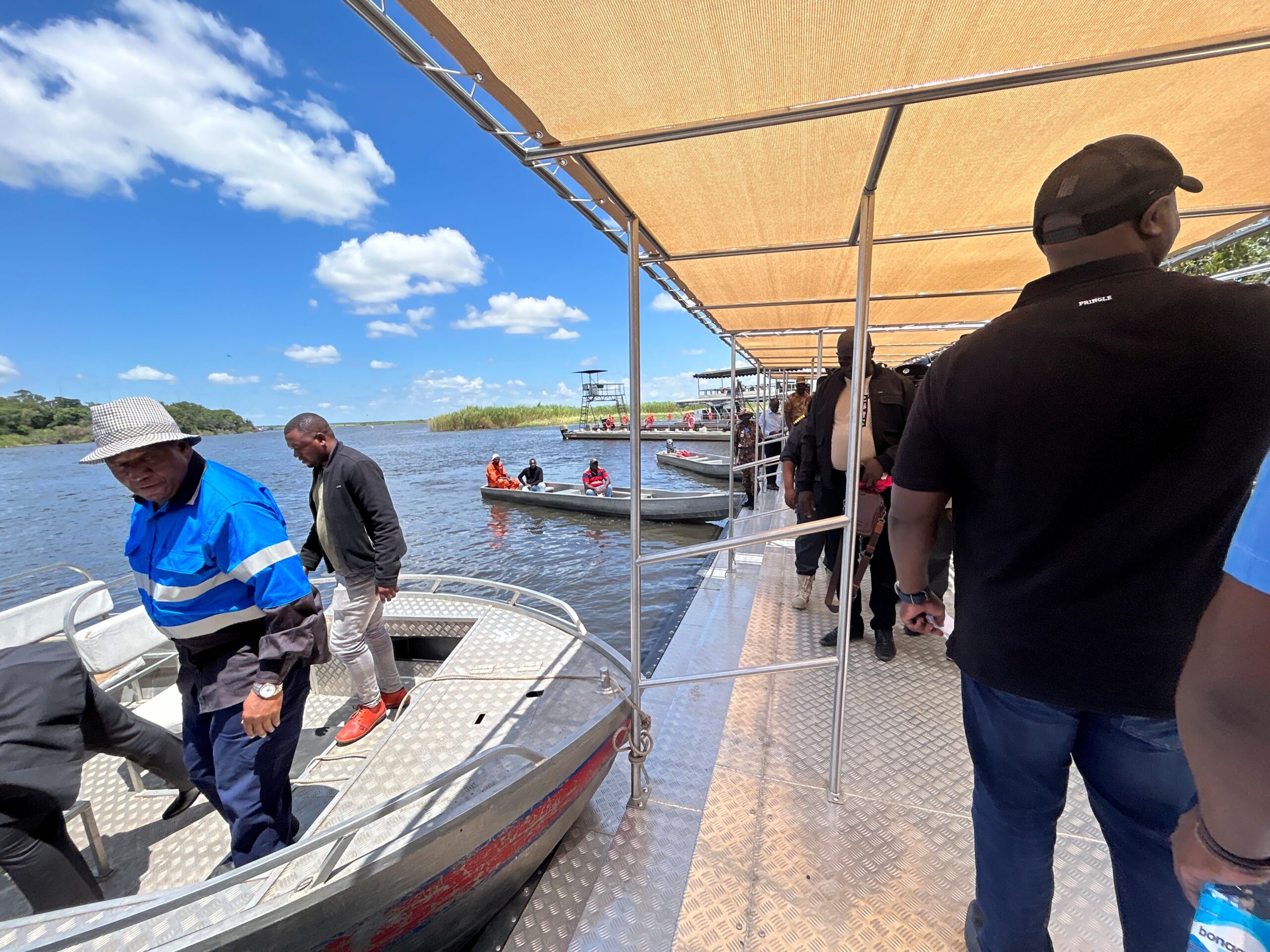
Additionally, transport and road infrastructure also advanced, with the completion of internal road networks and a floating docking jetty on Impalila Island. “This has strengthened mobility and service delivery,” Kabula informed the residents.
Though the Izimwe-Nakabolelwa-Kasika Road project faced temporary delays due to flooding, work on the Masida and Makanga access roads is progressing steadily. “We are unlocking economic potential and improving access in flood-prone areas,” the governor said.
Furthermore, in response to long-standing challenges in water access, Kabula reported the expansion of Kongola’s water infrastructure with the completion of a 5 000 cubic metre ground tank and a 2 500 cubic metre elevated tank. “A total storage capacity of 7 500 cubic metres will ensure a more reliable and sustainable supply,” Kabula explained.
The region also marked the completion of an effluent treatment plant at Ngoma Border Post, while formal water and sewer reticulation in Sangwali and Nchinchimane progressed after coordination with the Zambezi Communal Land Board.
Urban growth and housing initiatives
Town development in Katima Mulilo gained traction, with major housing and land servicing projects taking shape. “Katima Mulilo Town Council has donated land for over 300 homes, partnered with NHE on a 546-house project, and supported private-sector initiatives such as Novice Company’s 246-house project and Namizopol’s 350-house plan, Kabula revealed.
Efforts also include sewer network rerouting, stormwater drainage improvements, and infrastructure upgrades in Nova and Extension 30. “These investments, worth millions, enhance urban liveability and sustainability,” she noted.
Additionally, the Bukalo Village Council also made headway, servicing land for water and sewer in Extension 1 and commencing construction on 27 houses under the Shack Dwellers Federation. “More than 300 additional homes are planned, and 5 000 plots have been allocated to residents under the Build Together Project,” said Kabula.
Bridging socio-economic gaps through social programmes
Efforts to reduce inequality and promote public health were also emphasised. “The construction of 203 VIP toilets under the Rural Sanitation Programme – costing over N$2.9 million – is part of our push to eliminate open defecation,” she stated.
In water access, the region drilled 22 new boreholes and rehabilitated 12 existing ones. A further 15 boreholes were installed, and 105 were repaired, along with 8 short pipeline extensions. Preventive maintenance was performed on 30 engines and 48 solar or electric pumps.
“With rising demand, 246 new water point applications were received and surveyed,” Kabula added, highlighting that water tankers continued supplying communities on an emergency basis. Improved communication and civil registration
Kabula further highlighted progress in communication infrastructure, noting the successful launch of the Impalila Island radio and mobile tower. “This is a major milestone for access to information in our remote communities,” she said.
Additionally, 5 404 births were registered during the reporting period, including mobile outreach efforts. “We’re ensuring that every child is counted and has the right to identity and citizenship,” noted Kabula.
“These achievements reflect our commitment to inclusive, sustainable development and improving the quality of life for all Zambezi residents,” governor Kabula remarked.