

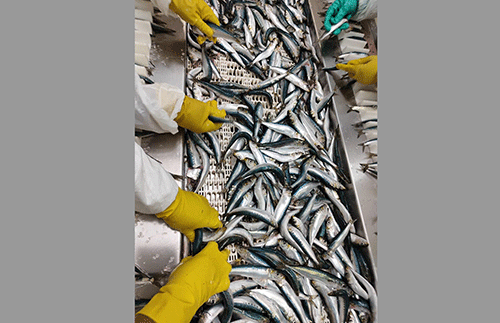

WALVIS BAY – Cabinet has approved a Total Allowable Catch (TAC) of 10 000 metric tonnes of pilchards for governmental objectives for the remainder of the 2025 fishing season, ending in September.
This was announced by the information minister Emma Theofelus last week.
The resurgence of pilchards, after being placed under a moratorium, has become a heated debate after several vessels operating in the horse mackerel sector landed masses of pilchards.
Last month, a total of N$23 million worth of pilchards were landed as bycatch in the horse mackerel sector.
This resulted in renewed calls by the small pelagic sector for the government to allocate a pilchard quota to rescue fishing companies in dire financial constraints due to the moratorium on the fishery.
Theofelus said the Cabinet approved that the TAC be allocated to a company or companies with processing facilities.
“The companies should use environmentally friendly fishing methods, and the fishery caught under this TAC must be processed locally,” she stated.
She noted that the current moratorium will remain in place for at least three more years.
The ban has been in place since 2015 to help the pilchard population recover after years of overfishing.
“The Cabinet further approved for the moratorium to remain in place until the pilchard biomass reaches one million metric tonnes to increase the chances of sustainable recovery,” Theofelus added.
Despite the moratorium, industry players say pilchards are still being caught illegally under the horse mackerel sector’s bycatch allowance.
The Small Pelagic Industry Association recently raised alarm over footage showing a trawler sorting large amounts of pilchards caught in Namibian waters.
Wet Landed Small Pelagic Association chairperson Johny Doeseb said horse mackerel vessels are deliberately targeting pilchards while pretending it is accidental.
“You cannot claim 300 tonnes of pilchards on a vessel as incidental. That’s not a bycatch. That’s targeted fishing, and it’s illegal,” he said during an earlier interview with New Era.
The Marine Resources Act stipulates that only 5% of a catch may consist of species not listed on a vessel’s quota.
In 2023, the landed value of pilchard bycatch was N$428 million.
However, only N$64 million was paid to the State in penalties.
This is despite Namibia’s remaining pilchard factories – Etosha Fishing, Princess Brand and Gendev – struggling due to the ongoing moratorium.
Together, they can employ more than 1 300 people.
Fisheries minister Inge Zaamwani last month told Parliament that the pilchard population is recovering, with recent estimates putting the biomass at 850 000 metric tonnes.
However, she said this is still below the one-million-tonne level needed to restart the fishery.
“There is currently no targeted pilchard fishing taking place. But recent landings are undermining efforts to rebuild the stock,” Zaamwani said.
She admitted that some of the bycatch may be intentional, and the ministry is aware of the concerns.
-edeklerk@nepc.com.na