


Ali Negumbo
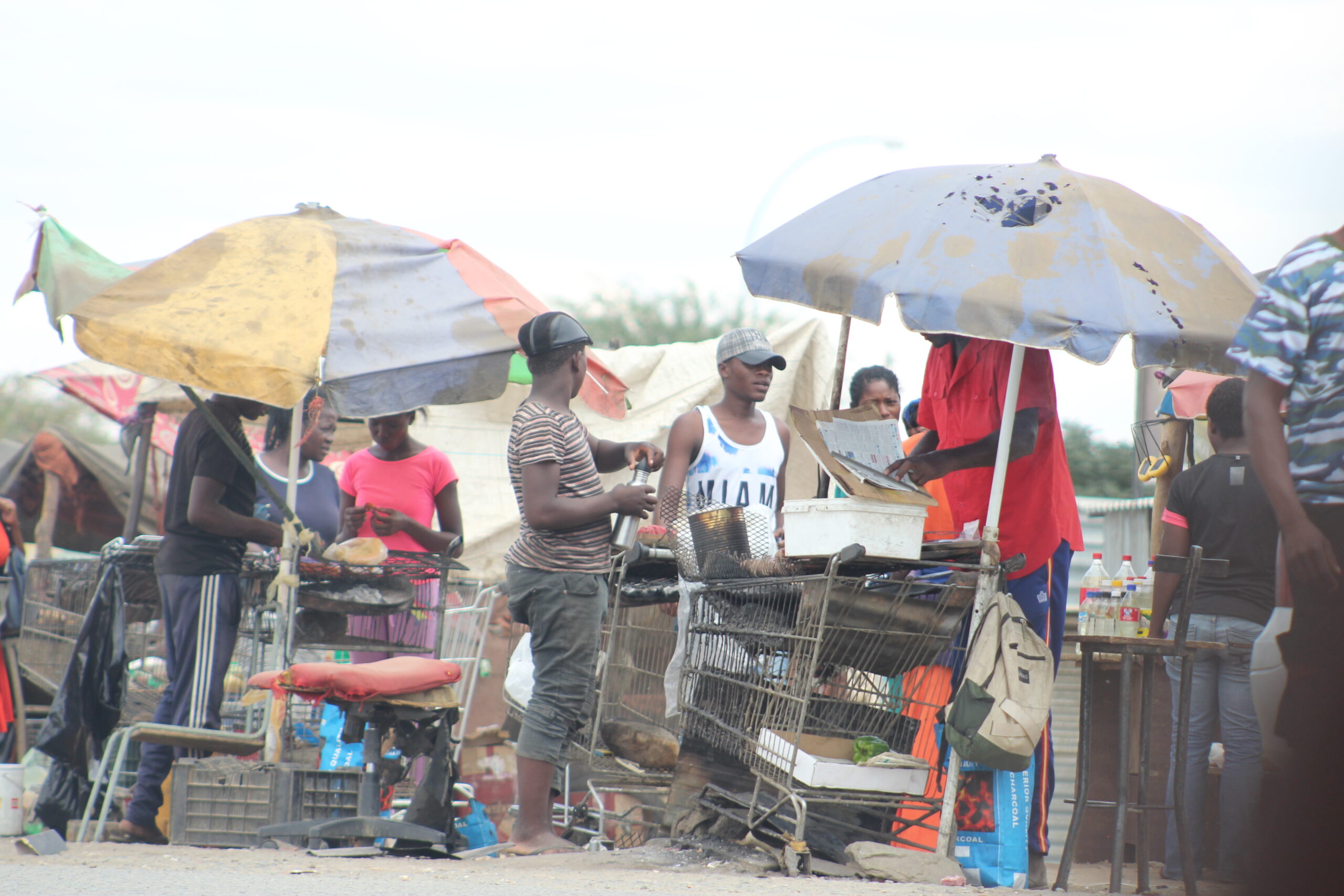
Amidst the busy traffic and tall office buildings of Windhoek’s downtown area, an often-overlooked economic force continues to thrive on the city’s sidewalks. Informal street vendors, many of them young and unemployed single mothers, line the pavements selling fruit, clothes, phone accessories and handmade crafts – not just to make a living, but to survive. Among them is Mommy Iininga, who sells handmade crafts on Independence Avenue.
She told Nampa her entry into the informal economy was driven by necessity, not choice.
“Before I got my permit, my products were confiscated several times.
I had to pay fines to avoid being arrested,” she said.
“When I was applying, they told me I had to be Namibian and sell only handmade items. So, I trained myself in crafting just so I could legally sell,” she said.
She sells wrist beads and engraved bracelets to attract tourists who visit the city centre.
Iininga’s story reflects that of hundreds of other informal vendors across Windhoek, many of whom operate in restricted zones without permits, risking fines, harassment and confiscation of their goods.
They argue that while they want to follow the rules, obtaining permits is a slow, often unsuccessful process.
According to local laws, vending without a permit in designated areas is illegal. The City of Windhoek spokesperson, Lydia Amutenya, said permits are issued on a first-come, first-served basis, with priority given to arts and crafts vendors.
The City also said that all stalls available in the CBD are already occupied, and the empty kiosks are part of a broader CBD Revitalisation Strategy and are not open for use.
Nevertheless, vendors claim that enforcement is strict, and alternative locations are unsuitable.
“I tried behind Shoprite and at the open market,” said Thomas Shiindi, who sells phone accessories. “But it’s not the same. I can make more in one day here in town than I do in a whole week there,” he added.
Shiindi said that designated areas are overcrowded and attract little foot traffic.
“For most of us, it’s either sell here in the city centre and risk getting fined or go hungry,” he said.
The fines are hefty, ranging from N$1 000 to N$2 000. A single penalty can wipe out a week’s earnings.
Worse, some vendors have had their goods destroyed during enforcement actions, mostly by officials from Windhoek City Police.
“My oranges and apples were confiscated,” said a young vendor near Wernhil Park.
“I cried. That was all I had,” he added.
Recent data from the Namibia Statistics Agency shows that in the Khomas region, youth unemployment is 44.2%.
In addition, over 34% of young people are not in employment, education or training.
The broader regional unemployment rate and potential workforce is alarmingly at 55%.
For many, street vending is the only viable option.
A 31-year-old single mother of three sells phone covers and screen protectors from a blanket in Town Square. She said she stays alert constantly – not from crime, but from the City Police. “We rarely see them coming. If they catch you, they take your things or fine you,” she stated.
“If you’re lucky, you get a warning. But where else can I go? This is where the people are,” she said, scanning the horizon for law enforcement.
The Windhoek Municipality announced plans to create a formal open market near the Shoprite parking lot to relocate vendors currently working in undesignated zones.But vendors say these sites simply do not support their businesses.
“People don’t go there to buy phone accessories. It just doesn’t work,” Shiindi repeated.
Another concern growing in the city is storage along Post Street Mall.
Some vendors have reported theft and mismanagement at municipal storehouses.
The municipality responded by saying these facilities are self-managed and encouraged vendors to work together to improve safety.
Amutenya said there have been inquiries about vacant stalls in the CBD, but what look like empty kiosks are part of the CBD Revitalisation Strategy and are not available for use.
“Permits are issued on a first-come, first-served basis, with preference given to arts and crafts traders,” Amutenya said.
Meanwhile, Maitjituavi Kavetu, a councillor with the Affirmative Repositioning group in Windhoek, said the City is listening to residents’ voices, including those of street vendors.
“We understand the challenges vendors face, and the Council has already begun reviewing and relaxing some of the rules to better support informal traders instead of pushing them out,” Kavetu said.
Despite these difficulties, vendors keep going. For many, this is more than just a job – it’s about survival.
“I don’t want to break the law,” a vendor said softly. “I just want to feed my children.”
As Windhoek continues to modernise and redefine itself, the future of the informal sector remains uncertain.
Vendors say they are not asking for handouts. They want dignity, understanding and a chance to work without fear.
-Nampa