

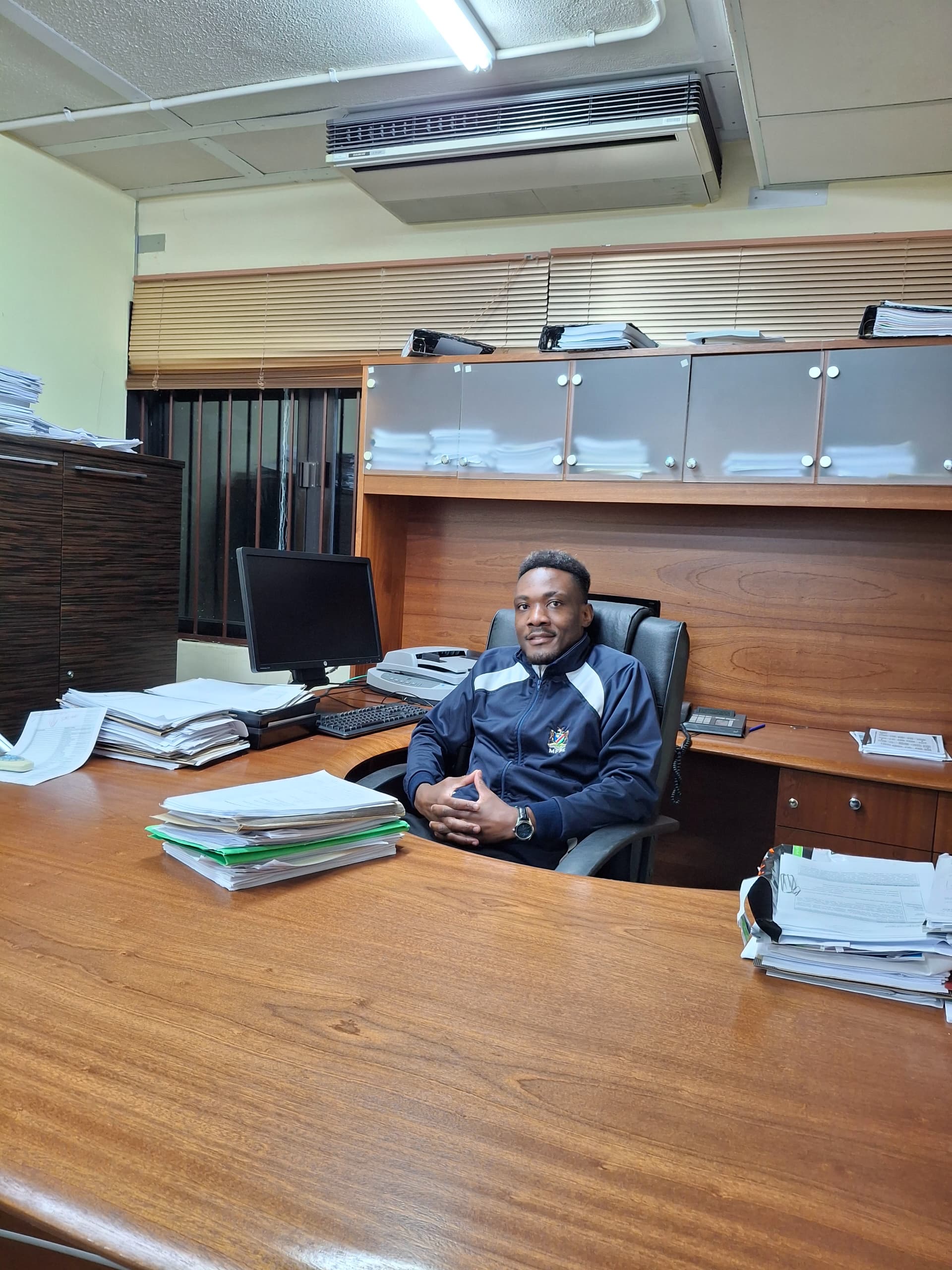

Lahja Nashuuta
Behind the scenes of Namibia’s public service healthcare system is a committed young civil servant.
His daily goal is to provide smooth access to medical aid for all public servants and their families.
This week, New Era met Salomo Tangi Mweuyange Salomo, a 30-year-old administrative officer at the Ministry of Finance and Social Grants.
He deals with the Public Service Employees Medical Aid Scheme (PSEMAS).
PSEMAS is a government-funded medical aid scheme covering over 300 000 public servants and their dependents.
This makes it one of the largest healthcare schemes in the country.
The scheme provides access to a wide range of medical services, including general practitioners, specialists, hospitalisation and prescribed medications.
Salomo handles daily tasks such as registering and activating memberships, along with resolving queries.
“My goal is to make sure no one is left behind by ensuring that all PSEMAS members and their dependents, regardless of their background, are attended to,” he shared.
He joined the ministry in 2024 after completing two internships and a voluntary service programme.
Since then, he has developed into his current role as an administrative officer.
He said his path into public service was deliberate and motivated by a desire to make a positive difference.
“I always wanted to contribute to the development of my country,” he reflected.
He added: “During my internships, I witnessed the impact of effective public administration. Seeing how civil servants could truly change people’s lives motivated me to stay and commit to this path”.
Although Salomo said he enjoys his job, he recognises the challenges it presents.
Managing a large number of daily requests, often complex or urgent, is particularly demanding. Nonetheless, he said he approaches each case with empathy and concentration.
“The work is not just about pushing papers. It’s about listening, being present and finding solutions. Sometimes, members are confused or even desperate. Being able to reassure them, solve their issues and make them feel heard is the most rewarding part of what I do,” he said.
He revealed that, over the years, he has built trust with many members who often recommend him to their colleagues and friends for help.
He recalled many messages of gratitude that strengthen his sense of purpose.
“It’s a great feeling when someone walks in and says, ‘You helped my colleague and they said I should come to you because you get things done’. That tells me I’m doing something right,” he said, smiling.
Salomo credits teamwork and solidarity within his division for his motivation.
“We support one another, and that makes all the difference. There’s a strong sense of shared responsibility in our unit. That keeps me going, especially on tough days,” he said.
He added that the practical training and knowledge gained through his internships formed the basis of his current success, highlighting how his expertise benefits the ministry.
“The combination of classroom theory and real-world experience made me ready to hit the ground running. I now use that knowledge every day to serve the public effectively,” he maintained.
He revealed that, in addition to his main responsibilities, he mentors interns and junior staff, sharing institutional knowledge and contributing to the development of a sustainable service culture within the ministry.
“I see myself as more than just an administrator. I’m a bridge between policy and people. By aligning our day-to-day operations with national strategies, I help translate policy into real impact,” he said. Salomo provided a different perspective when questioned about public perceptions of civil servants being slow or inefficient.
“That stereotype doesn’t reflect the reality I see,” he said firmly.
He maintained: “Many of us are highly motivated, committed and passionate about what we do. We work hard every day to ensure systems like PSEMAS are functioning as intended”.
Plans
Salomo envisions building a long-term career in public service, aiming to advance into a leadership position where he can influence policy reform, foster innovation and mentor future administrators.
“I want to become an expert in our healthcare systems and use that knowledge to lead and inspire,” he said.
“Ultimately, I want to help build a public service that evolves with the needs of our people,” he stated.
For Salomo, this is more than just a job – but it is a calling.
“Public service is my purpose. It’s about serving others, building trust and making a difference. I’m proud to be part of that mission,” he remarked.