


Rudolf Gaiseb
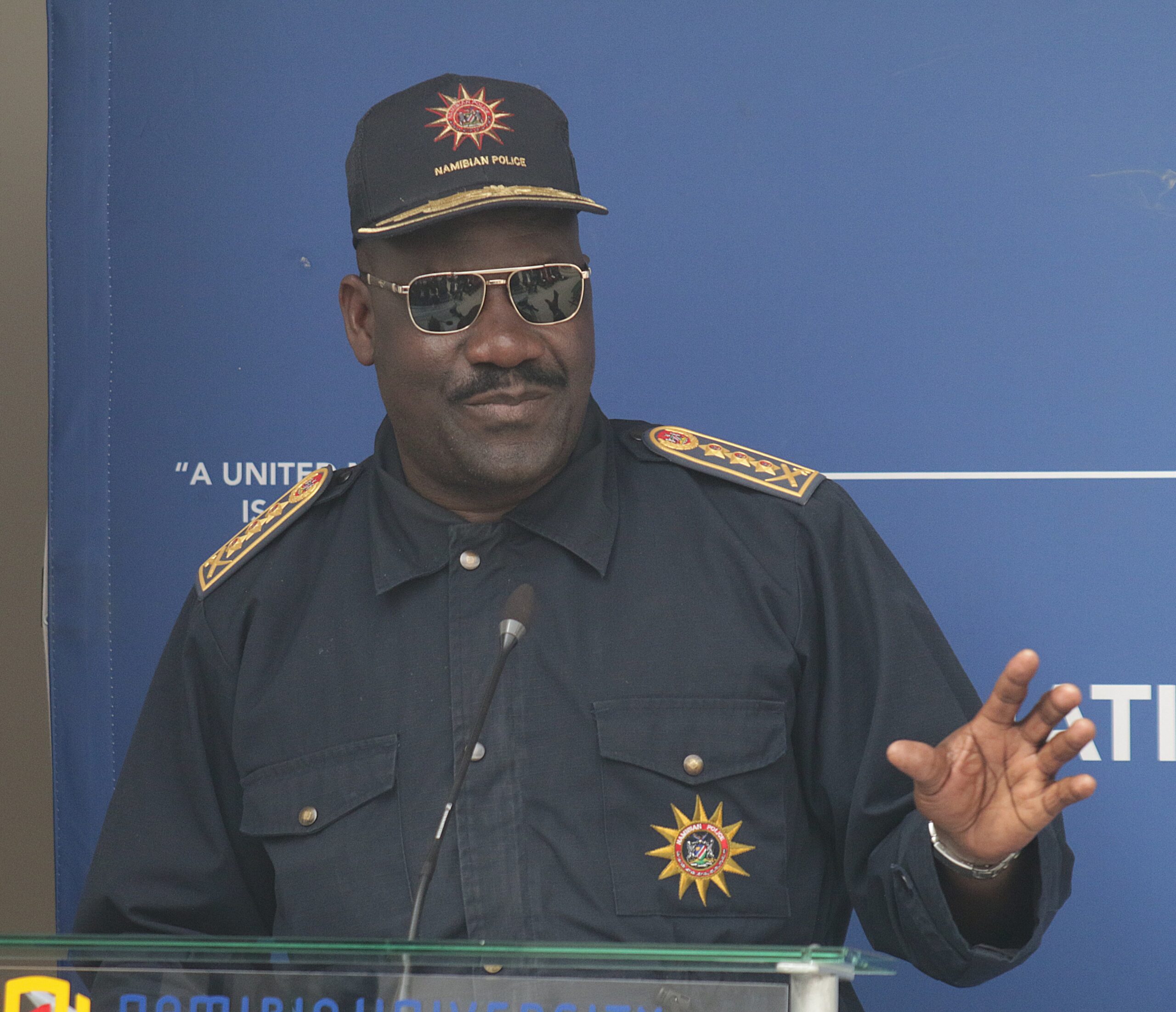
Inspector General of the Namibian Police Joseph Shikongo has once again urged young social media users, especially young women, to refrain from sharing naked pictures of themselves online.
Young women are more at risk, as this material can be used in extortion or cyberbullying, he indicated.
He spoke at the launch of the Ethical Use of Social Media campaign by the Ministry of Information and Communication Technology (MICT) at the Namibia University of Science and Technology yesterday.
Additionally, he warned citizens to stop posting images and videos of car accidents on these platforms.
He said this is irresponsible, as some of these accidents are posted before the victims’ next of kin are informed.
“This campaign is not aimed at policing free speech or restricting responsible online engagement. Instead, it is about promoting ethical responsibility through encouraging every Namibian to think before they post, verify before they share, and engage without causing harm. A single reckless post can destroy lives, careers, and reputations and may land the offender in prison,” he said.
Over the last three years, 11 990 fraud cases were reported, while 9 039 were committed via online platforms countrywide.
During the same period, 4 835 cases of defamation of character and 165 cases of theft under false pretence were also reported countrywide.
Moreover, six cases of assault through threatening and two cases of extortion were also recorded.
This is in addition to six cases of human trafficking in the same period.
Other offences being committed via social media include cyberbullying, online child sexual exploitation, distribution of explicit content without consent, hate speech and incitement to violence.
He said these offences are harmful and, under Namibian law, may result in serious consequences and punishment.
These laws are the Financial Intelligence, Criminal Procedure, Child Care and Protection, Combating of Domestic Violence and Electronic Transaction Acts.
These also include the Communication Act, Combating of Immoral Practice Act, Combating of Rape Act and Combating of Trafficking in Persons Act, among other legal instruments.
Meanwhile, the campaign aims to promote the ethical use of social media, encourage and educate social media users, organisations and institutions to engage in social media activities in a respectful, truthful, and constructive manner aimed towards nation-building.
On the day, ICT minister Emma Theofelus emphasised that misinformation and disinformation, invasion of privacy and mental health affect thousands of our workforce, both adults and youth, and result in the loss of life of productive citizens.
She noted fake news can mislead, cause panic and even influence critical decisions that affect communities.
“It is essential that we cultivate a culture of critical thinking, questioning the sources of information, cross-verifying facts and resisting the urge to share content that we have not confirmed. Before posting or sharing, let us pause and ask ourselves, Is this information accurate? Is it from a credible source? Our collective vigilance can curb the spread of false information and uphold the integrity of our digital spaces,” she said.
Nevertheless, the campaign was developed together with the Club de Madrid, the world’s largest forum of democratic former presidents and prime ministers.
It takes place within the framework of the Women and Youth in Democracy Initiative, a European Commission-funded project aimed at strengthening the rights and participation of women and youth in public and political life, recognising them as key actors of change.
Club de Madrid will be supporting the campaign in Namibia through a youth-led approach towards ethical social media use.
The ministry stated that it will be an ongoing campaign, and no end date has been set.
Club de Madrid will work together with Junior Chamber International Namibia, a local non-governmental youth organisation, to deliver their support to this initiative.
Photo: Heather Erdmann