


Mulisa Simiyasa
KONGOLA – Located about 121 kilometres south of Katima Mulilo in the Zambezi region, the site of the former Kamenga military base stands as a powerful reminder of Namibia’s liberation struggle.
Once a South African Defence Force installation, Kamenga was a key battleground in the eastern and southern Zambezi, witnessing fierce clashes between the apartheid regime and fighters from the People’s Liberation Army of Namibia (PLAN).
As Namibians gather in Katima Mulilo to commemorate Heroe’s Day yesterday, they also reflect on the many lives lost in confrontations around this base, where local villagers were often caught in the crossfire.
Today, while the physical structures have mostly disappeared or are in ruins, the site remains deeply etched in the collective memory of the region.
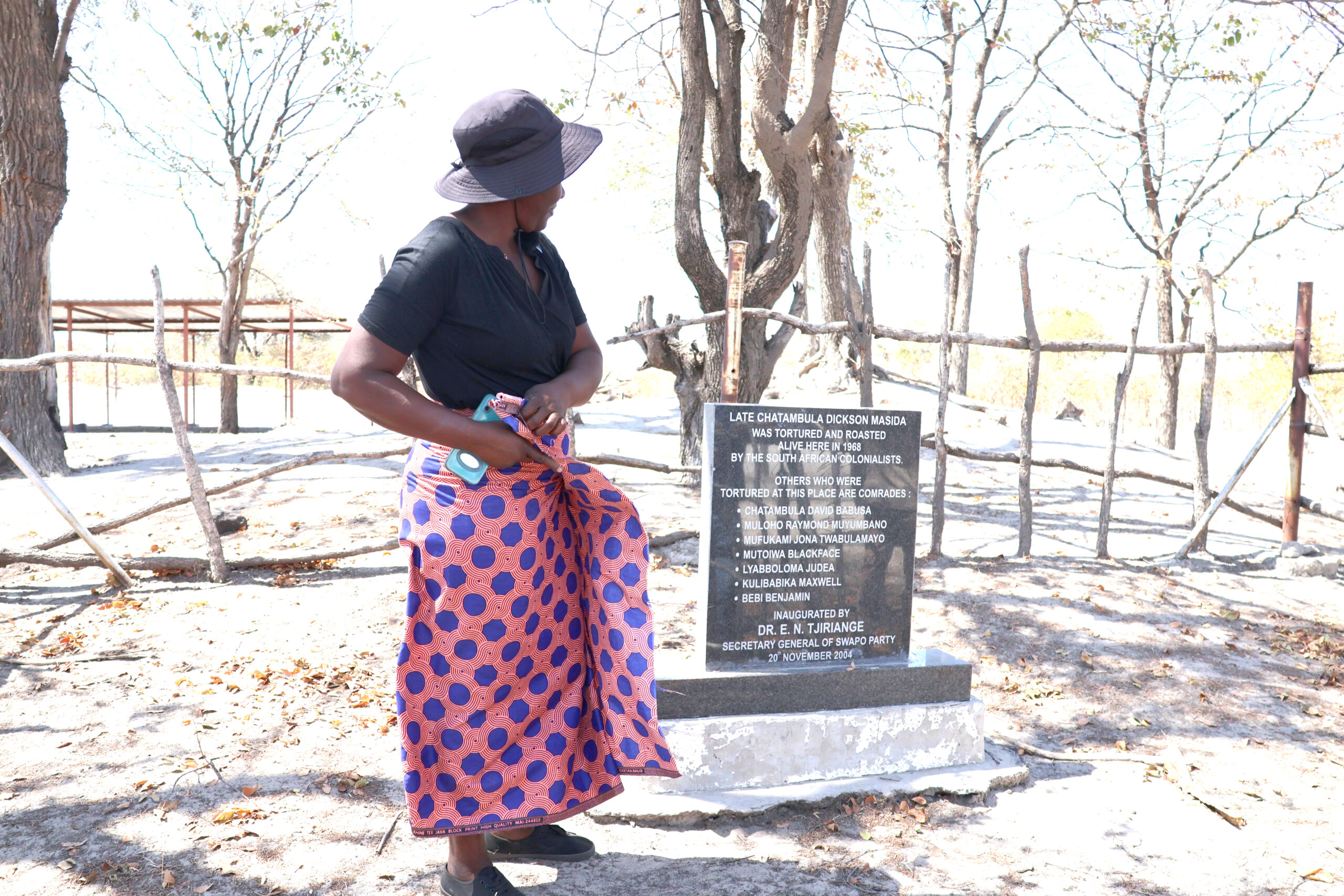
Retired Namibian Defence Force Captain, Richard Kopano, who recently toured the former base with a team from Nampa, highlighted the strategic importance of the battles fought there as early as 1968.
In an exclusive interview, Kopano, a recognised war veteran, explained that Swapo’s guerrilla warfare tactics were heavily employed at Kamenga.
These battles marked a shift in the struggle after the first shots were fired at Omugulugwombashe in the Omusati region on 26 August 1966. Many war veterans from the Zambezi region, including former governor Lawrence Sampofu and Patrick Mwampole, participated in these engagements.
The remnants of the old base are still visible today – a dilapidated military structure, barracks, a well, military holding cells, and a wire fence. The names of some South African soldiers are even still visible. “This former base was constantly attacked by our Swapo soldiers who had crossed into Namibia with a plan to attack it and retreat back into Zambia,” Kopano shared.
The old base, which is situated in thick bushes about 50 metres from the main Singalamwe-Kamenga road, is still considered dangerous as it has not yet been cleared of landmines.
Another war veteran, Phillemon Nepaya, also known by his combat name ‘Haipinge,’ joined PLAN at the age of 20 and later fought on the eastern front.
He participated in many battles across what is now the Zambezi region, specifically highlighting Kamenga and Ofinoti as particularly ‘difficult’ battlefields. He described Kamenga’s terrain – thick bush, sandy soil, and open plains – as a significant challenge for the combatants.
Nepaya is part of a generation of freedom fighters who endured immense hardship to lead the national liberation struggle to a successful conclusion.
This year’s official Heroes’ Day commemorations will be held at the Katima Mulilo Sports Stadium, where President Netumbo Nandi-Ndaitwah will deliver the key address.
-Nampa