

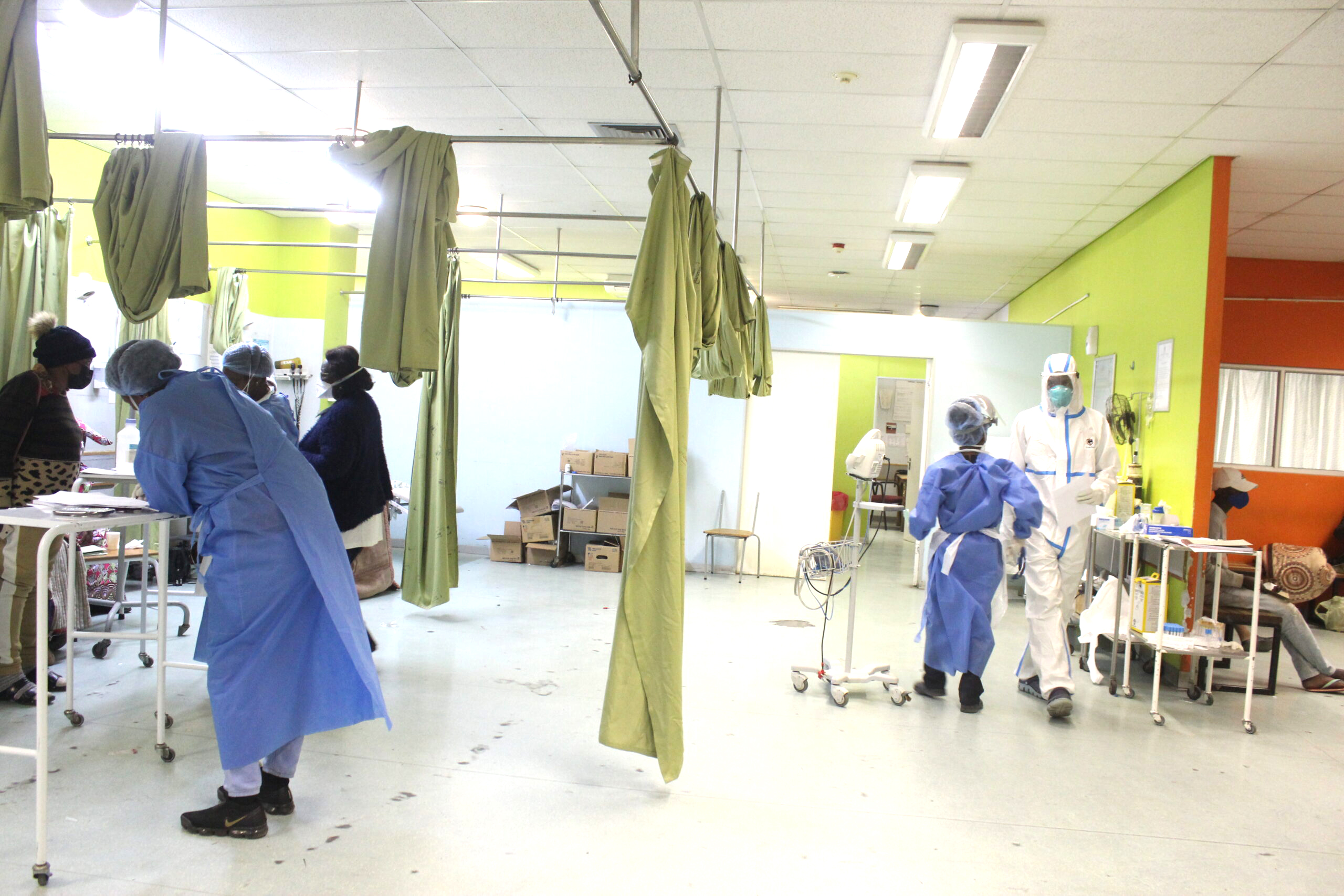

Namibia is leading most African countries in the race to achieve the globally accepted and World Health Organisation (WHO) certified 95/95/95 HIV/Aids targets.
The targets translate to 95/95/95 HIV testing, treatment and viral suppression targets aimed at closing gaps in HIV treatment coverage and outcomes in all sub-populations, age groups and geographic settings.
The first 95 calls on countries to at least have 95% of people living with HIV know their status and the second 95 is that at least 95% of people who know their status must be on treatment and the third 95 is for at least 95% of people on treatment to have a fully suppressed viral load.
On that front, Namibia remains on course to achieve the full 95/95/95 targets, as the country currently has 94% of people living with HIV aware of their status, and 97% are on treatment, while a commendable 93% of people living with HIV are virally suppressed.
Recently launching the sixth National Development Plan (NDP6), President Netumbo Nandi-Ndaitwah highlighted the success of the country’s health sector amidst challenges and shared how it continues to be the beacon of hope for a large portion of the country’s most destitute.
“Namibia has made significant progress in managing communicable diseases, particularly HIV/AIDS, tuberculosis (TB), and malaria. The country, however, places significant emphasis on maternal and neonatal health (MNH), acknowledging it as a crucial indicator of overall national health. In addition, the Covid-19 pandemic brought to the fore the burden of mental health in the country,” Nandi-Ndaitwah said as she recently launched the NDP6.
Although the country’s public health sector still faces common challenges such as long waiting times, outdated critical infrastructure and shortage of medicines in some cases, Namibia’s public health system remains one of the most resilient, responsive, and ever evolving systems on the continent.
Government, through the National Health Policy, continues to ensure that all Namibians have access to high quality, accessible, acceptable, affordable, effective, equitable, preventive, curative, rehabilitative and palliative health services countrywide.
The country’s health system is parochially categorised, and it includes private health service providers such as private-for-profit, not-for-profit (mission facilities), non-governmental organisations, and informal entities (traditional healers).
Unlike the private health service providers, State-funded public health facilities provide services at a nominal fee, while exempting those who are not able to pay.
Non-governmental organisations play an important role in the delivery of public health programmes, and the government has engaged them through a social contracting framework. Development partners, on other hand, provide technical and financial support.
New HIV infections have halved since 2004, and life expectancy increased by seven years, from 56 in 2005 to 63 in 2019. Despite the high prevalence of HIV amongst women of reproductive age, in 2022, the country attained a coverage of over 95% for the first antenatal care visit at 97%, pregnant women’s HIV and syphilis testing, and maternal antiretroviral therapy. Annually in Namibia, around 12,000 infants are born to mothers living with HIV.
Not only has the country’s public health system responded well to the HIV epidemic, but it also remains one of the best health systems when it comes to viral diseases such as tuberculosis (TB) and malaria.
Namibia’s TB treatment success rate currently stands at 82%, while the country also has a 100% success rate for leprosy cases. In addition, the country has fully developed and implemented the National e-Health Strategy at all 34 district hospitals countrywide.
e-Health Strategy
The e-Health Strategy, an electronic system at public health facilities, was implemented through the upgrading of physical and network infrastructure at all 34 district hospitals.
It utilises and harnesses the power of Information and Communication Technology (ICT) to provide quality healthcare and social welfare services.
“Namibia’s antiretroviral therapy (ART) programme has seen a 6,234-patient increase, achieving a coverage rate of 96.6%. TB services remain free, and this has led to a reduction in mortality rate of 7.7. Malaria services are also enhanced through effective treatments and preventive measures; however, the mortality rate of 0.59 was recorded against the NDP6 target of 0.”
In terms of healthcare professionals training, the country attained a doctor per population ratio of 1:701 against 1:1457, and the ratio for registered nurses per population was 1:177 against 1:270.
Furthermore, the pharmacist per population ratio stood at 1:1715 against 1:2289. Despite this achievement, there remains a skills mismatch in certain healthcare fields.
“The aim is to ensure equitable access to quality health services and products, to attain universal health coverage. By 2030, percentage of the population with access to quality healthcare must increase from 63 to 75%.
The focus is on investing in the development of human resources for health and this involves improving training and education programs for healthcare professionals, ensuring adequate staffing levels, staff retention, and providing continuous professional development opportunities…”
“The aim is to further strengthen the health system’s capacity to control emerging, re-emerging epidemics/pandemics, and public health threats through evidence informed proactive measures,” the President indicated.
Leading in child healthcare
The country equally has one of the best health systems in the area of child healthcare, with vaccination an integral part of its primary health care and child health.
Namibia has seen milestone achievements with the introduction of the Hepatitis B birth dose vaccine, yearly vaccine microplanning as well as the African Vaccination and Maternal and Child Health weeks.
These contributed significantly to improved immunisation rates, including the Hepatitis B birth dose and third dose.
Namibia reached immunisation coverage of 83% for viral hepatitis B birth dose administered within 24hrs and a 3rd dose coverage of 94% in 2021. The birth dose coverage increased to 92% in 2023.
-ohembapu@nepc.com.na