

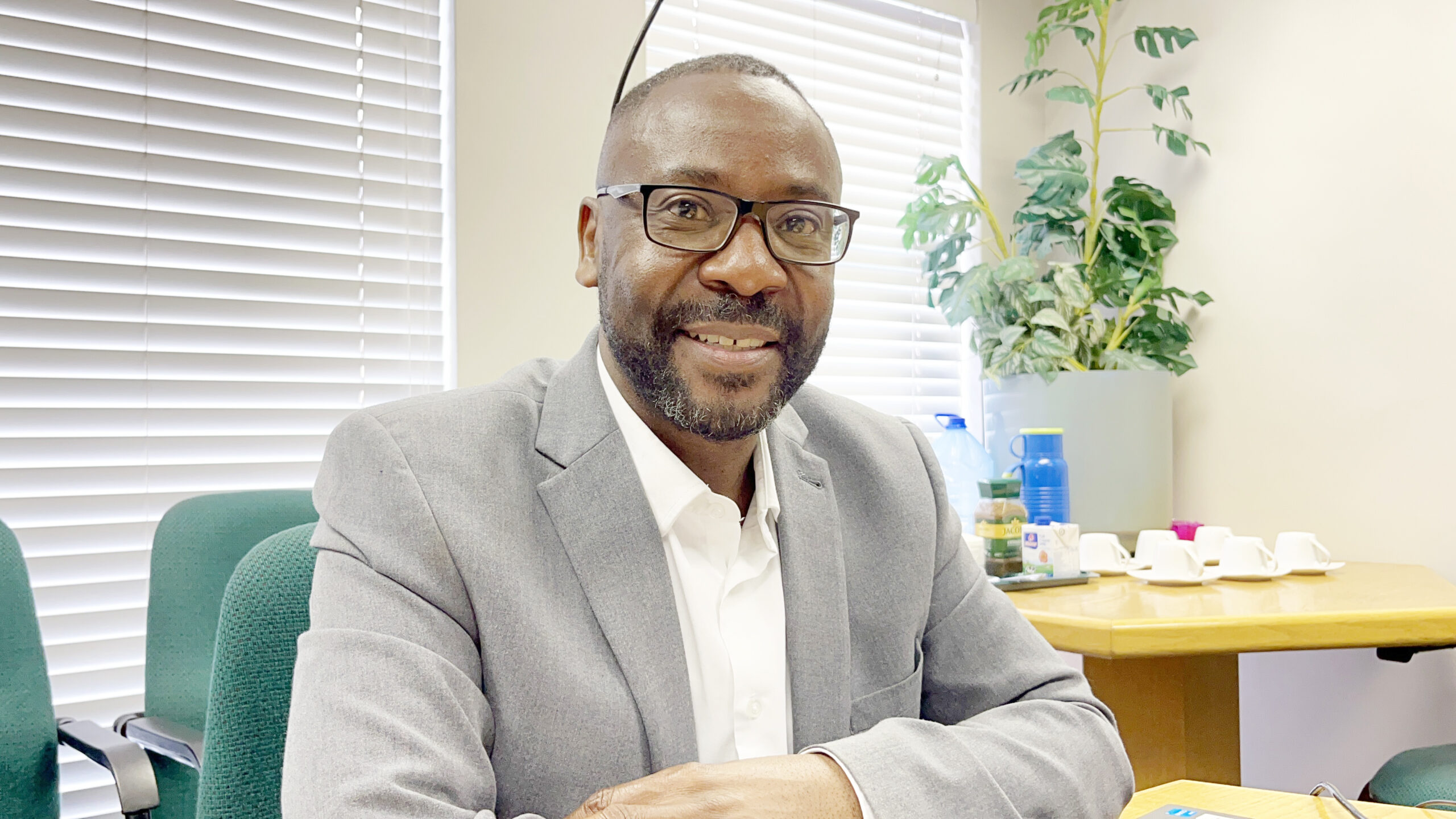

WALVIS BAY – Fisheries Observer Agency CEO Stanley Ndara, has urged young Namibians to consider maritime law as a career.
Speaking to journalists shortly after a SADC Atlantic regional workshop held in Walvis Bay, Ndara, who also serves as interim chairperson of the Southern African Monitoring, Control and Surveillance Coordination Centre (MCSCC) said the fight against illegal, unreported, and unregulated (IUU) fishing in the region faces a major hurdle – a shortage of specialised legal and enforcement expertise.
“Combating IUU fishing and protecting our maritime resources are priorities for Southern Africa, but the lack of officers and legal experts trained in fisheries crimes is a real challenge,” Ndara said. “This shortage affects prosecutions, human welfare at sea, and the overall enforcement of the law.”
The two-day workshop, held in Walvis Bay, brought together officials from Namibia, Angola, and South Africa to strengthen regional cooperation, improve governance, and enhance risk assessment for fishing vessels.
“When law enforcement officials understand the risks associated with vessels intending to fish in Namibian waters, they can act proactively to prevent illicit activities. We are not just talking about illegal fishing, but also fisheries crimes such as the transport of contraband, ammunition, or illegal immigrants. That is the reason we have gathered here,” he said.
Ndara further stressed the importance of capacity building to ensure effective legal outcomes. “Last month, we held report-writing and statement-taking training here in Walvis Bay, which will continue in Lüderitz in October. Proper statements mean proper cases in court and stronger enforcement,” he said.
Highlighting the broader impact of IUU fishing, Ndara said its consequences extend beyond economics. “Illicit fishing contributes to the collapse of vital fisheries, degradation of biodiversity, and undermines food security. This slows regional development and hinders our aspirations for blue growth.”
He explained that initiatives such as the Port State Measures Agreement (PSMA), introduced in 2009, and risk assessment programmes supported by Stop Illegal Fishing, are helping countries evaluate vessels’ operational histories and ownership to determine potential IUU risks. These also provide training in report writing and statement-taking, which are crucial for successful prosecutions.
Representing Stop Illegal Fishing and the SADC Atlantic project, Per Erik Bergh said the workshop also aimed to build regional capacity. “Law enforcement officers from Angola and Namibia, partners from the Benguela Current Commission, and a SADC Secretariat representative attended. The MCSCC is the product of years of commitment from regional fisheries ministers,” he said.
Bergh added that inter-agency coordination is critical, as police, fisheries, immigration, and customs must work together to address cross-cutting issues and ensure effective enforcement.
He warned that without investment in legal expertise and training, fisheries crimes will remain difficult to prosecute.
“Illegal fishing is extremely disruptive. It reduces the ability of a country like Namibia to develop a thriving blue economy. Communities dependent on small-scale and artisanal fishing are particularly affected. Illegal fishers operate with no regard for the environment or local fishers, threatening food security and local livelihoods,” Bergh stressed.
edeklerk@nepc.com.na