


Rudolf Gaiseb
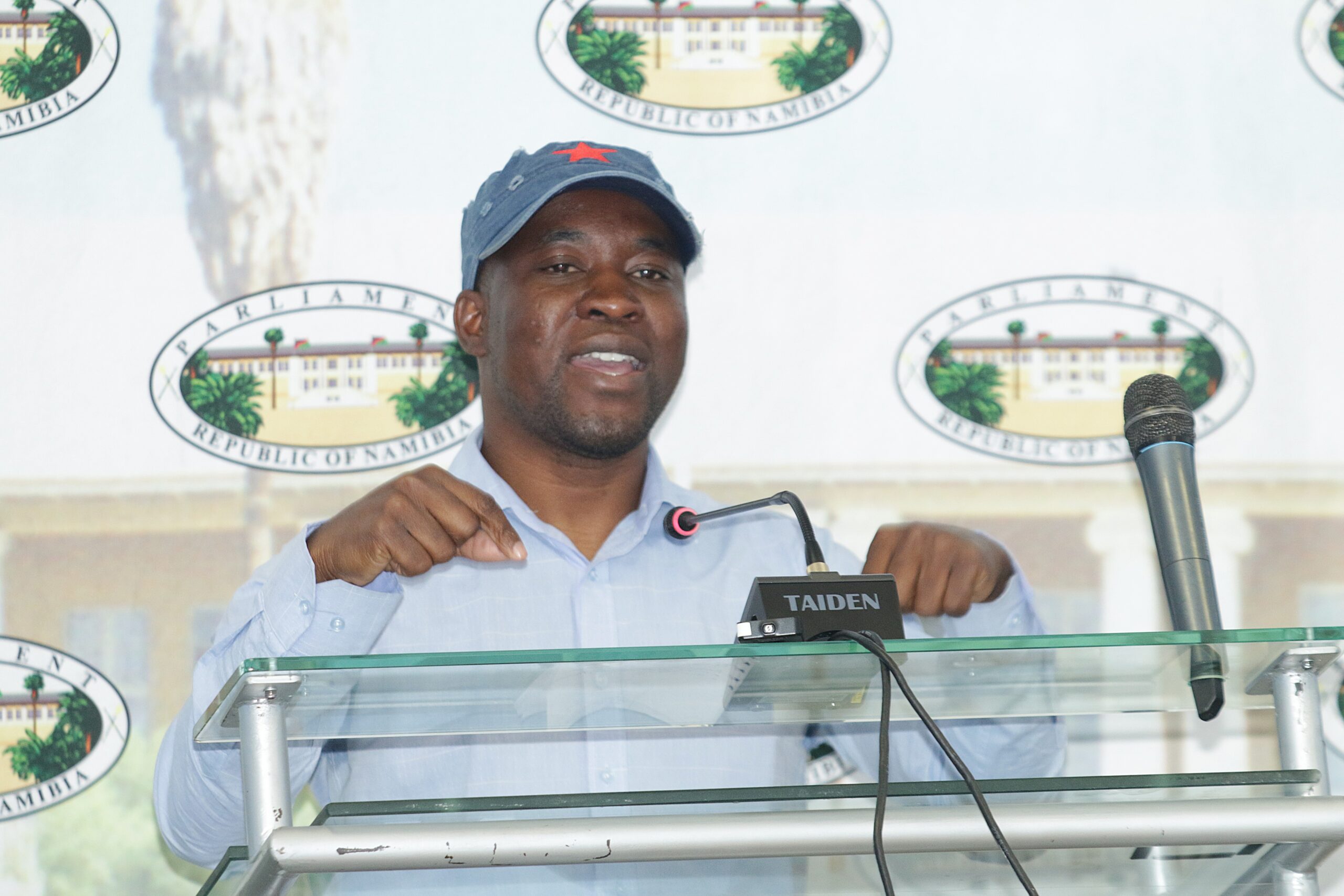
Affirmative Repositioning leader Job Amupanda in Parliament last Tuesday gave notice that lawmakers debate Namibia’s potential withdrawal from the International Criminal Court (ICC).
Burkina Faso, Mali and Niger recently announced their immediate withdrawal from the ICC, labelling it an “instrument of neo-colonialist repression”, the British Broadcasting Corporation revealed.
The three military-led countries issued a joint statement, saying they would not recognise the authority of the United Nations-backed court based in The Hague.
“The ICC has proven itself incapable of handling and prosecuting proven war crimes, crimes against humanity, crimes of genocide and crimes of aggression,” the statement reads.
Amupanda said Africa has been used as a pawn in global politics and to legitimise programmes that do not align with its objectives.
“Although some liberal institutionalists might argue that remaining in the ICC is a collective effort towards fighting impunity, it is not in Namibia’s best interest,” he said.
The investigative body in The Hague has jurisdiction to try individuals for the gravest international crimes: genocide, crimes against humanity and war crimes.
Namibia signed the Rome Statute, the document defining the court’s jurisdiction, and ratified the treaty in 2002, becoming the 70th party.
Amupanda added that, “like some other African nations, Namibia pays millions every year to legitimise a Western instrument”.
In retrospect, the pending withdrawal was debated by President Netumbo Nandi-Ndaitwah during her tenure as international minister in 2016.
It has been a topic for some lawmakers.
At the time, Nandi-Ndaitwah said “the government in 1990 inherited weak institutions from the architects of apartheid, hence the decision at the time to look abroad for interim assistance [and join the ICC]”.
She noted that Namibia’s participation in ICC activities is no longer a priority, as the country now has robust and functional governance institutions.
She, however, did not specify when the withdrawal might occur.
In contrast, the late president Hage Geingob advocated that Namibia would remain in the ICC if the United States (US) joined.
In 2023, he was quoted by international media as saying, “It seems to be true… that the ICC only targets African leaders,” adding that if the US joins, Namibia would stay.
“Africa needs to develop its own processes, systems, courts and institutions… It would help us to be self-sufficient. We must build lasting institutions… not something imposed from foreign countries,” Geingob said in London at the time.
The US has not signed or ratified the Rome Statute.
It is, therefore, not part of the ICC.
-rrgaiseb@gmail.com
Photo: Heather Erdmann