


Auleria Wakudumo
Adolf Kaure
Namibia is Africa’s top tourism destination for the year 2025.
The country was officially recognised as a top, in-demand African destination for 2025 by the African Tourism Board (ATB), joining ranks with tourism powerhouses such as Morocco, South Africa, Zimbabwe and Kenya.
The recognition highlights the country’s unique appeal, including its authentic experiences, vast low-density landscapes, and conservation-focused tourism that offers visitors immersive, sustainable adventures.
According to the ATB, Namibia’s international tourism sector is experiencing rapid growth, with arrivals soaring by 87.4% from 2022 to over 863 000 visitors in 2023. South Africa remains the leading source of tourists, followed by Germany, the United States, the United Kingdom and other European nations. The board cites Namibia’s strong and safe infrastructure, high-quality roads, and the marketing of its ‘space to breathe’ concept as key drivers behind its rising popularity.
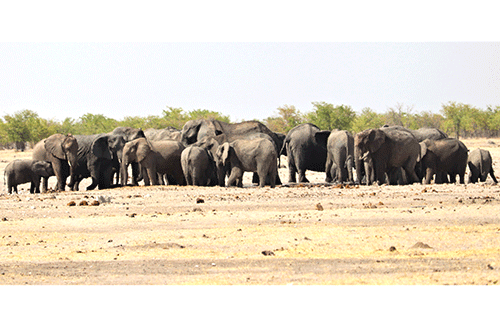
Visitors are drawn to Namibia’s remarkable landscapes, including the iconic Sossusvlei sand dunes and Etosha National Park, alongside rich cultural experiences that showcase the country’s heritage.
The ATB predicts that Namibia will maintain its position as a high-value, exclusive, and “most authentic” destination for international travellers seeking unique, non-crowded and sustainable experiences.
With this recognition, Namibia continues to strengthen its reputation as a premier African destination, appealing to travellers who value space, authenticity and environmentally conscious tourism. Approached for comments, the ministry’s Ndeshipanda Hamunyela, said that travelling statistics are yet to be released.
However, according to 2024/2023 statistics released by the Minister of Environment, Forestry and Tourism Indileni Daniel, the year 2024 recorded 1 257 093 tourist arrivals, representing a 45.5% increase from 863 872 tourist arrivals in 2023. The minister emphasised that this increase in tourist arrivals is a powerful indicator of the sector’s resilience, and it demonstrates the industry’s exceptional strength in overcoming unanticipated external shocks.
“When it comes to key source markets, the main source of tourist arrivals in 2024 remains our good neighbour, South Africa, constituting 38.5% of the overall tourist arrivals. Other neighbouring countries such as Angola, Botswana, Zambia and Zimbabwe also formed part of the top African source markets.”
Regarding the overseas source markets, Germany retained its dominance, as has been the case across the years, with tourist arrivals from Germany representing 8.8% of the total tourist arrivals. In addition, the United States of America, the United Kingdom, France, and the Netherlands similarly made-up part of the biggest sources of tourists to Namibia.
She further revealed that 47.5% of tourists visited Namibia for holiday and leisure purposes. This figure and similar statistics from the past years show that visiting for holidays and leisure is the most common purpose for coming to Namibia among tourists. On the other hand, tourists who came to Namibia with the purpose of conducting business made up 15.8%.
Park fees
Meanwhile, the ministry of environment has announced in a recent press statement the new park and reservation entry fees.
After stakeholder consultations held last year, park fees and conservation fees have been amended.
The deputy executive director in the ministry, Colgar Sikopo, said that the proposed entrance fees for national parks and national areas will increase the ministry’s budget to over N$100 million from N$78 million.
“The funds are crucial for maintaining the parks, preventing poaching and dealing with human-wildlife conflict.”
“We want to reinvest this money into the management and maintenance of national parks. It will also assist with human-wildlife conflict management and with anti-poaching operations,” said Sikopo.
The amended fees come into effect from 1 April 2026.
– awakudumo@nepc.com.na
– akaure@nepc.com.na