

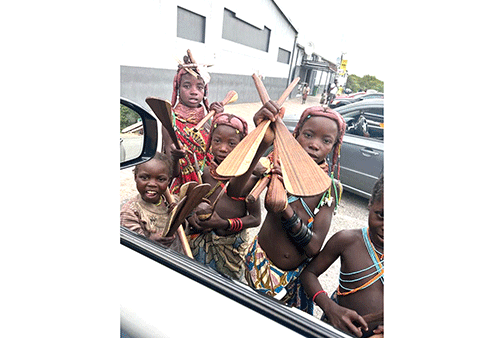

Namibia, through the Ministry of Home Affairs, Immigration, Safety and Security’s immigration control programme, has repatriated more than 1 000 Angolan nationals.
They were in the country illegally for over 12 months.
The ministry’s Executive Director, Nghidinua Daniel, shared at the ministry’s recent staff engagement that due to the country’s well-oiled immigration control programme, about 33 Congolese and an additional 347 nationals of other countries who were in Namibia illegally were also tracked down and deported to their countries of origin.
As of last year, the same pattern continued with a repeated influx of Angolan migrants, mostly children selling wooden curios without permits and begging at almost all intersections countrywide.
“Namibia continues to work with other governments and related institutions of counterparts to ensure that immigration is lawful and regulated. And it is through these processes that we repatriated the Angolan nationals, including 33 Congolese. There was also an amnesty period that was granted to all foreign nationals who had overstayed in Namibia to allow them to come forth and voluntarily leave the country. Through that amnesty period, over 347 illegal nationals came forth, and we assisted with their return to their home countries,” said Daniel.
Namibia has for years struggled with an uncontainable influx of thousands of Angolan migrants, who are primarily forced to cross into Namibia because of the prolonged severe drought and increased poverty levels in that country’s southern regions.
Between 2022 and 2023, more than 6 000 Angolan migrants crossed into Namibia in search of better job opportunities, access to education and medical care, as well as a promising livelihood for themselves and their children.
The Namibian government has for years made efforts to return thousands of Angolans back to their country of origin, but just a few months later, if not weeks, a renewed influx is always witnessed across Namibia’s various major cities.
Crisis
In recent years, Angolans faced the worst recorded drought in over 45 years, with that country’s southern provinces such as Huila, Cunene and Namibe all experiencing severe drought conditions and low levels of food security.
A food insecurity analysis conducted in southern Angola by the Red Cross found that between October 2021 and March 2022, around 1.6 million people experienced high levels of acute food insecurity due to drought.
Communities in the southern parts of Angola, which borders Namibia’s northern regions, faced constraints in accessing food due to consecutive droughts, poor harvests and depleted reserves, loss of livelihoods and livestock, as well as rising food prices.
The Red Cross also found that lack of access to safe water and sanitation in most rural communities in the south further prolonged the cycle of malnutrition and general hunger.