

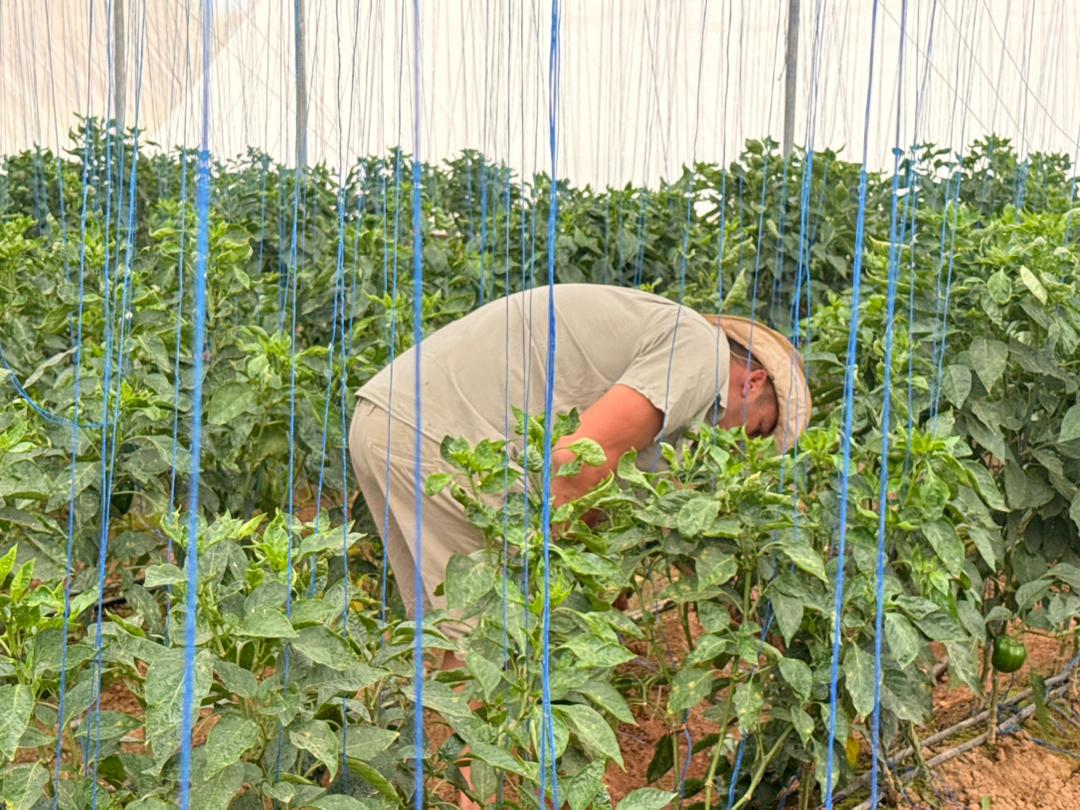

SESFONTEIN– Located in Namibia’s dry and scorching-hot Kunene region, Aloe Agriculture Technologies, established in 1993, is thriving and showing that farming can flourish even in tough conditions.
Veteran farmer and farm manager Johannes Swanepoel oversees Farm Warmquelle, where they grow sweet corn, butternuts, tomatoes, and green peppers.
Their produce is primarily supplied to major retailers in Windhoek and other areas, including Shoprite, Checkers, and Metro outlets. Namibia imports more than half of its produce, primarily from neighbouring South Africa, making the country highly dependent on other nations for basic food supplies. Prices can rise due to regional supply and demand.
One of the main goals of Namibia’s sixth National Development Plan (NDP 6) is to reduce this dependence and increase the country’s self-sufficiency.
“Therefore, farming is very important in Namibia because it supports food security, provides jobs, and strengthens the national economy” , Swanepoel emphasised.
Many families, especially in rural areas, depend on growing crops such as mahangu and raising livestock like cattle, goats, and sheep for both food and income. Agriculture also contributes to the country’s exports, particularly beef, which brings money into the economy and supports related industries such as transport and meat processing.
Swanepoel is convinced that farms like theirs remain key to achieving this national goal of self-reliance.
“Living in a dry place is not an excuse not to grow food. Farming here is challenging, but it is possible with careful planning and hard work. It can also be a profitable business. Despite the heat and limited rainfall, Aloe Agriculture Technologies produces large amounts of food, and each week, we harvest between 1 000 and 4 000 tonnes of maize, half a tonne of green peppers, and about two tonnes of butternuts, he said.”
Innovation
Swanepoel said modern irrigation methods, like drip irrigation, help use water efficiently and make farming possible even in the semi-desert area, but highlighted that experience and innovation remain key.
“Mistakes cost money. Many new farmers invest but lose because they lack sufficient knowledge. We call it paying school fees. You learn from mistakes and get stronger. You must never give up, and you must have a plan for tomorrow, the next week, and for the long term. As Namibians, resilience is in our blood. Start, and you will finish. Sitting idle will not help you. Action is what leads to success,” he stressed.
Swanepoel praised the government for supporting farmers through programmes that protect local producers and provide access to markets where they can sell their crops.
“If we have a surplus of tomatoes, the government can close borders so we can sell locally. Not many countries in Africa do that. Farming can feed families and earn you a good living for generations,” he said.
Aloe Agriculture Technologies is also working to add value to its crops by turning produce into products such as paprika spice and tomato sauce.
“It’s not enough to just grow crops. We must process and package them for sale. This is how farming becomes profitable and sustainable. You cannot grow everything everywhere. You must know what will grow here. Experience teaches you what works,” he said.
Their long-term plans include selling processed products to South Africa and other countries, reducing imports, and creating more jobs in Namibia.
“Never give up. Keep working hard. Learn as much as you can. Farming is not easy, but it can feed your family, generate income, and help our country grow. I believe that Namibia has the talent and resilience to feed itself. With modern farming methods, government support, and more young people taking part, the country can reduce its dependence on South Africa and grow a strong agricultural sector,” he concluded.
-pmukokobi@nepc.com.na