


Bravery Kabula
In many parts of Namibia, young men are expected to be strong. They are raised to believe they must provide, protect and lead. From an early age, many are taught not to cry, not to complain and not to show emotions or fear.
But behind this mountain of expectations lies a growing number of boys and men quietly battling depression, anxiety and emotional distress.
Clinical psychologist Dr Shaun Whittaker says the pressure placed on young men is contributing to what he describes as a growing mental health crisis.
“There are many mental health challenges facing young men today. Some of the most common are depression and anxiety, and we are seeing rising rates of depressive episodes and anxiety disorders, especially among those aged 18 to 25,” Whittaker said.
He warned that suicide remains a serious concern. “Men are more than twice as likely to die by suicide compared to women, with young men particularly vulnerable. Often these cases are linked to untreated depression, substance misuse and prolonged emotional isolation,” he said. According to Whittaker, alcohol and drug misuse frequently become coping mechanisms. “Instead of speaking openly about their struggles, many young men turn to alcohol or drugs to manage emotional pain. Unfortunately, substance abuse and depression often reinforce each other.” Unemployment is another major factor. “Unemployment is not just about income. It is about loss of purpose and loss of identity, which can lead to depression, and in a country where youth unemployment remains high, many young men tie their self-worth to their ability to provide,” he said.
Financial pressure, he added, is deeply connected to traditional masculinity norms. “There is a lot of anxiety and shame around financial pressure, especially when it is tied to expectations of being the provider. When economic instability clashes with these expectations, emotional distress often follows,” Whittaker said.
Relationship breakdowns and family conflict can further intensify the strain. “Breakups or ongoing family stress can trigger emotional instability and isolation,” he noted.
Cultural expectations also make it difficult for young men to seek help. “Masculinity norms often encourage stoicism, independence and emotional suppression. Many fear being judged or seen as weak if they admit they are struggling,” Whittaker said.
He urges families and friends to pay close attention to warning signs. “Withdrawal from social activities, sudden irritability or anger, changes in sleep or appetite, risk-taking behaviour, substance misuse and expressions of hopelessness should never be ignored.”
Despite the seriousness of the issue, Whittaker emphasised that practical steps could make a difference. “Young men should be encouraged to talk to trusted friends or family members and to seek professional help when needed. Engaging in physical activity, maintaining healthy routines and limiting alcohol or drug use are also important.”
At the community level, he believes more needs to be done. “We must strengthen peer support groups for men, promote awareness campaigns that challenge stigma and expand affordable psychological services. Workplaces and schools should also integrate mental health programmes.”
Whittaker describes the situation as a silent epidemic. “Young men are facing depression, anxiety and emotional distress that is worsened by social expectations around masculinity. True strength is not about hiding pain. It is about recognising it and seeking help before it becomes overwhelming.”
Numbers
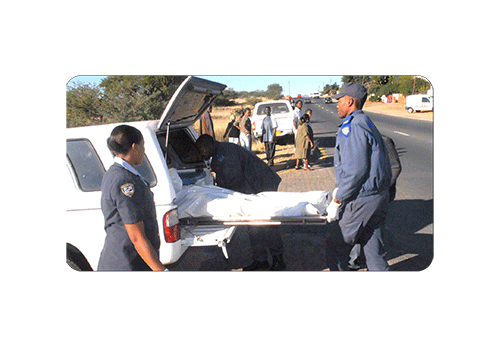
Between January and March this year, 124 people died by suicide in Namibia, with 108 of these being men.
The statistics, recently released by the Namibian Police Force, painted a sobering picture of a nation amid a mental health crisis. According to reports, between January and March last year, 124 people died by suicide in Namibia, with 108 of these being men.
Nampa reported that the Oshana region in central northern Namibia topped the grim list with 20 suicide cases, followed closely by Omusati with 17 and Kavango East with 14. Between January and May 2023, police recorded 151 suicides, with 123 of the victims being men.
In total, the 2023/2024 financial year saw 542 lives lost to suicide, including eight boys and five girls, the youngest of whom was only five years old.
The oldest was 103. These figures represent more than just numbers; they reflect the isolation, despair and failure to address mental health, particularly among men.
This crisis extends beyond completed suicides. The number of attempts is equally high, with about 3 000 individuals attempting to take their own lives during the same period.