


RUNDU – The Kavango East and West regions are recording notable development gains more than three decades after independence, but leaders say progress remains uneven and more work is needed to meet growing demands.
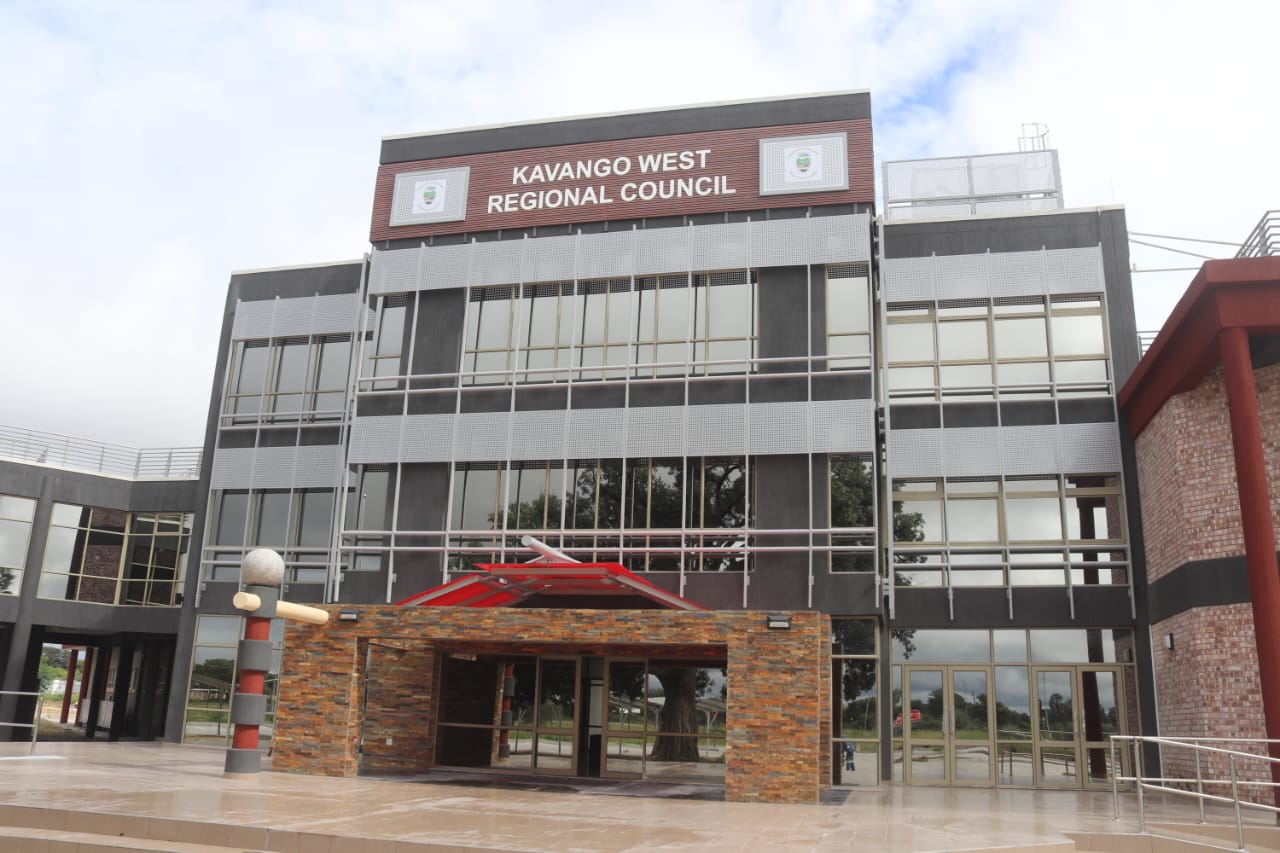
Kavango West, Namibia’s youngest region, is gradually shedding its predominantly rural status. At the centre of this transformation is Nkurenkuru, the regional capital.
The town is currently overseeing the N$30 million Nkurenkuru-Nepara road upgrade, a key project linking surrounding villages to major trunk roads and the Trans-Zambezi Corridor. The development is complemented by the construction of an agricultural development centre and a veterinary office aimed at supporting the growing farming sector.
“The Kavango West region has seen development in various areas, including access to commercial institutions such as banks and delegated functions in education,” said chief regional officer Matheus Singambwe.
However, he expressed concern over the pace of progress, calling on central government to decentralise development budgets. “Implementation status of projects by various line ministries is very poor, with low execution rates over several years,” he said.
Singambwe noted that key projects such as the construction of a magistrate’s court, a multipurpose youth resource centre and the Mpungu fish farm remain critical for the region’s growth.
“At 36 years of independence, we are still faced with a healthcare system that cannot meet demand,” he added.
Despite these challenges, development is expanding in designated growth points. Katwitwi, a border settlement, is being fast-tracked for proclamation as a village council due to its strategic importance for trade with Angola.
Meanwhile, Rupara and Katjinakatji are being upgraded to formal settlements, while a rural development centre in Rupara is nearing completion.
Economic prospects
A major potential boost for the region is the hydrocarbon discovery announced in December 2025 by ReconAfrica. The Kavango West-1 well confirmed the presence of oil and gas, with production testing expected in the first quarter of 2026. The discovery is anticipated to attract significant investment and create employment opportunities.
The Kavango West Regional Council has proposed a N$6 billion budget for its 2025–2030 strategic plan, focusing on transforming the region into a “food basket” through value addition, including proposed tomato processing plants to reduce post-harvest losses.
Kavango East: Strengthening the hub
In Kavango East, development efforts are centred on modernising Rundu and expanding services to rural constituencies.
Rundu, one of Namibia’s fastest-growing towns, has proposed a N$284.1 million budget for the 2025/26 financial year.
Among key projects is a N$665 million water treatment plant aimed at doubling purification capacity through 2037. To address the housing backlog, the town council plans to formalise 3 000 residential erven in the Satotwa and Tuhingireni areas.
In constituencies such as Divundu and Ndiyona, social infrastructure is also improving. In March 2026, groundbreaking ceremonies were held for multi-million-dollar sports facilities in the Mukwe and Rundu Rural constituencies.
Kavango East governor Hamunyera Hambyuka remains optimistic.
“Development is currently slow because many projects are still underway, but after the 2026/27 financial year, many will be completed. People will be asking, ‘When did we get here?’” he said.
A shared vision
The development trajectory of the Kavango regions reflects a broader transition. While agriculture remains the backbone of the local economy, there is a clear shift towards industrialisation.
The Ndonga Linena green scheme recently produced over 2 600 tonnes of maize and wheat, underscoring the region’s agricultural potential.
With Kavango East set to host the 2026 African Day of Decentralisation, national attention is increasingly focused on the region.
From the expanding town of Rundu to emerging centres like Nkurenkuru, the Kavango regions are positioning themselves as key drivers of Namibia’s future growth—provided development efforts accelerate to match rising expectations. -jmuyamba@nepc.com