

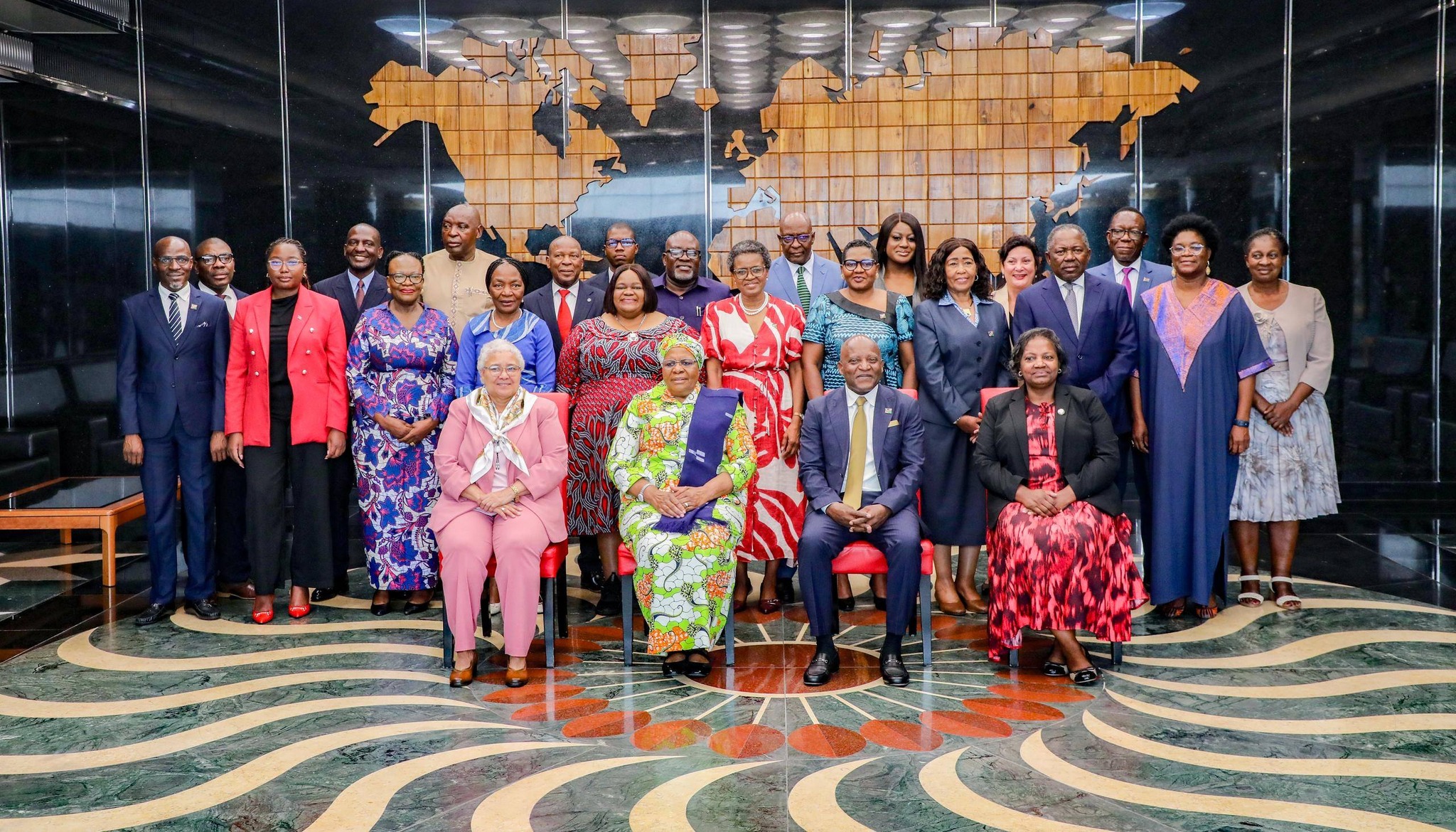

President Netumbo Nandi-Ndaitwah has defended her Cabinet appointments, saying her decisions were guided by the need to carefully balance power between government and Parliament at a time when the ruling party holds only a slim majority.
Speaking during an agenda-setting interview on the Namibian Sun platform over the weekend, Nandi-Ndaitwah said forming her Cabinet was not only about selecting capable leaders, but also about protecting the strength of Parliament.
“My tenure started at a point where the party has a slim majority in the National Assembly. So I had to balance the government and the Parliament. Otherwise, I would hand over Parliament to the opposition,” she said.
The President explained that the Constitution requires her to appoint ministers mainly from members of the National Assembly. However, removing too many elected members to serve in Cabinet could weaken the ruling party’s numbers in Parliament.
“I had no choice but to take a few elected members of Parliament to come to Cabinet. I made sure that all the eight members that the President is allowed to appoint, I made them ministers,” she said. She added that this balancing act also meant that some ministries are currently operating without deputy ministers.
“If I take more from the National Assembly, I will weaken it. As a party, we need a strong National Assembly to face the opposition,” said the President.
Nandi-Ndaitwah’s Cabinet differs from previous administrations, with several new faces brought in and only a few ministers retained from the previous government. This has raised questions about her approach, but the President said the decision was necessary under the current political reality.
“It is something that I had to think over carefully. I must have a good balance between the government and the National Assembly,” she said. Despite the challenges, the President said she is confident in the team she has appointed. “I am proud of my Cabinet. I appointed them based on trust that they will work with me and help deliver the promises we made to the Namibian people,” she said.
The head of State pointed to the rollout of subsidised tertiary education as one example of her cabinet’s performance. The policy, which initially raised concerns, has been implemented smoothly, she said.
“There were sceptics who thought it would not work, but we have seen a smooth implementation. The universities are operating, and by and large, the nation is happy,” Nandi-Ndaitwah said.
Nandi-Ndaitwah also highlighted improvements in the distribution of social grants after government moved the process to state institutions. While there were initial challenges, including long queues, she said the system is now stabilising. “Anything new will have challenges. But with time, people will appreciate the programmes we are putting in place,” she said.