


The Namibian economy is expected to experience steady, moderate growth over the next two years.
However, the pace is unlikely to deliver immediate relief to households and businesses. The latest economic outlook by the Bank of Namibia (BoN) states that the domestic economy is projected to expand by 2.6% in 2026 and 2.9% in 2027, following an estimated growth of 1.7% in 2025.
The central bank noted that these projections represent a downward revision from earlier forecasts, primarily due to weaker-than-expected performance in key primary industries, notably metal ores and diamond mining.
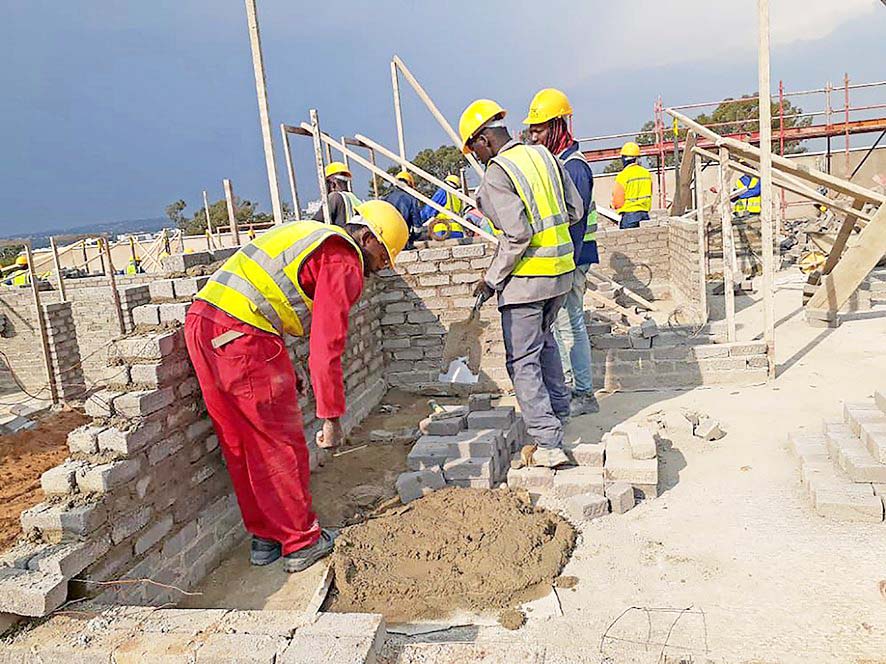
“The recent projections for 2026 and 2027 reflect a cautious outlook, mainly due to subdued performance in the primary sectors. Growth is expected to be driven chiefly by construction, electricity and water supply, wholesale and retail trade, financial services and public administration,” stated the Bank.
Notably, uranium mining is anticipated to support economic expansion, albeit at a slowing pace.
The report indicates that uranium production is projected to increase by 7.9% in 2026 and a more moderate 4.2% in 2027, following a robust 27% growth in 2025. Primary industries, however, are forecasted to remain subdued.
The report also projects a contraction of 0.3% in 2026, following a sharp decline in 2025. Diamond mining continues to face challenges, with output expected to decline further amid persistent weakness in global demand.
Agricultural sector
The agricultural sector is projected to recover gradually following recent drought conditions. Growth estimates of 2.8% are anticipated in both 2026 and 2027, supported by livestock farming, as herds are rebuilt and productivity improves. Economist Klaus Schade commented on the impact of exchange rate fluctuations. He noted that the depreciation of the South African rand and the Namibia dollar will influence the cost of imported goods and services.
“While the exchange rate fluctuation may be temporary, its inflationary impact will depend on how businesses respond. Inflationary pressures are currently contained, and monetary policy is expected to remain unchanged in the near term,” he said. Some businesses have announced price stability measures, which could help contain inflationary pressures.
Schade added that, at present, inflation remains under control, and there is little justification for adjusting the repo rate.
Meanwhile, economist Mally Likukela indicated that the Monetary Policy Committee (MPC) is likely to keep the repo rate steady, citing low inflation levels and stable external reserves as key factors.
“The current economic environment supports maintaining the rate, especially given concerns over high household debt and sluggish credit uptake. Namibia’s foreign reserves remain sufficient to meet international trade obligations, providing a buffer amid external uncertainties,” he said. -pmukokobi@nepc.com.na