

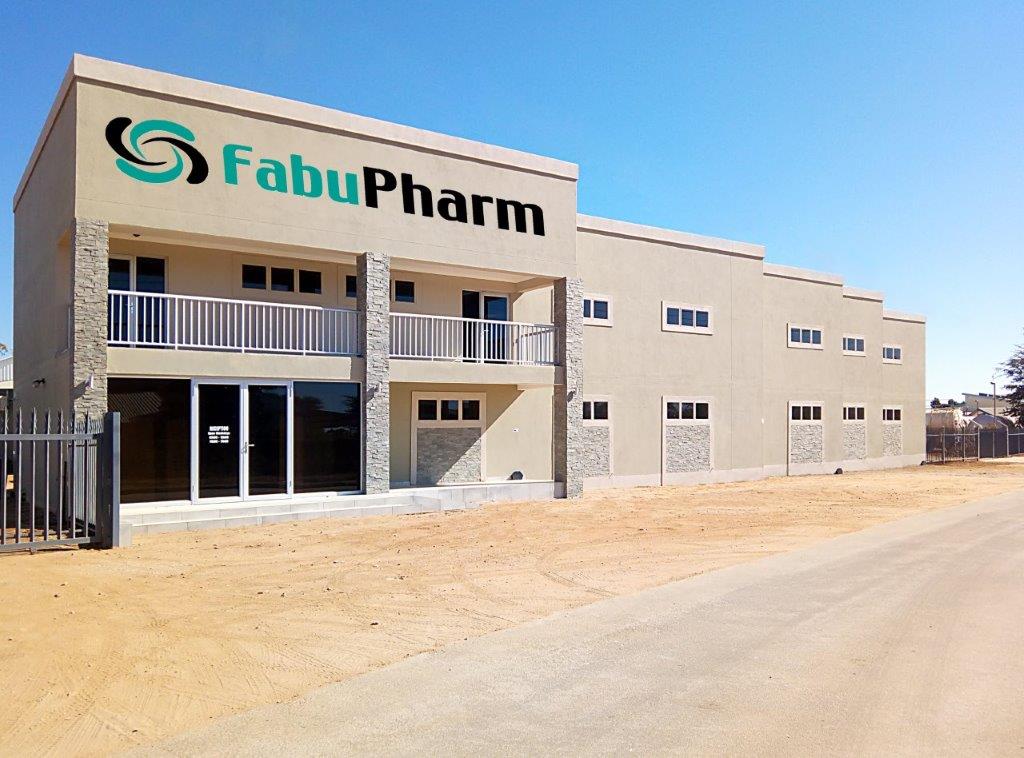
OTJIWARONGO – President Netumbo Nandi-Ndaitwah doubled down on local pharmaceutical manufacturing after visiting the FabuPharm factory in Otjiwarongo yesterday.
Her visit comes at a time when Namibia is struggling with medicine shortages in public hospitals.
During the visit, the President said the lack of medicines in hospitals is one of the issues giving her “sleepless nights” as head of state.
“If there’s one of the things that gives me sleepless nights, in all sincerity, it is when I’m hearing there are no medicines in our hospitals,” Nandi-Ndaitwah said during a tour of the factory.
The President praised the company for investing in Namibia’s health sector and said local production of medicines is critical for the country’s future.
“No true Namibian would want to see another Namibian without access to quality health,” she said, adding that a healthy nation is necessary for economic prosperity and productivity.
FabuPharm, which describes itself as Namibia’s only fully-fledged pharmaceutical manufacturing company, produces medicines, supplements, syrups, ointments and healthcare products locally from raw materials to final packaging. Company officials said the factory currently manufactures more than 150 products and supplies some medicines directly to government hospitals through the Central Medical Stores.
Among the products supplied to the government are paracetamol syrup for children, antiseptic solutions, pain ointments and calamine lotion.
FabuPharm founder Fanie Badenhorst said the company was born out of frustration with shortages of healthcare products in the late 1980s.
He said while operating a retail pharmacy in Otjiwarongo in 1986, he realised Namibia needed its own pharmaceutical manufacturing capacity after struggling to source basic products such as aqueous creams from wholesalers.
That pushed him to study industrial pharmacy full-time before returning to Namibia shortly after independence to start local production. The company officially opened its manufacturing facility in 1993 under then health minister, the late Nickey Iyambo.
Over the years, FabuPharm expanded from producing toiletries to manufacturing syrups, creams, tablets and supplements.
The company said it became especially important during the Covid-19 pandemic when countries closed borders and restricted exports of medicines and vitamin products.
On his part, head of production Richard Iyambo said Namibia was fortunate because FabuPharm had enough raw materials to continue producing vitamin C supplements and immune boosters locally during the crisis.
“When Covid-19 hit, we could not even import the raw material for vitamin C because other countries closed their borders,” he said. “This just speaks to the need for us to increase local manufacturing capacity.”
The company has since invested heavily in expansion projects, including a new liquid medicine production line, upgraded warehouses and improved testing laboratories.
According to company officials, about N$50 million has already been invested in the business since 2021, while another major expansion plan worth about N$68 million is expected over the next five years. The expansion is projected to create between 80 and 100 additional jobs.
FabuPharm currently employs around 80 Namibians and exports products to countries including Botswana, Mozambique and Ghana.
Company director Carl Bregman said Namibia must reduce dependence on imported medicines and build its own pharmaceutical industry.
“For too long, we have relied on other nations to manufacture the medicine that keeps our families healthy and alive,” he said.
He added that the company’s vision is aligned NDP6, which focuses on industrialisation, local production and job creation.
Furthermore, during the presentations, the President repeatedly linked local manufacturing to economic development and poverty reduction.
“Our government really wants all Namibians to come on board so that together we can develop our country, create jobs for our people and fight poverty,” she said.
Nandi-Ndaitwah also praised the company for reinvesting profits back into expansion instead of paying dividends to shareholders.
Company officials revealed that since FabuPharm was established, shareholders have never received dividends because profits were continuously reinvested into upgrading equipment and facilities.
The president said the company’s persistence showed what could be achieved through determination and innovation.
She also welcomed the company’s cooperation with the University of Namibia, where pharmacy students receive practical training at the factory every year.
The visit further highlighted Namibia’s ambition to become more self-reliant in healthcare manufacturing at a time when global supply chains remain under pressure.
FabuPharm officials said local production helps reduce prices for consumers because imported medicines carry high transport costs. The company compared its locally made paracetamol syrup, which sells for about N$18, with imported brands costing around N$50, saying the active ingredients are the same.
FabuPharm also manufactures products using indigenous Namibian plants, such as Devil’s Claw, Moringa and Hoodia sourced from local harvesters.