

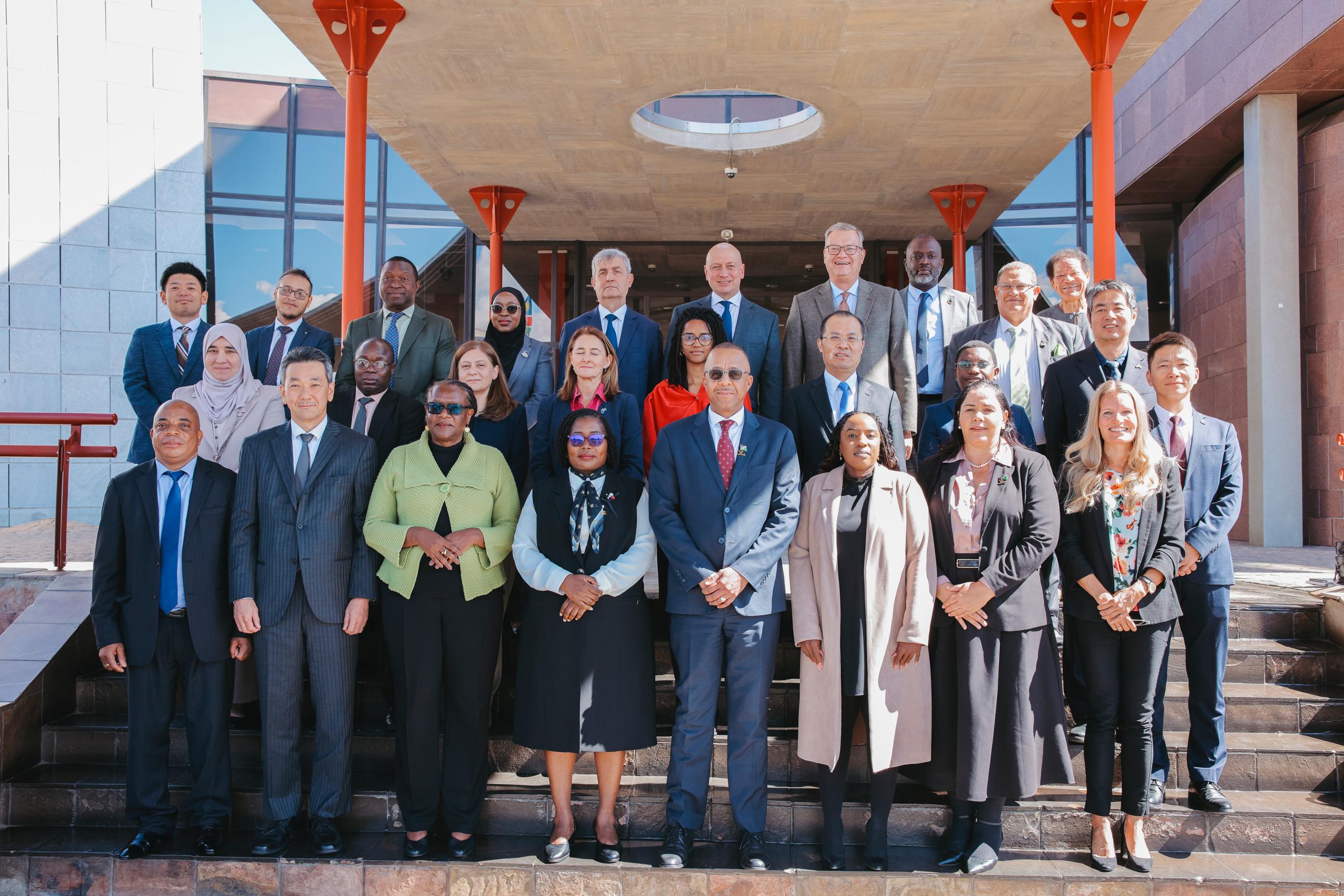
The Bank of Namibia (BoN) has issued a stark warning that escalating geopolitical tensions, volatile oil prices and mounting global financial uncertainty are reshaping the country’s economic outlook, even as Namibia positions itself to capitalise on opportunities in oil, gas, mining and renewable energy.
Speaking during the central bank’s Diplomatic Stakeholder Engagement in Windhoek last week, BoN governor Ebson Uanguta said the global economy is entering a period of profound structural change driven by conflict, technological disruption, climate risks and increasingly fragile supply chains.
Held under the theme “Navigating a Changing Global Economy: Aligning the Central Bank for the New Economy,” the engagement brought together diplomats, multilateral institutions, development agencies and international partners at a time when fears over global economic fragmentation and energy market instability continue to intensify.
Uanguta warned that Namibia, as a small and highly open economy, remains vulnerable to external shocks despite efforts to strengthen resilience.
“The global economy is undergoing structural shifts characterised by heightened geopolitical tensions, rapid technological transformation, climate-related risks, supply-chain disruptions and increasing uncertainty in global financial markets,” he said.
His remarks come amid growing international concern over persistent inflationary pressures, elevated borrowing costs and rising energy prices linked to instability in the Middle East, developments that have placed renewed strain on emerging and frontier economies.
The central bank said global growth is expected to remain subdued through 2026 and 2027 as tighter financial conditions and geopolitical risks continue to weigh on investment and trade flows.
According to a macroeconomic presentation delivered by Economic Advisor to the governor, Helvi Fillipus, developments in the Middle East are already creating risks through rising oil prices, shipping disruptions and supply-chain bottlenecks that are pushing inflation higher and complicating recovery efforts across developing economies.
Despite these global pressures, Namibia’s medium-term outlook remains cautiously optimistic.
The central bank projects the domestic economy will gradually strengthen, supported by rising uranium production, a recovery in tourism and financial services, and sustained investment activity in the mining and energy sectors.
The rapid expansion of exploration activity in Namibia’s offshore oil and gas industry, combined with growing international interest in green hydrogen and renewable energy, is increasingly positioning Namibia as a future regional energy and logistics hub.
However, the central bank cautioned that major risks remain.
Weak global diamond prices, recurring drought conditions and constrained fiscal space continue to weigh heavily on economic performance, exposing vulnerabilities in traditional sectors while increasing pressure on government finances.
At the same time, policymakers and investors are increasingly concerned about whether Namibia can successfully convert its resource boom into broad-based economic development.
A major theme emerging from the discussions was the need to maximise local participation and value retention from new industries, particularly oil and gas, while avoiding the dangers of “Dutch disease”, the economic phenomenon where resource booms distort the wider economy and weaken other productive sectors.
Meanwhile, participants stressed that Namibia’s economic transformation agenda would require far stronger coordination between government, regulators, investors, development partners and the private sector.
Uanguta added that central banks globally are now being forced to evolve beyond traditional mandates to include digital finance, cyber security, artificial intelligence and financial innovation that are rapidly transforming the global financial system.
He said the Bank of Namibia is intensifying efforts to modernise its own institutional frameworks and policy tools to keep pace with these changes.
Among the strategic initiatives highlighted were the implementation of the National Payment System Vision and Strategy 2030, the rollout of the Instant Payments Platform, reserve diversification programmes and expanded financial inclusion initiatives.
Last week’s engagement also placed heavy emphasis on innovation and emerging technologies, including the growing role of artificial intelligence and Central Bank Digital Currencies in shaping future economies.
Participants further reflected on Namibia’s long-term development trajectory under Vision 2030, warning that with the country is entering the final stretch of its national development agenda, where there is increasing urgency to evaluate progress and accelerate implementation.
Moreover, discussions at the engagement underscored the importance of strengthening MSMEs, agriculture and skills development to ensure economic growth becomes more inclusive and employment-intensive, particularly as Namibia seeks to navigate an increasingly volatile global economic environment.