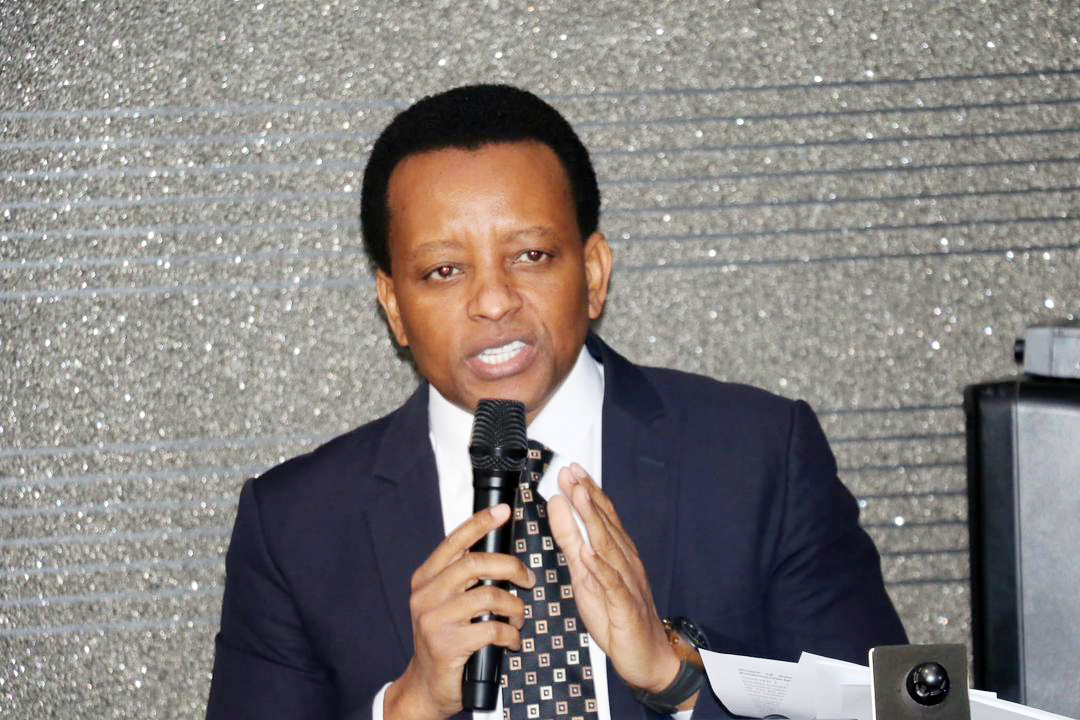

Lawmaker Tobie Aupindi has warned that Namibia cannot afford to keep investors in a limbo while taking forever to make timeous and conclusive decisions that would result in job creation and economic growth.
He was expressing frustration with the slow progress around determining the fate of Russian mining giant Uranium One, whose planned operations remain dormant due to fierce legal and administrative contestations.
In 2021, the Uranium One mining company, through its Namibian subsidiary Headspring Investments, announced plans to extract uranium in what is known as the Stampriet Transboundary Aquifer System (STAS) at farm Tripoli, near Leonardville in Omaheke region.
Uranium One, which is part of the Russian state-owned nuclear energy company Rosatom, plans to invest close to N$8 billion in the Namibian economy as part of its operating licence and targets to commence mining operations by 2029 after completing the prospecting and exploration phase next year.
The company also announced it would extract uranium using the in-situ leaching method as the most viable process.
This method is generally used to recover minerals such as copper and uranium through boreholes drilled into a deposit.
During the in-situ leaching process, chemicals like sulfuric acid or ammonium carbonate and oxidants are pumped into the aquifer through dedicated injection wells, e.g. boreholes. These chemicals, also known as lixiviants, dissolve the uranium.
The resulting mineral-acid solution is the pumped to the surface through production wells. Nowadays, in-situ leaching, also known as solution mining or in-situ recovery, is employed extensively worldwide.
Certain segments of the mining industry label it the most cost effective and environmentally acceptable method of mining, as it is used in other uranium producing countries such as Kazakhstan, United States of America, Australia, China, Uzbekistan and Russia.
However, Uranium One’s plans have over the past four years divided both parliament and public opinion, especially farmers and local community members who are farming in the Leonardville area and are reliant on the transboundary aquifer for top-quality drinking water.
Most farmers around the Leonardville area and greater Omaheke region fear that extracting uranium from the Stampriet transboundary aquifer could result in the pollution of the rest of the aquifer with harmful chemicals.
Indecisiveness
Aupindi, who is the chairperson of the Parliamentary Standing Committee on Natural Resources, and fellow committee members recently visited Farm Tripoli near Leonardville where Uranium One operations are based to conduct a comprehensive evaluation and discuss the project’s revival and prospects with the investor and regional leaders.
While he fully understands the risks associated with the project and the fears of the community, Aupindi said four years of not making a conclusive decision on an N$8 billion investment opportunity that could create more than 500 jobs is not acceptable to both the investor and the Namibian people.
“This is a multibillion-dollar opportunity that is here, so we can’t just allow it to be sabotaged or wasted because people have different opinions. I just don’t support that. The committee will investigate why the water permit was revoked and has not been reissued after four years. People are misinformed by opinions rather than scientific or geophysical evidence, which is something we will not accept as a committee,” said Aupindi.
He said it is important that Namibia moves with the necessary speed and applies the required science to strike an informed balance between the much-needed employment benefits and economic growth and possible long-term threats to the country’s groundwater sources.
Meanwhile, Omaheke governor Pijoo Nganate said local people should benefit from investments coming to their areas, adding that it is expected of national leaders to advise and provide guidance.
“The only way we can proceed is by allowing people to conduct exploration and pilot testing; for instance, a laboratory has been established there. This facility will enable all necessary testing, and if we determine that we are entering a danger zone, we will halt operations. However, without any scientific evidence, we cannot act,” said Nganate.
Namibia is the third biggest producer of uranium in the world after Kazakhstan and Canada and ahead of Australia, Uzbekistan, Russia and Niger.
ohembapu@nepc.com.na