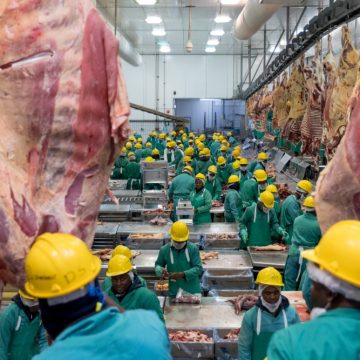
In the final quarter of this year, particularly during the month of October, output at various local abattoirs remained steady as they managed to slaughter a total of 4 655 pigs during the month under review to record a 6.08% increase on a year-on-year basis. On a month-on-month basis, the total number of pigs slaughtered...
Agriculture
Meatco Foundation launches Agribusiness e-Academy … to boost farmers’ productivity
Undamuje Hambira The Meatco Foundation, together with its consortium partners, has launched an innovative Agribusiness e-Academy to strengthen the skills and resilience of smallholder farmers across Namibia and beyond. The initiative is delivered in partnership with Meatco Northern Communal Area (NCA), the Namibia National Farmers’ Union (NNFU), the Ministry of Agriculture, Fisheries, Water and Land...
Farmers’ Kraal with Hanks Saisai – Benefits of crop producers registering their businesses
When one is in production or aspires to venture into producing fresh produce like vegetables, fruits, or cereal grains, often a key aspect is overlooked by many producers, and that is to register as a crop producer. One must register with the Namibian Agronomic Board (NAB) as a producer of crop products, as this offers...
Farmer’s Kraal with guest Hanks Saisai – Essential steps to increase crop yields in communal areas
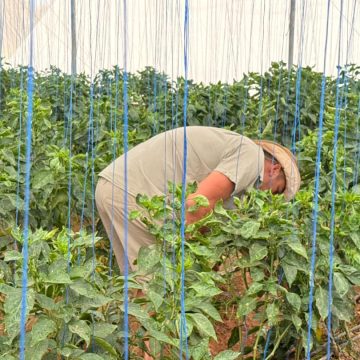
Namibia’s crop sector is fundamental, as it ensures that food is readily available at the household, regional and national levels. It also creates much-needed employment opportunities, providing income for rural populations. One notable observation is that crop production is seasonal and largely relies on annual rainfall, enabling farmers to grow staple grains for both the...
Meatco makes historic export under AfCFTA … enters Kenya’s leather market
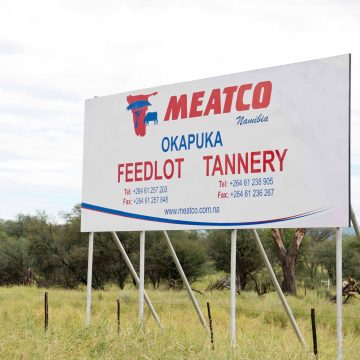
The Meat Corporation of Namibia (Meatco), the country’s largest meat and meat products processing and marketing entity, is set to make a historic breakthrough into the African Continental Free Trade Area (AfCFTA) trading framework with exports to Kenya. On Thursday this week, Meatco will dispatch two full containers of Wet Blue Hides from its Okapuka...
Farmers’ Kraal with Hanks Saisai – Farming: Building a resilient, sustainable business
Farmers in Namibia face numerous challenges, including climate change. This is evident in the form of erratic rainfall, recurring droughts, and crop and livestock losses. These have continuously led to financial losses for farmers across the country. As we head towards the end of 2025, farmers are encouraged to create resolutions that can transform their...
Good rains reignite hope in Omaheke
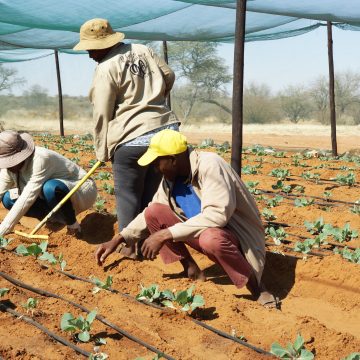
Zebaldt Ngaruka Recent promising rain showers across various parts of the country have ignited hope among farmers in the Omaheke region, who many have now turned their attention and efforts to gardening as they strive to preserve food security. Omaheke region, commonly known as the Cattle Country, is a predominantly cattle farming area, and only...
Desert to oasis …how Aksu defied odds
AKSU – Aksu has earned a reputation for producing sweet, juicy, large, and fragrant apples; however, little is known that this land of orchards was once a desert. Aksu is in China’s Xinjiang Uyghur Autonomous Region. A recent trip to Aksu provided me and over 20 other African journalists and editors with an opportunity to...
Red meat industry shows market resilience …maintains self-sufficiency, stable supply
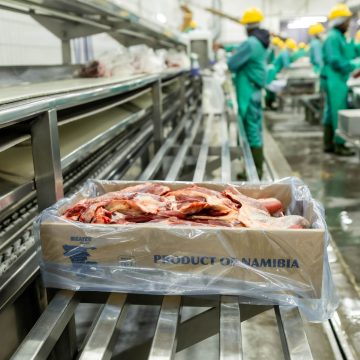
Namibia’s beef market continues to demonstrate a strong domestic orientation, with local consumption absorbing nearly two-thirds (69.3%) of total beef production between January and September 2025. Exports accounted for 30.7%, while imports represented a minimal 3.4% of total supply (4.8% of consumption), equivalent to about 6% of total consumption. This highlights the country’s continued self-sufficiency...
Farmers’ Kraal with Erastus Ngaruka – Farmers must know, understand grasses
In Namibia, livestock production is heavily dependent on rangeland, which supports a diverse range of forage resources, including trees, shrubs, grasses and forbs. These plants differ in growth forms, structure, life cycles, habitat preferences and uses. Cattle, sheep and goats characterise livestock farming in this country. These animals have different forage preferences and foraging habits. ...