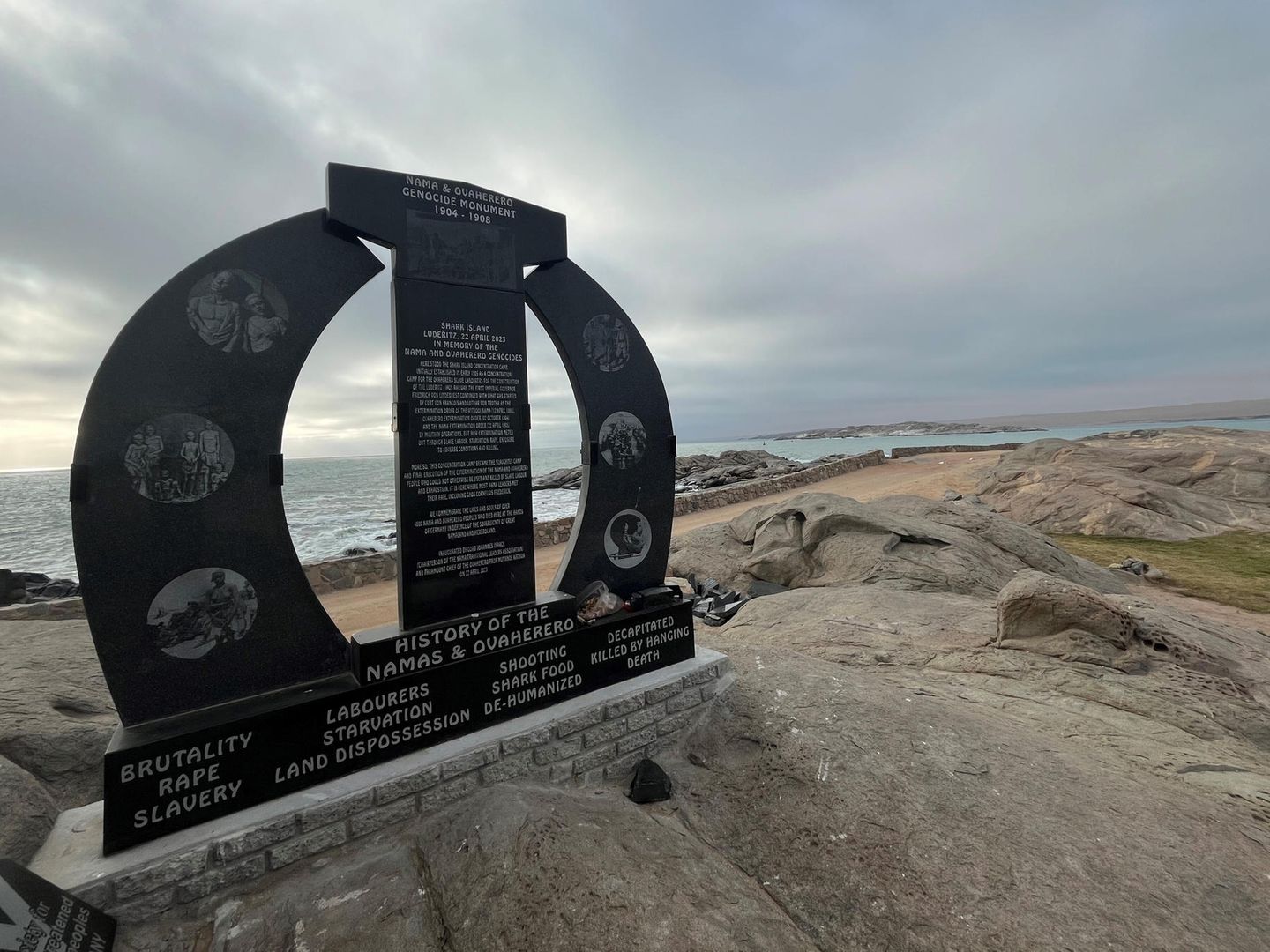

Ovaherero and Nama descendants of victims of the 1904/08 genocide have welcomed the ceasing of all tourism activities at Shark Island.
This development, they say, will make way for the conversion of the historic enclave into a fully-fledged heritage site under the National Heritage Council.
Shark Island, one of Namibia’s most popular and attractive tourist destinations, is the same island where German colonial troops carried out deadly labour and extermination campaigns against prisoners captured during that country’s genocidal war against the Herero and Nama between 1905 and 1908.
Sima Luipert, patron for international affairs on the Nama Traditional Leaders Association (NTLA) technical committee on genocide, said the move to fully convert the island into a heritage site is welcomed by all, especially the affected communities, as they have
been pushing for the change of status since 2019.
“Calls for Shark Island to be declared a heritage site have been coming for years, and only in 2019 did we have some sort of principled agreement with the government to move in that direction. Now there is concrete progress towards finally getting Shark Island to be a national heritage site.
For a place with such a dark and painful history, it can no longer serve as a tourist destination or as a place for recreational purposes. It should be a place of healing, mourning, and reflection and a place where future generations of Namibia can go and learn about our dark past as a country.
The bones and various remains of our people are still there, and moving on as if nothing happened to our people cannot be fair,” said Luipert.
The Namibia Wildlife Resorts (NWR), which handles the lion’s share of the country’s tourism activities through its various establishments, including at Shark Island, has already started winding down all its operations at the historic island.
NWR acting CEO Epson Kasuto said the gradual phasing out of all its camping operations at the island started last year and is now at the administration phase of the process before the site is officially handed over to the National Heritage Council.
“In fact, as we speak now, we have already removed our Shark Island establishment from our website, and we have also stopped advertising camping activities at Shark Island, as no more bookings will be accepted on all our platforms. For the next two to four months, we will be busy honouring the final bookings of the island, and that will then mark the end of all our operations on that side,” said Kasuto.
Dark history
Between 1905 and 1908, German colonial forces killed approximately over 100 000 Herero and Nama, which constitutes roughly 80% of the Herero population at the time and half of the Nama population.
Those who were not immediately killed during the war were captured and sent to concentration camps, where they were forced to perform manual labour, such as working on railways and harbours, until they died of starvation, diseases, and fatigue.
Colonial Germany’s sea-based genocidal atrocities occurred mainly at concentration camps at coastal sites at Shark Island and Swakopmund, where thousands died and their bodies were thrown into the ocean.
For decades, descendants of the two communities have been calling on the government to declare the island a heritage site due to its dark and brutal history and significance to future generations. They have also called for the restoration of historic gravesites and for memorial shrines to be erected at various points on the island.
Through their respective traditional authorities, the Herero and Nama have said only through such undertakings by government can recognition, justice, and equitable rights be achieved for the affected communities.