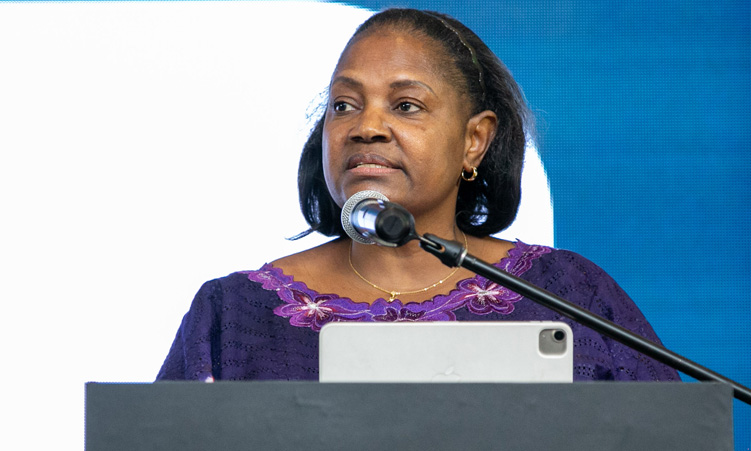

Secretary to Cabinet, Emilia Mkusa, says the 2024/25 rainfall season was Namibia’s 13th wettest in 44 years, officially ending a cycle of consecutive droughts across the country.
Mkusa said this in a statement released on Friday through the Office of the Prime Minister. The Secretary to Cabinet, however, said the improvement in rainfall came with severe consequences, as excessive rains in several regions caused infrastructure damage and displaced communities.
Seven regions, namely Khomas, Oshana, Omusati, Ohangwena, Kunene, Zambezi and Hardap experienced flooding that affected about 9 184 people. In the Agtste Laan settlement in Windhoek, 282 households and 1 189 individuals were impacted, leading to the relocation of 102 households. Key transport infrastructure also suffered damage. “A bridge linking Rehoboth and Windhoek was destroyed, prompting the temporary closure of the main road and the construction of a N$6.4 million bypass. The Osona bridge, which connects Osona Village and Okahandja to Windhoek, was also damaged by heavy rains, with reconstruction costs estimated at N$28 million,” Mkusa said.
She further said rainfall forecasts for the coming season indicate varying conditions across the country. Large parts of the ||Kharas, most of Hardap, Namib, western Erongo and southern Omaheke have a high likelihood of below-normal rainfall, while Zambezi, Kavango East, Kavango West, eastern Ohangwena, Oshikoto, north-eastern Otjozondjupa and northern Omaheke have a high likelihood of above normal rainfall. Mkusa called for improved and proactive water management systems and urged authorities to regularly monitor water bodies to reduce risks associated with both flash floods and droughts. She further called for additional water sources through borehole drilling, and rainwater and floodwater harvesting.
Mkusa advised both livestock and crop farmers to prepare for a potentially favourable season. Crop farmers should make optimal use of early-season rainfall, cultivate fields promptly, and use a variety of seed types. Livestock farmers should consider restocking due to the expected improvement in grazing conditions.
-Nampa