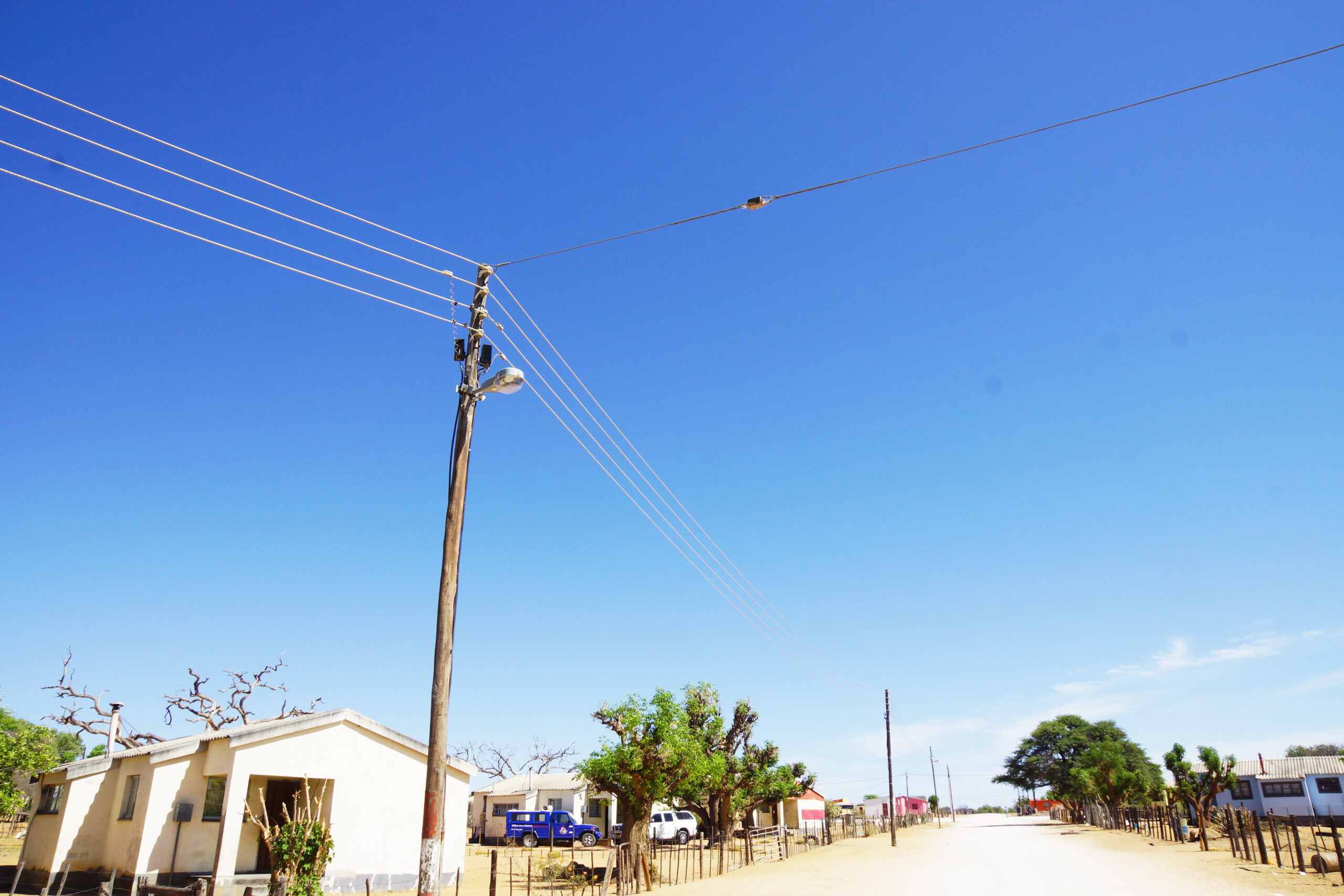

Through concerted efforts in collaboration with the Regional Electricity Distributors (REDs), government will by 2030 connect over 200 000 houses to the electricity grid.
That number is expected to grow to 400 000 households by 2040.
This was revealed by mines and energy minister Natangwe Ithete.
He recently shared government’s ambitious plans to connect thousands of Namibian households to the grid during the commissioning of the joint electrification projects at Otjiwarongo’s Ombili settlement.
Namibia is part of the Mission 300 Energy Compact, an African effort to electrify 300 million households by 2040.
For Namibia, this means 200 000 new connections by 2030 and an additional 400 000 by 2040.
The ministry currently has a Service Level Agreement with all the REDs, which is the first of its kind.
It serves as a new way of working together, where the ministry and electricity distributors pool resources, shared responsibilities and agree on clear targets.
“The result has been powerful. With N$12 million from the ministry and over N$9 million from the Central North Regional Electricity Distributor (Cenored), we connected 561 households across four regions to date. It is a long journey, but it proves that it is possible. With proper planning, consultation and partnership, we will electrify every corner of our country – step by step and household by household,” said Ithete.
Cenored is one of the three licensed regional electricity distribution companies established in Namibia, with the Northern Regional Electricity Distributor (Nored) and Erongo RED being the other two established between in 2002 and 2004.
“The commissioning of electricity creates jobs, improve livelihoods and provides a dignified standard of living. The streetlights provide safety and security in the community because criminals will no longer find covers in the darkness. We can confidently say electricity makes streets and home safer. These are practical ways in which electrification impacts lives at the community level.”
Ithete continued: “As we continue to work hard to bring electricity to every Namibian, we should also face our reality. There are some communities that are too far from the main grid. Therefore, connecting them to the grid is a challenge. However, we are launching a new off grid electrification programme, which will complement the Solar Revolving Fund, through which households nationwide can apply loans for solar systems.
“These solar systems are quality products designed to provide modern electricity to our communities living far from the grid. As such, we must take ownership and pride in them,” he stated.
Presently, 61% of Namibia’s energy is imported due to local generation producing 39% of electricity.
Namibia’s total electricity demand is currently estimated at 600 MW per annum.
This demand is expected to grow at about 5% per annum.
The country’s generation capacity currently stands at approximately 486.5 MW.
Total generation capacity delivers approximately 400MW, thereby rendering a deficit of about 200MW.
– ohembapu@nepc.com.na