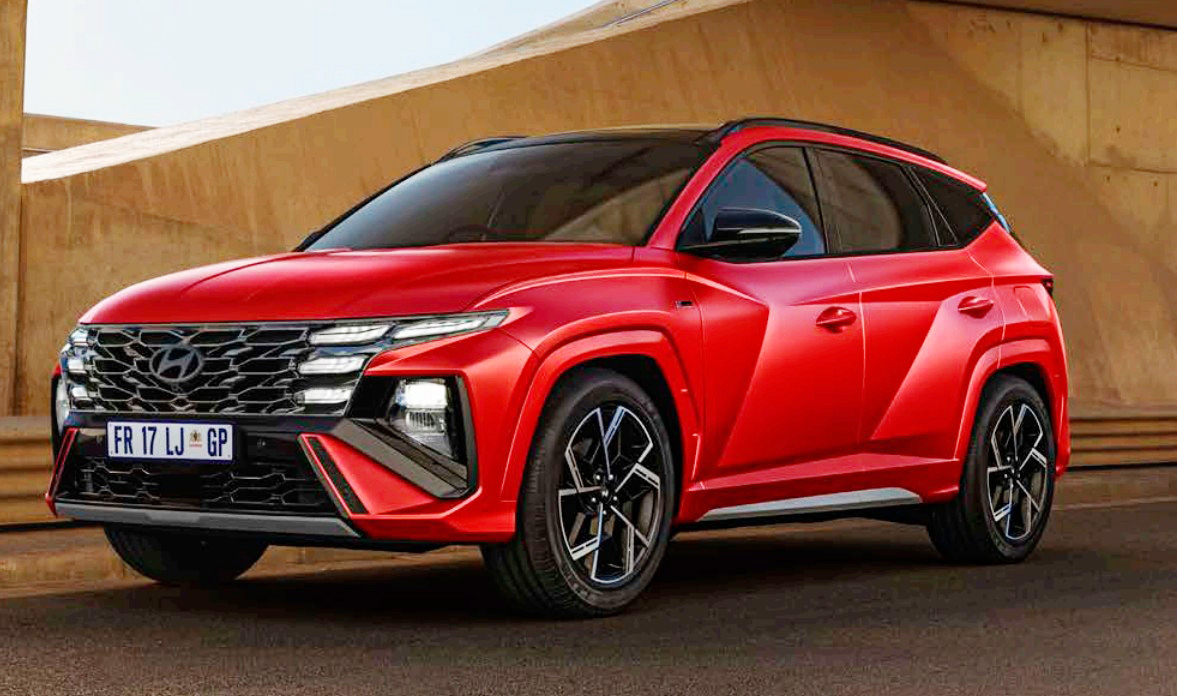

The reason the Hyundai Tucson has consistently remained a global best seller is that it offers a blend of style, comfort, and advanced technology in a spacious SUV. Blending conspicuous styling, strong practicality, and value-for-money appeal, the Tucson has received a thoughtful mid-cycle facelift that sharpens its design, introduces new technology, and enhances the driving experience across the range.
The latest model, the Hyundai Tucson 2.0 premium AT, now retails locally for a starting price of N$559 900.
Sales executive at Hyundai Namibia, Darren Diergaardt, explains that the 2026 facelifted Hyundai Tucson Premium (entry spec) stands out for its refreshed exterior design and a far more modern, upmarket interior with a large 12.3-inch infotainment screen. This Tucson further improves on standard safety features and encompasses a cleaner, more user-friendly dashboard compared to the pre-facelift model, while retaining the proven and reliable 2.0-litre petrol engine for low-stress ownership.
“Compared to the old model, it delivers more technology, better perceived quality, and added safety without added complexity, all at a more competitive price point, making it a strong value proposition for buyers who want a stylish, well-equipped midsize SUV without stepping into higher trim pricing,” said Diergaardt.
For 2026, Hyundai has succeeded in evolving the Tucson into a more complete package. With its updated styling, upgraded cabin tech, and comprehensive safety features, the Tucson facelift remains a strong contender in the compact SUV segment. Particularly, in markets like Namibia, where value and versatility are paramount. The pricing positions it slightly above some rivals, but its features and capabilities justify the cost for many buyers. If you are considering a capable, modern, and well-equipped SUV for family use or daily driving with a touch of refinement, the 2026 Tucson facelift deserves a serious look.
Visually, the 2026 Tucson continues the brand’s bold “Parametric Dynamics” design language, but the refined details make it feel more modern and distinctive. The front end’s reworked grille and lights incorporate parametric LED elements that sit more harmoniously with the sculpted bodywork. Revised bumpers and subtle bodyline tweaks improve the overall stance, giving the popular Hyundai SUV a more athletic presence on the road.
Inside, the most striking update is the introduction of a panoramic digital display that stretches across the dashboard, combining the instrument cluster and infotainment under a single seamless glass panel. This enhances both aesthetics and usability, placing key vehicle data and media information within easy sight. The dashboard layout is now cleaner and more intuitive, drawing inspiration from Hyundai’s electric-vehicle interiors. Hyundai has carried forward and refined its Tucson powertrain lineup for 2026. Key changes include the deletion of the oldest base engines in favour of more efficient and performance-oriented units. Under the bonnet, options include a 2.0-litre four-cylinder petrol engine producing 115kW at 6200 rpm and 192 Nm at 4500 rpm.
The 2.0-litre diesel variant is listed as producing 137kW at 4000rpm and 416 Nm at 2750rpm. Both engine options deliver competent power and respectable fuel economy from a six-speed automatic gearbox.
Real-world reviewers of the 2026 Tucson highlight its smooth ride and confident handling, qualities that feel especially competitive compared with rivals like the Honda CR-V and Mazda CX-5.
The interior technology and digital experience have also received positive attention for their ease of use and modern feel. External reviews point to a comfortable ride, tidy on-road dynamics, and solid real-world fuel economy.
-ebrandt@nepc.com.na