


ITSAWISES – Just a few kilometres outside Keetmanshoop lies the small village of Itsawises, in the vicinity of Blouwes. A dry, barren settlement area where time seems to move slowly and opportunities for a better life even slower.
Residents here are hungry for jobs and support for gardening, to be able to produce own food to sell and feed their families.
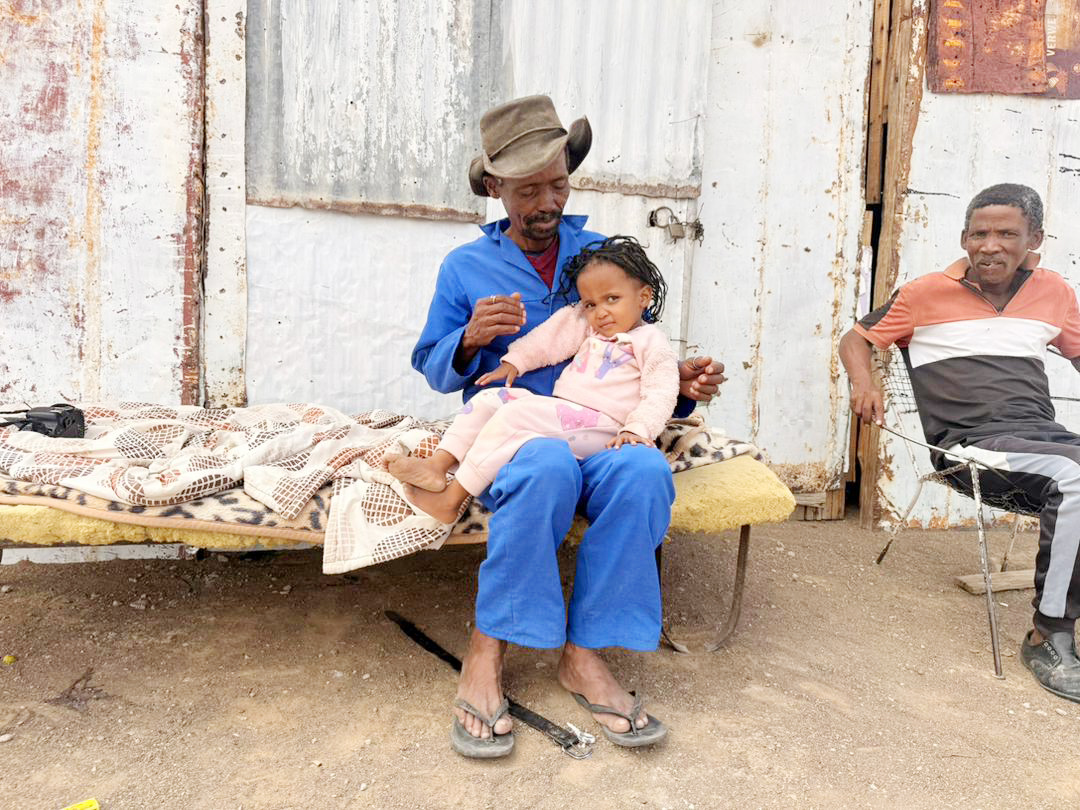
On a quiet afternoon, three men sit together beneath the open sky, sharing cigarettes and conversation.
Nearby, a little girl, no older than three, wanders around them, occasionally glancing up at the adults who are deep in discussion about the life they lead in this corner of the south. When approached, the men warmly offer a seat and begin sharing stories about daily life in the village, stories shaped by hardship and hope for something better.
Among them is 52-year-old Alfred Kooper, a father of five whose voice carries both strength and exhaustion. He explains that unemployment has become the norm in Itsawises, leaving many families struggling to survive. For Kooper, the burden became heavier last October when his wife passed away, leaving him to raise their children alone.
“It’s hard being a single father,” he says quietly, pausing for a moment as the little girl plays nearby.
Kooper describes life in a village where basic services remain out of reach. There are no shops and no clinic. When someone falls ill, residents must find transport along the main road and travel to Keetmanshoop, a trip that often costs around N$50: money that many villagers simply do not have.
“Sometimes when the child is sick, I just pray and hope nothing happens to her,” he says.
Although the village has traditional and political councillors, Kooper feels their presence is rarely seen. According to him, leadership disputes and internal conflicts have slowed progress in the area.
“There is a lot of infighting and little change,” he says.
In the meantime, he has applied for a social grant in Keetmanshoop in hopes that it will help him provide for his children.
Sitting beside him is Johannes Swartbooi, another long-time resident whose life story echoes similar struggles. Swartbooi says he once worked as a security guard in Tses, but that job ended in 2012. Since then, employment opportunities have been scarce.
“Now all we do is sit and watch donkey carts pass by. It’s not a good life.”
For Swartbooi, the problem is a lack of opportunities. He believes that even small agricultural support could make a difference in the village.
“All we want are farming products to start small gardens so we can feed our families,” he explains.
The third man, Sylvester Brandt says the only change he has seen lately is the provision of electricity in the village from the rural electrification project in the //Kharas region. “But how will we afford electricity if we are unemployed?” he asked.