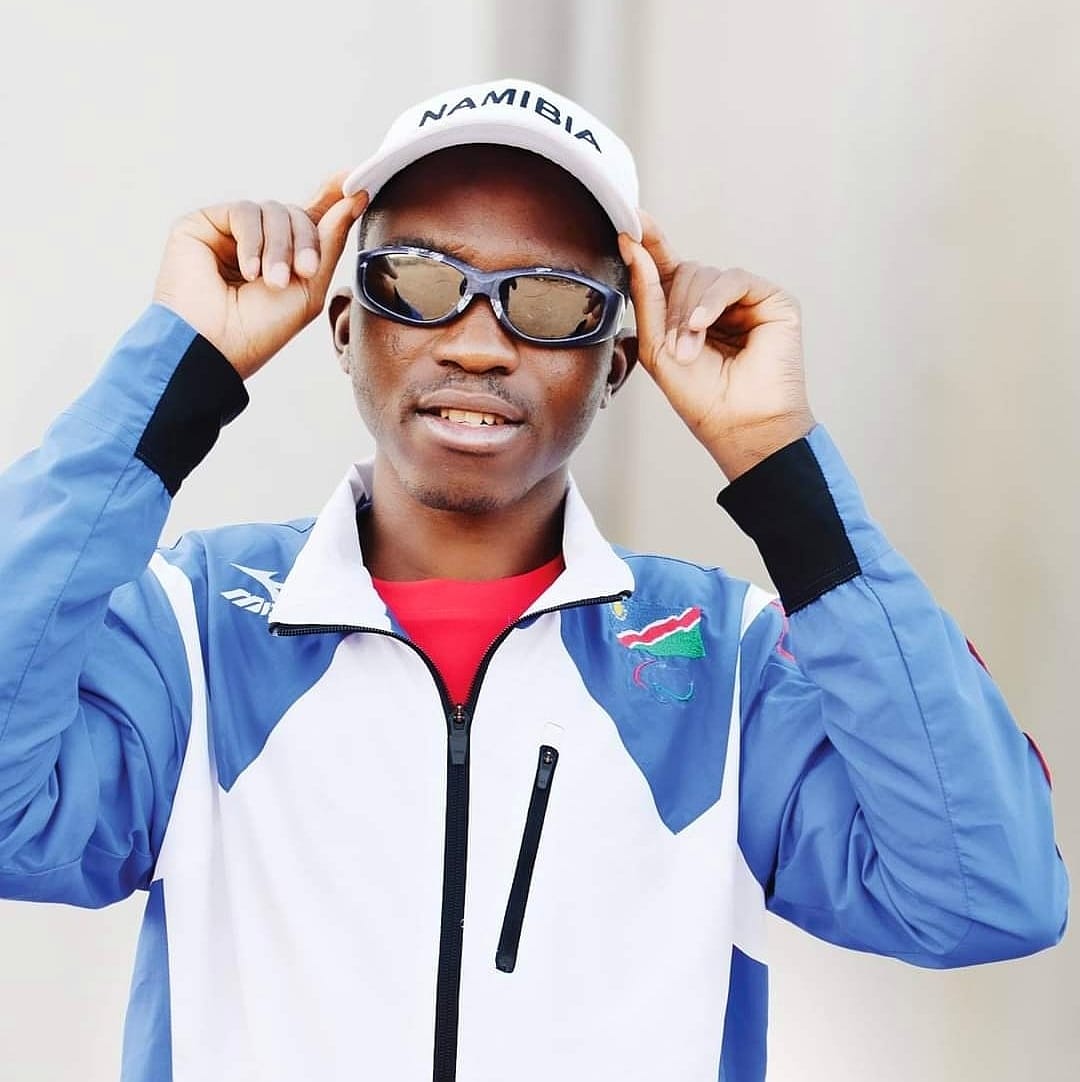

Moses Tobias, popularly known as Sondre, is a visually impaired schoolteacher and public servant who is committed to educating Namibian children against all odds.
He is currently working as a grade 8 and 9 teacher at Nakambunda Primary School in the Ohangwena region.
“I refused to allow blindness to limit my participation. I wanted to prove that I could still perform well both academically and socially,” he mimicked. Tobias was born in Onaiganga village near Muvaluma in the Ohangwena region. He grew up in a rural household, herding cattle and attending school like many children in the area.
“I had a normal rural childhood, herding cattle and going to school like other children in my village,” Tobias recalled. “Nothing prepared me for the challenges that were still ahead of me,” he added.
At a few months old, he lost sight in his left eye under circumstances that remain unclear. At the age of 10, he lost sight in his remaining eye following an accident while herding livestock. Medical treatment came too late, and he was declared totally blind.
“When I lost my sight completely, it felt like my world had ended,” Tobias reflected. “But later I understood that blindness does not mean the end of life.” he added.
Life without sight
Despite losing his sight at a young age, Tobias continued his education at Onambwebwe Combined School, where he learned Braille and adapted to learning through hearing and touch. He later enrolled at Gabriel Taapopi Secondary School, where he studied in a mainstream classroom alongside sighted learners.
“I had to rely on listening, Braille and memory,” Tobias explained. “My teachers played a big role in making sure I was not left behind,” he explained.
During his secondary school, Tobias actively participated in school activities, including choir, cultural dance groups and athletics. In 2012, Tobias represented Namibia at the Zone 6 Games in Lusaka, Zambia, competing in the Paralympic category for visually impaired athletes.
He won a gold medal in the 100 metres and a bronze medal in the 400 metres.
“Representing Namibia and winning medals for my country remains one of my proudest moments,” Tobias shared.
After completing Grade 12, Tobias enrolled at the University of Namibia’s main campus, where he pursued a Bachelor of Education degree, majoring in English for the secondary phase.
He studied from 2015 to 2018 and successfully completed his qualification.
“Education was my way of proving that disability does not block one’s future,” Tobias noted.
Becoming a public servant
Following his graduation, Tobias applied for a teaching post and was appointed as an English teacher. He currently teaches Grade 8 and 9 learners in a mainstream school.
“I prepare detailed notes in advance and rely on structured lesson delivery,” Tobias explained. “Knowing my classroom layout helps me move confidently during lessons,” he said.In line with the ministry of education’s inclusive education policy, Tobias was later assigned a co-teacher. The co-teacher assists with marking, administrative duties and record-keeping, while Tobias focuses on teaching and learner engagement. “This support system allows me to focus on what I do best, which is teaching.” he added.
Music beyond the classroom
Outside his teaching profession, Tobias is also a recording artist known as Sondre. His interest in music began during his school years through choir and cultural activities. He started recording professionally in 2016 and has since released several albums.
“Music is another way for me to communicate and inspire people,” Tobias expressed. He has performed at several national events, including the Ongwediva Annual Trade Fair and the Walvis Bay Expo, where he shared the stage with other Namibian artists. “Performing on national stages reminds me that my voice still matters,” Tobias said of his music career.
Parting shots
The teacher says his life and career are driven by a belief that disability should not be seen as an inability. He hopes his journey will encourage others, particularly young people with disabilities, to pursue education and personal goals despite challenges.
“Disability should never be mistaken for inability. If I can do it, others can too,” he concludes.
–taimihaihambo2000@gmail.com