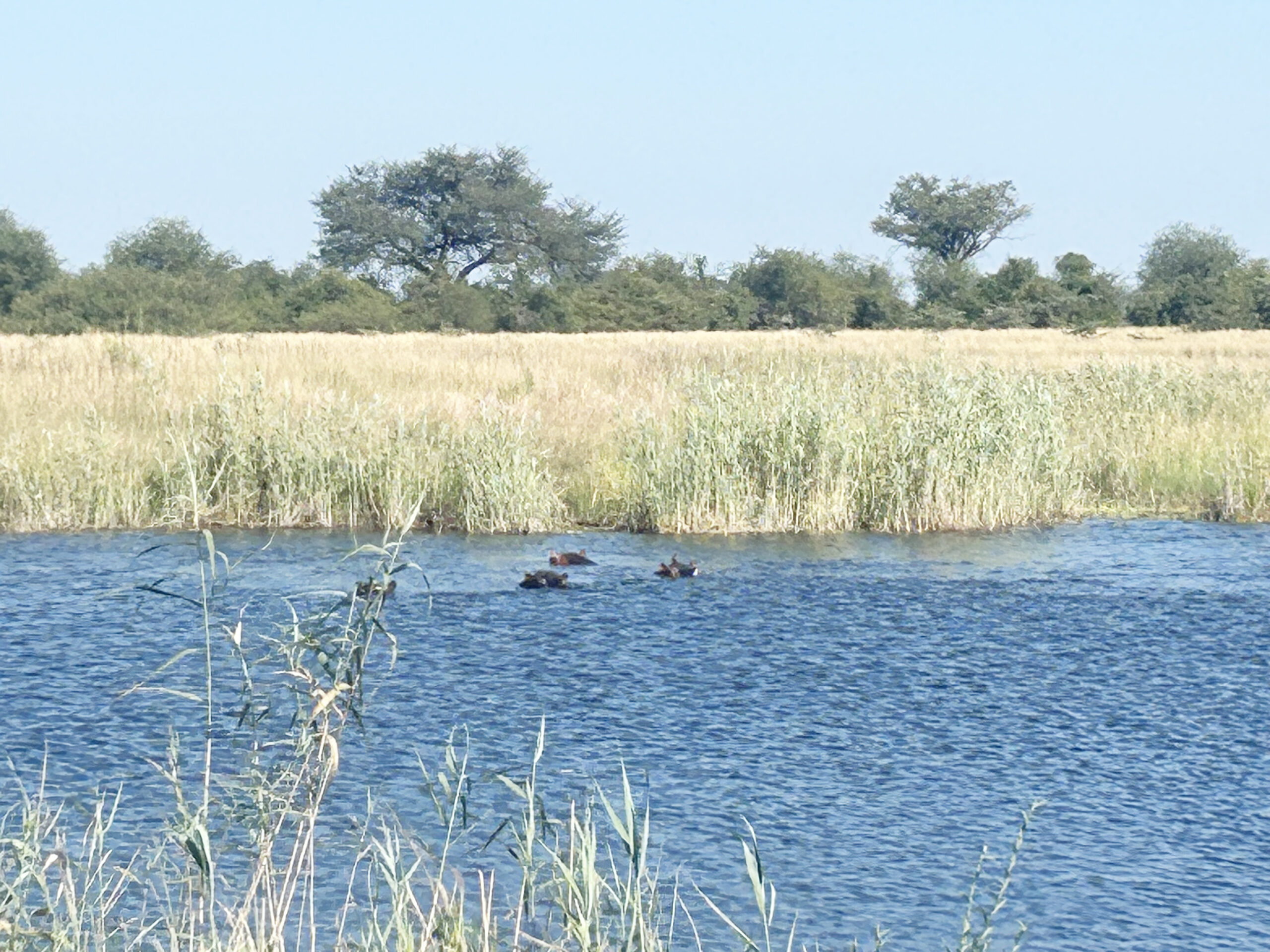

CHOI – Communities living in conservancies bordering the Mudumo and Bwabwata national parks in the Zambezi region have called for the urgent reform of Namibia’s wildlife compensation policies.
They have cited mounting damages caused by animals not currently covered under the existing government framework.
Dominic Liambani, special advisor to the chief of the Mashi Traditional Authority, expressed their deep frustrations, particularly those in and around the Mayuni Conservancy and neighbouring areas in the Kongola and Judea Lyamboloma constituencies.
“Currently, only elephants and hippos are considered for compensation,” Liambani said. “But other animals like eland, buffaloes, giraffes, kudus, baboons – many types of antelopes – also destroy crop fields. These animals are not included in the Act, and that’s a serious gap which needs urgent attention,” he stressed.
To address such issues, the Ministry of Environment, Forestry and Tourism (MEFT) has implemented the Human-Wildlife Conflict Self-Reliance Scheme, part of the National Policy on Human-Wildlife Conflict Management.
The scheme provides financial compensation and support to individuals and communities affected by wildlife-related incidents, including crop destruction, livestock loss and human injuries or fatalities.
In March, the ministry announced it had paid over N$45 million for 3 301 cases of human-wildlife conflict nationwide since 2019. Of this amount, N$29.8 million was allocated to conservancies, N$4.8 million for the loss of 3 182 head of livestock, and N$3.6 million was to compensate for crop losses covering 3 869 hectares. The ministry also paid N$1 million for 108 injuries, and N$6.2 million for the tragic loss of 69 lives – although some claims were rejected.
Revised compensation rates, which took effect on 1 September 2024, include funeral expenses [increased to N$100 000], injuries [no body part loss, up from N$10 000 to N$15 000]; injuries (with body part loss: N$30 000 to N$40 000]; permanent disability [from N$50 000 to N$100 000].
Livestock compensation was also reviewed.
Loss of cattle [from N$3 000 to N$5 000]; goats [N$500 to N$800]; sheep [$700 to N$800]; horses [N$800 to N$1 500]; donkeys [N$500 to N$1 000] and pigs from N$700 to N$1 000.
For crop damages, compensation for a quarter-hectare rose from N$250 to N$500, while for one hectare it increased from N$1 000 to N$2 000.
Despite these increases, Liambani is still disappointed.
“Lions in areas like Ngonga and Choi have caused panic. People fear fetching firewood, or letting children walk to school. Communities are losing livestock. The current compensation of N$8 000 for such losses is inadequate,” he reiterated.
The special advisor called for stronger collaboration between MET and local conservancies like Mayuni and Mashi to manage and, where necessary, relocate dangerous wildlife.
Adding to the hardship, poor weather conditions have impacted harvests. “The rains came late. People managed to plough in late December and January, but the harvest is not so good,” Liambani stated. Most residents in the region rely on subsistence farming, making the losses from wildlife even more devastating. – anakale@nepc.com.na