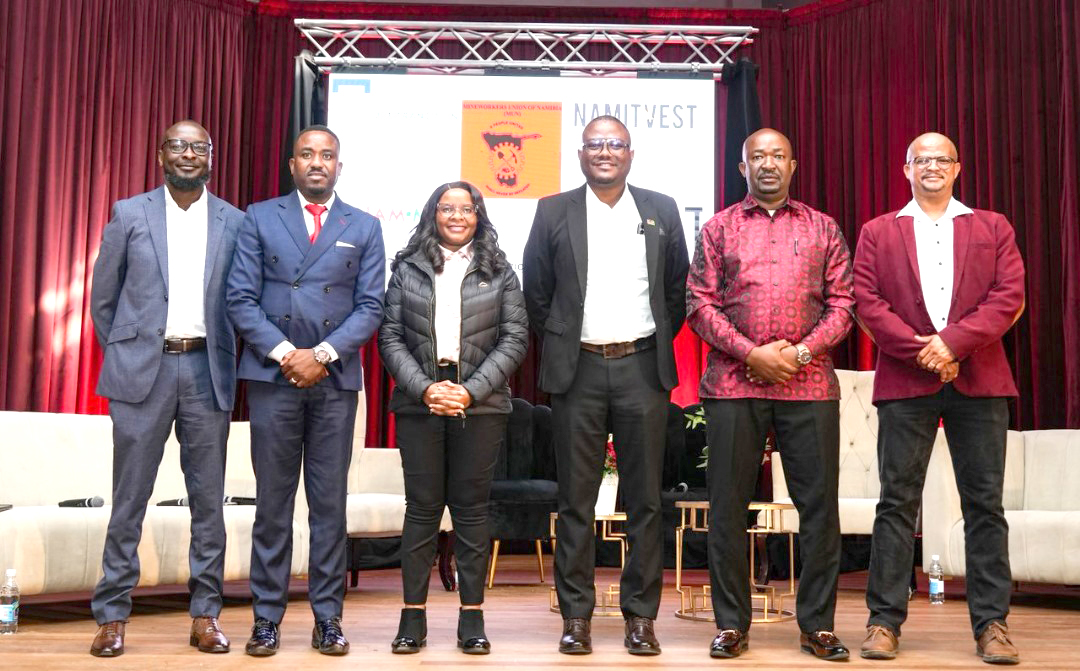

The Mineworkers Union of Namibia (MUN), in its continued mission to deepen its impact and presence, has launched several strategic initiatives aimed at strengthening member engagement and promoting sustainable socioeconomic development. As part of this drive, MUN successfully hosted a Western regional roundtable discussion in Erongo region yesterday, marking a key milestone in its national series of member engagement forums.
The roundtable event formed part of a broader effort to enable closer interaction between the union’s leadership and its members across all regions. These dynamic and interactive platforms are designed to inform, empower, and engage members on the benefits of union affiliation, while also providing critical updates on current campaigns and national labour matters. Since its formal establishment in 1986, the MUN has played a pivotal role in safeguarding the rights of workers across the mining and related industries.
MUN remains a central force in Namibia’s labour movement and a committed advocate for social justice within the broader political landscape. Poco-Key Mberiuana, the acting president of the MUN introduced and opened the roundtable discussions; “These roundtables are not a top-down information session. They are a dialogue. A conversation. A listening exercise. They are a chance for us, the leadership, to sit side by side with members on the ground and hear directly from you. What are your concerns? What are your ideas? How can we make this union even stronger, more inclusive, and more effective? ‘Each One Teach One’ is how we need to lead as the mineworkers union,” he remarked.
Additionally, Rebekka Bengela, MUN national secretary emphasised the value of continuous dialogue between leadership and members. “Our aim today is both clear and meaningful, which is to reinforce the relationship between leadership and membership, to have a deeper understanding of the union’s work, and to build a more informed, engaged, and united membership, one that is prepared to participate actively in shaping our shared future,” he said. Adding to the sentiments, MUN western regional chairperson, Niklaas Afrikaner, highlighted the challenge of lack of awareness of the initiatives by the members “Still, challenges remain. Many workers are unaware of the benefits available to them through the union. Some believe the union is only there during strikes or salary disputes. But we must change that narrative. MUN membership means support in every season of your life whether you’re starting your career, raising a family, launching a business, or investing in your children’s education,” he stated.
The roundtable brought together MUN national, regional leaders and the western region members. The agenda included panel discussions, open floor sessions, and reflective presentations on the union’s history, its evolving role in the present day, and the shared responsibility of building a stronger, more informed and resilient membership base. Attendees also engaged in conversations about the economic and social benefits of collective bargaining, as well as the significance of solidarity in securing long-term worker protections.
The regional chairperson further underscored the union’s dedication to finding localised solutions to member challenges. Also, a panel discussion was facilitated highlighting various aspects of the current state of MUN and its members.
SME Fund
In a significant development, MUN provided an update on its NAMIT SME Fund, a groundbreaking initiative designed to support entrepreneurial ventures by current and former members. Established in 2024, the fund has already disbursed over N$800 000 to entrepreneurs in various regions, demonstrating tangible support for members’ economic empowerment. As of this year, 54 applications have been received, reflecting growing interest and demand for inclusive economic support from the Union.
Members in attendance were pleased and grateful for such initiatives which allow transparency and open communication with its leadership. Rauna Namolo Osino, a current MUN member, expressed her opinion on the importance of the round table discussions; “The roundtable discussions were an important step toward real change. They gave members a chance to engage directly with leadership in an open, respectful space — not for conflict, but for solutions. I truly believe these kinds of platforms should happen more often. However, dialogue must lead to action. If workers’ voices are heard but not acted on, then we’re simply talking in circles. Let’s make roundtables a bridge to impact — not just conversations,” she noted.