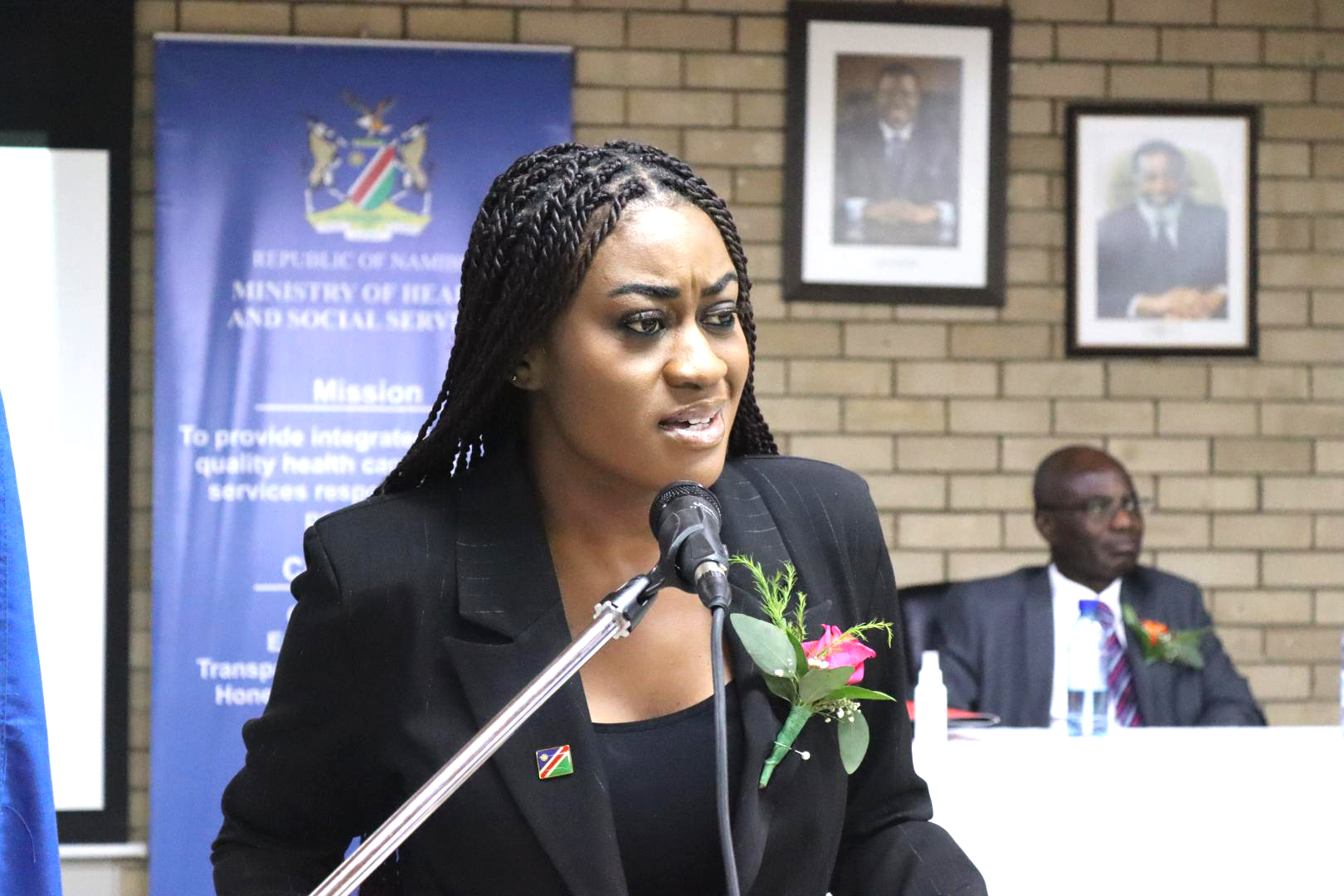

Lahja Nashuuta
Namibia’s public health sector is under severe strain.
The persistent shortages of nurses, doctors and specialists are crippling service delivery.
More than 85% of Namibians depend on State-funded healthcare, yet the system remains overstretched and under-resourced.
The country’s network consists of 1 400 outreach points, 290 state clinics, 43 health centres, 30 district hospitals, four intermediate hospitals and one national referral hospital.
Despite this, many communities still struggle to access adequate healthcare.
The United Nations International Children’s Emergency Fund figures reveal that Namibia has only 0.6 physicians and two nurses per 1 000 patients.
This is well below the upper-middle-income country average of 2.3 physicians and 3.4 nurses per 1 000 patients.
Retention struggles
Spokesperson of the health ministry Walter Kamaya told New Era that retention remains one of the ministry’s greatest challenges.
“As much as the ministry recruits and employs nurses, they leave for studies, private sector jobs or other reasons. People come and go. This is an ongoing process. The ministry has to manage constantly,” he noted.
The challenge is compounded by the fact that 62% of healthcare workers are employed in private facilities, which serve only 20% of the population.
This leaves most Namibians dependent on an overstretched public system.
“Despite Namibia’s total health expenditure trending above the 15% Abuja target for the past five years, the public sector continues to lose skilled workers,” Kamaya said.
He added that the shortages not only undermine service quality but also increase wage costs, as nurses and midwives are forced to work extensive overtime.
Many reportedly clock an additional 40 hours a month, often without fair or timely compensation.
The delays in overtime payments reportedly frustrate some healthcare workers, while some avoid turning up after hours.
However, Kamaya defended the ministry’s processes, insisting that verification is crucial to safeguard public funds.
“Unlike salaries, which are paid on fixed dates, overtime claims require verification. Some staff have even submitted claims for hours not worked. So, as responsible officers, we must double-check to avoid loopholes,” he said.
Ambulance availability remains another headache. Despite distributing new vehicles this year, demand continues to exceed supply and breakdowns are frequent.
“You can buy an ambulance today and tomorrow it breaks down. We’ve even had cases where new vehicles became unroadworthy before reaching their destinations. It’s a back-and-forth challenge,” Kamaya said.
In emergencies, the ministry often relies on the defence ministry, hires private ambulances or resorts to costly airlifts.
Kamaya urged staff at health centres to ensure services remain open around the clock after reports emerged that some facilities close after 17h00.
“A health centre should not close after hours. Officially, all health centres are directed to operate 24/7, ideally with a doctor on duty. If centres are closing, that is against ministry policy,” he said.
Response
Health minister Dr Esperance Luvindao acknowledged the scale of the crisis but said government is committed to reversing the trend.
She told Parliament that 11 742 new positions have been approved over the next six years at a cost of N$4.5 billion.
However, only N$150 million is available for the 2025/26 financial year, enough to recruit just 434 staff members.
“Our priority will be to deploy specialists in obstetrics, surgery, internal medicine, anaesthesiology and critical care, particularly in underserved regions,” Luvindao said.
She added that the overall vacancy rate across the health sector currently stands at 26%.
Units that are worst affected include Policy Planning (76%), Health Information and Research (72%) and Human Resources for Health (58%).