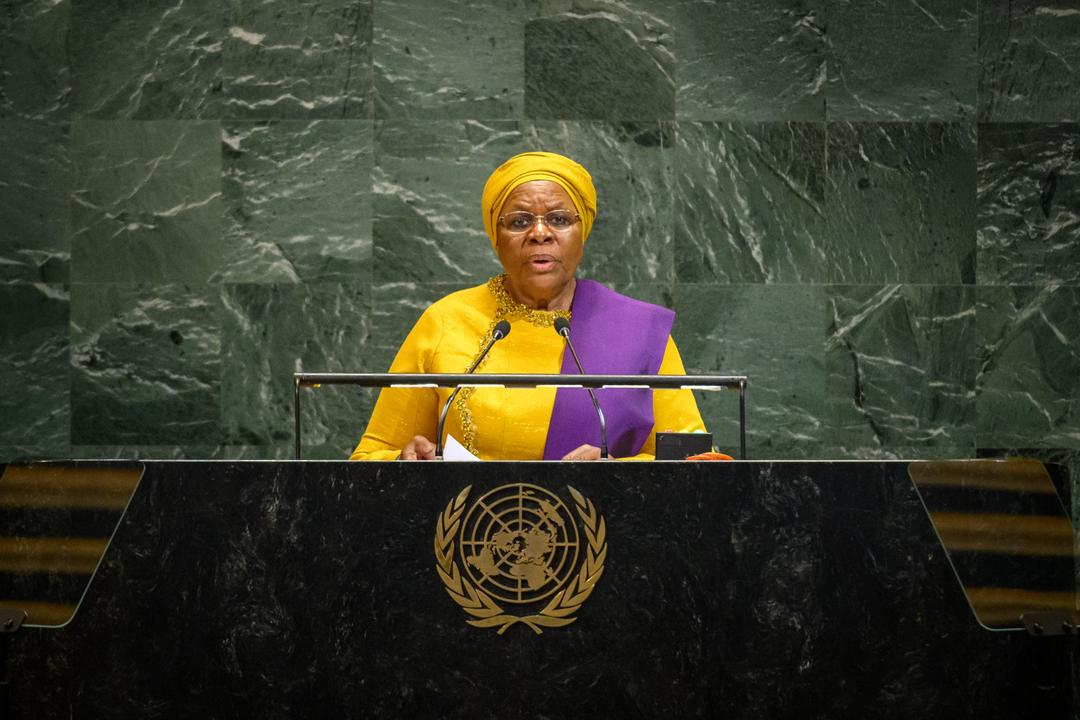

President Netumbo Nandi-Ndaitwah announced that Namibia will host the 25th anniversary of the Women, Peace and Security (WPS) agenda, reaffirming the country’s role as the birthplace and global champion of UN Security Council Resolution 1325.
Speaking at the WPS Focal Points Network meeting on Tuesday, President Nandi-Ndaitwah said Namibia’s leadership, rooted in its liberation struggle, continues to inspire the global movement recognising women not only as victims of conflict but as active participants in peace processes.
“Women must not only be seen as victims of conflict, but also as participants in conflict prevention, peacekeeping and peacebuilding,” she said. “Namibia stands ready to deepen our commitments through strong national leadership, intergenerational partnerships, and global cooperation to ensure this agenda makes a tangible impact on women’s lives, especially those in conflict situations.”
Resolution 1325, adopted in October 2000, was the first UN Security Council resolution to formally link women’s participation with lasting peace, calling for their inclusion in decision-making at all levels. Namibia, serving on the Security Council at the time, played a decisive role in shaping and championing the resolution.
“When Namibia entered the Security Council 25 years ago, we had to decide what issue to carry to the world stage. Based on our liberation struggle, it was clear that women and peace must be central. We could never have imagined that this resolution would grow into a global agenda,” Nandi-Ndaitwah recalled.
Since then, Resolution 1325 has influenced peace processes worldwide and led to the establishment of National Action Plans (NAPs). Namibia was an early adopter and is now preparing to launch a strengthened second plan.
The first national plan expanded beyond traditional conflict issues to include disaster management, climate change, and cybersecurity. The second plan, under development, will focus on community-led solutions and include the private sector alongside government and civil society. Extensive regional consultations with traditional authorities, youth, and community leaders will ensure the plan reflects Namibian realities.
“This inclusive approach will enhance regional coordination, provide grassroots voices, and reinforce the link between community perspectives and policymaking,” Nandi-Ndaitwah said.
The President also emphasised preparing the next generation, highlighting the importance of training youth in mediation, peacekeeping, and peace support operations. “Peace is not only for today; it must be built for tomorrow, and that means engaging youth now so they carry this agenda forward.”
Namibia will host the silver anniversary of Resolution 1325 in October in Windhoek, in partnership with the African Union Commission and the Southern African Development Community. A parallel commemoration will also take place in New York during the UN General Assembly session. The events will provide a platform to share best practices, strengthen networks, and renew global commitments beyond the 25-year milestone.
Nandi-Ndaitwah said the anniversary will highlight intergenerational leadership, bringing together women leaders of the liberation struggle, current policymakers, and youth activists. “This will honour the legacy of 1325 while ensuring young people are included to carry it forward,” she said.
Espen Barth Eide, Norway’s Minister of Foreign Affairs, praised Namibia for keeping the WPS agenda alive. He noted that the Focal Points Network, now including 96 member states and 10 regional organisations, ensures dialogue continues even in challenging times.
“Peace is more than the absence of fighting. It is about building sustainable societies that can handle differences openly. Without dialogue, the world risks moving into a darker place,” Eide said. He stressed that women’s voices must be included, because peace cannot be sustained without their insights.
When Resolution 1325 was passed, many powers were reluctant to see women’s issues as central to peace and security. Namibia’s insistence, rooted in its history of armed struggle and reconciliation, helped shift that narrative. Today, as the world marks 25 years of the resolution, Namibia is stepping forward again—not just to celebrate the past but to expand the agenda into new areas such as climate change, cyber threats, and intergenerational leadership.
In her closing remarks, Nandi-Ndaitwah reminded delegates of the principle guiding Namibia then and now: peace cannot be sustained if half of society is excluded.
“For too long, women have been seen only as victims of war. Resolution 1325 declared that women must be empowered to be part of conflict prevention, peacekeeping, and sustaining peace. We must keep that light alive,” she said.
With the African Union and SADC as partners, Namibia aims to position southern Africa as a hub for advancing the Women, Peace and Security agenda into its next chapter.