

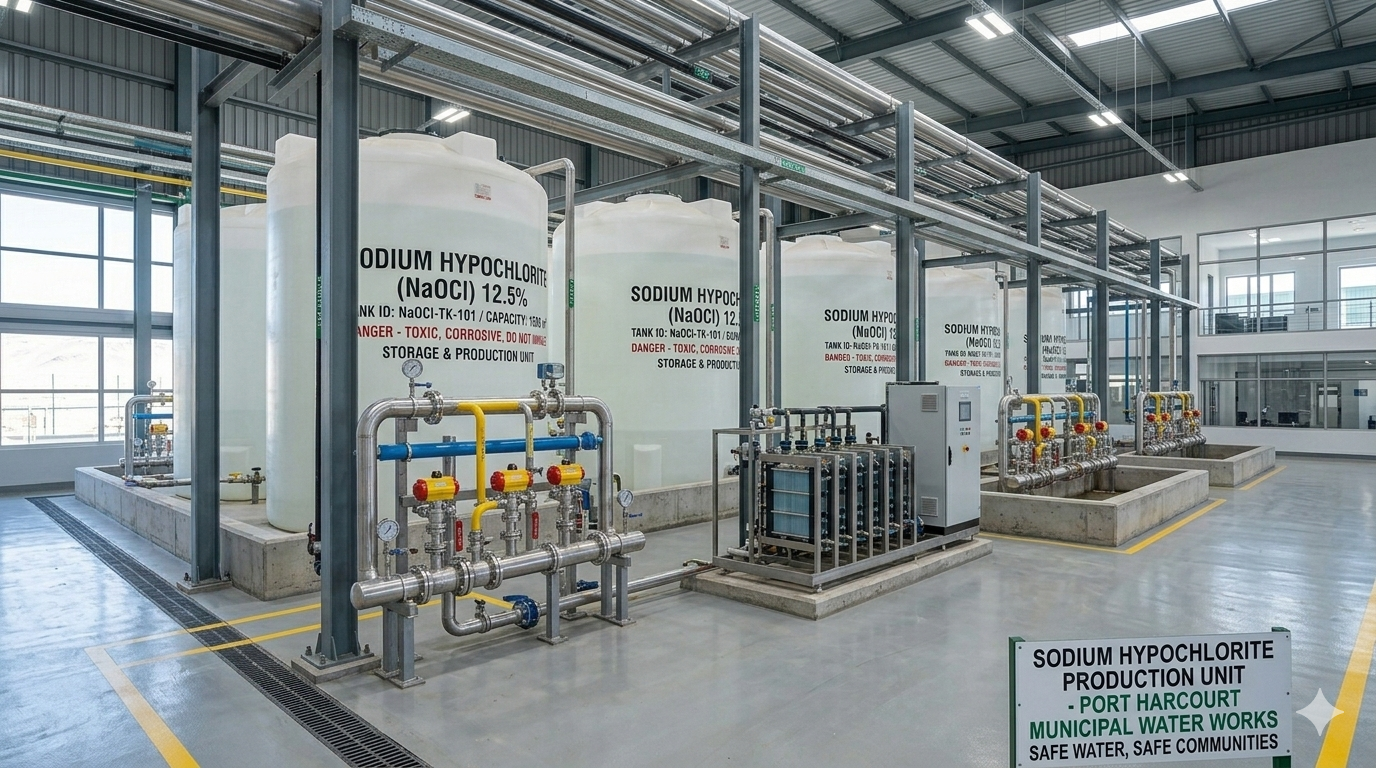

SWAKOPMUND – An ambitious Namibian start-up is positioning itself within the country’s green ambitions by turning desalination waste (brine) into valuable industrial by-products. The company, Green Brine Technologies, plans to convert desalination brine waste into essential industrial chemicals, reducing environmental harm, strengthening local supply chains and supporting Namibia’s green industrial future.
Assley Kalola, the project coordinator, during a presentation to the Erongo regional council in a bid to acquire 25 hectares of land from the council, said their plan is to combine renewable energy, industrial production and environmental protection.
Kalola explained that the company, founded in early 2023, is focused on developing technologies to address brine waste, a by-product of seawater desalination that is typically discharged back into the ocean.
“Green refers to our use of solar and renewable energy, while brine speaks to the waste stream from desalination that we are targeting,” he said. “Our focus is to develop technologies around that disposal issue and turn it into something valuable.”
He said the company, made up largely of young professionals under the age of 35, has grown into a team of seven core members, supported by an advisory board and strategic partners in technology, research and finance. Local and international institutions, including the Namibia University of Science and Technology, are contributing to research and innovation efforts.
Kalola added that since its inception, Green Brine Technologies has progressed from company registration and concept development to stakeholder engagement and feasibility studies. The project is currently in its technical and commercial feasibility phase, with pilot testing expected this year and full-scale commercialisation targeted for 2029.
“The projects will be executed in three stages. The first stage focuses on extracting minerals such as calcium carbonate and purified water from brine. The second stage involves chemical production, including caustic soda, chlorine and hydrogen, while the third stage produces by-products like gypsum for use in construction,” he explained.
“Our solution is to utilise the brine that is currently being disposed of through a three-stage approach. We are not only extracting valuable minerals but also creating industrial chemicals and reducing environmental harm,” he told the council.
Kalola said nearly half of the project’s costs, about 48%, are earmarked for local procurement, with a focus on small and medium enterprises in the Erongo region.
“We are looking at strong local participation, particularly from SMEs, provided they meet the required standards,” he said. “This project is not only about technology but also about economic inclusion.”
The company projects that it will contribute to Namibia’s economy through tax revenue and job creation. Estimates indicate potential tax contributions starting at about US$410 000 in 2027, increasing to about US$7.2 million by 2031. Employment is also expected to grow from the current seven employees to more than 120 permanent jobs by 2029. Kalola further noted that the initiative could help reduce Namibia’s reliance on imported industrial chemicals, which currently cost the country an estimated 28 million US dollars annually.
“These are products Namibia is already importing in large quantities,” he said. “By producing them locally, we keep that money within the economy and strengthen local industries.”
Chairperson of the Erongo regional council, Lazarus Kanelombe, described the project as impressive. Saying that Namibia, especially the Erongo region, needs innovators that think outside the box and create employment opportunities for the region. “I must applaud you as young Namibians for your effort in contributing towards the growth of the country,” he said.