
OSHAKATI – Namibia’s drug crisis continues to deepen, with over N$160.6 million worth of dagga confiscated by law enforcement between January 2023 and July 2024.
According to police data, drugs valued at N$49.3 million were seized in 2023, resulting in 1 641 arrests. This year has already recorded drug seizures worth N$56.7 million, with 1 623 suspects arrested.
One of the biggest breakthroughs occurred last month, when a dagga plantation valued at over N$52 million was uncovered at Farm Eendrag, situated between Hochfeld and Osire.
While these figures demonstrate law enforcement’s success, they also highlight a growing social crisis—young lives falling apart under the weight of addiction.
A life derailed
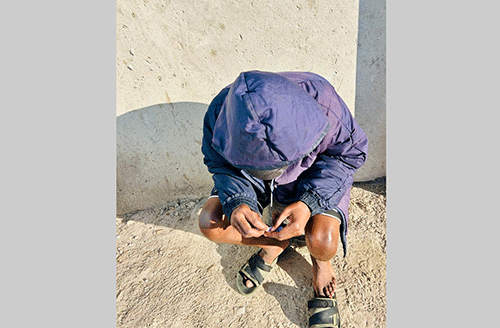
A 16-years-old teenager from Windhoek, whose life has spiralled due to dagga addiction. Once a vibrant and curious learner, he dropped out of school late last year and now lives with a friend, who is also addicted.
“I left home because my mother used to shout at me all the time. I would get irritated and feel like she didn’t understand me. So, I decided to leave and go smoke dagga freely. But now I realise she was only trying to help me,” he admitted.
Now living a “life without rules,” he and his friend, who lost both parents, often resort to petty theft to feed their addiction.
“We can’t go a day without it. So, we steal, sell, and use the money to buy dagga,” he said.
He revealed he was recently released from jail after being arrested for stealing a mobile phone. “I just wanted to smoke, and I didn’t have money,” he said.
Filled with regret, he says he wants to return home but is scared.
“I think I’ve killed the love my mother had for me,” he said, his voice breaking.
A mother’s grief
His mother, confirmed that her son began using dagga some years ago. She said household items—including her phone, expensive pots, and groceries—began disappearing.
“When I tried to intervene, he accused me of mistreating him. He said I didn’t respect his choices. Then he left. I haven’t seen him in months,” she said.
Despite everything, she says she keeps her son’s room exactly as he left it, hoping he will return and rebuild his life.
“I just want him to be okay, to get help. He still has a future if he comes home,” she said softly.
Sources close to the family say he is often seen wandering around the Okandjengedi area and hanging out with known drug dealers. Police suspect he may have been recruited by a local street network connected to larger drug syndicates, such as those behind the illegal plantation discovered at Eendrag.
Youth vulnerability
According to Oshana regional commander, Commissioner Naftal Lungameni Sakaria, many young people involved in drug cases are introduced to dagga without understanding its dangers.
“Many think it’s a harmless plant. But dagga impairs brain development, concentration, and decision-making in teenagers. It’s causing school dropouts, petty crime, and broken families,” Sakaria said.
He added that drug syndicates often use young people as runners or lookouts—particularly in urban areas—because they are “easy targets.”
“They’re unemployed, desperate, and many come from broken homes or lack proper support systems,” he explained.
Psychological impact
Clinical psychologist Sirkka Johannes warned that early and frequent use of dagga can lead to long-term psychiatric issues in teenagers, including depression, anxiety, and in severe cases, psychosis.
“Dagga is not harmless. Its impact on the adolescent brain is real, and we’re seeing a surge in drug-related mental health cases among young people,” she said.
As Namibia’s law enforcement agencies continue their crackdown on drug production and distribution, experts and families alike are calling for more support structures for young people at risk of addiction—before it’s too late.
-vkaapada@nepc.com.na